
Activity
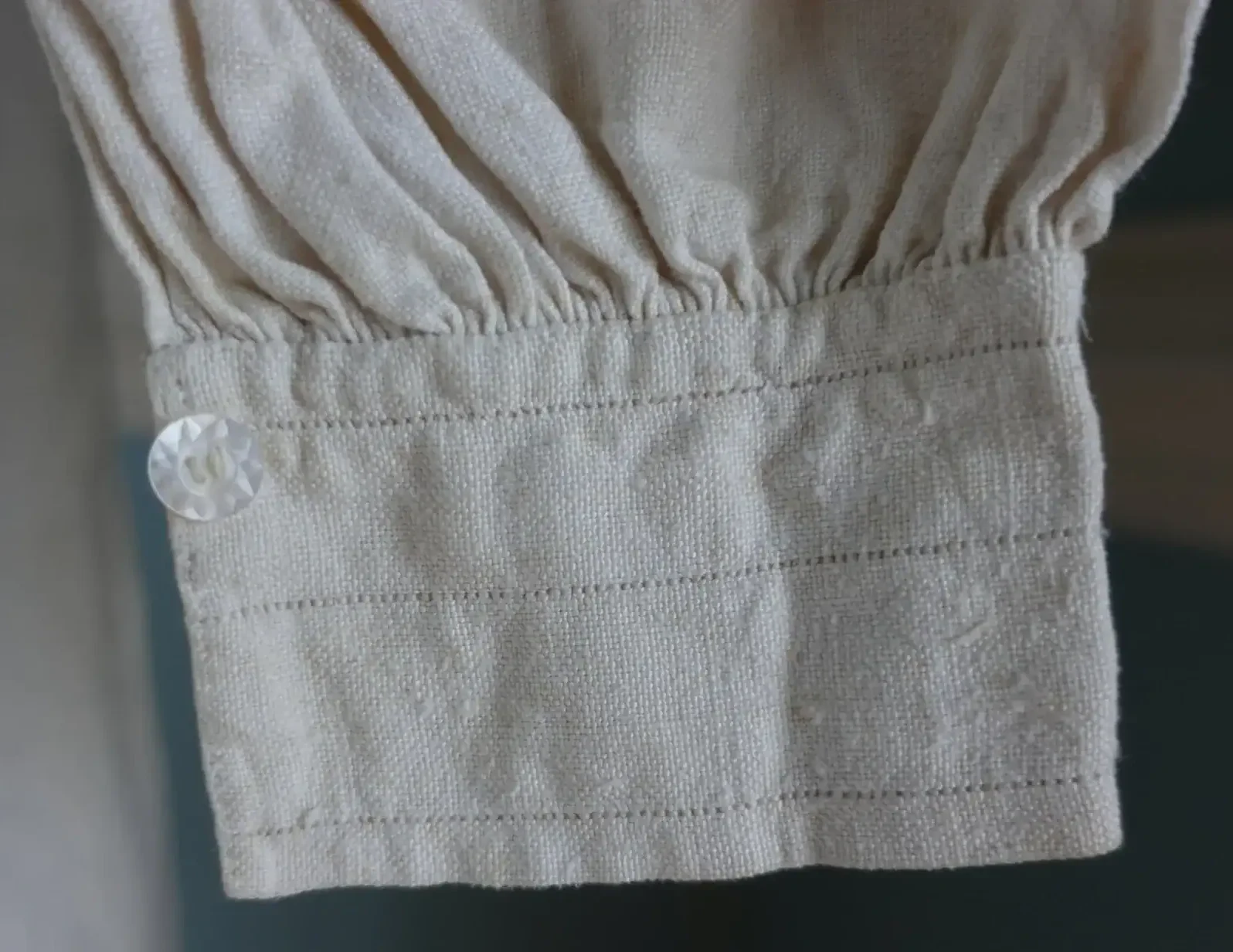
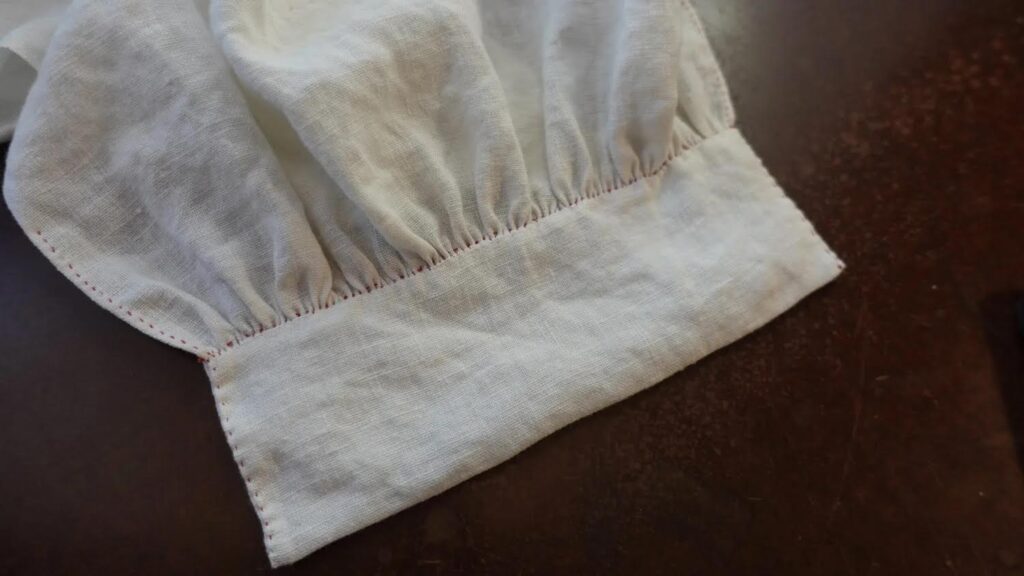
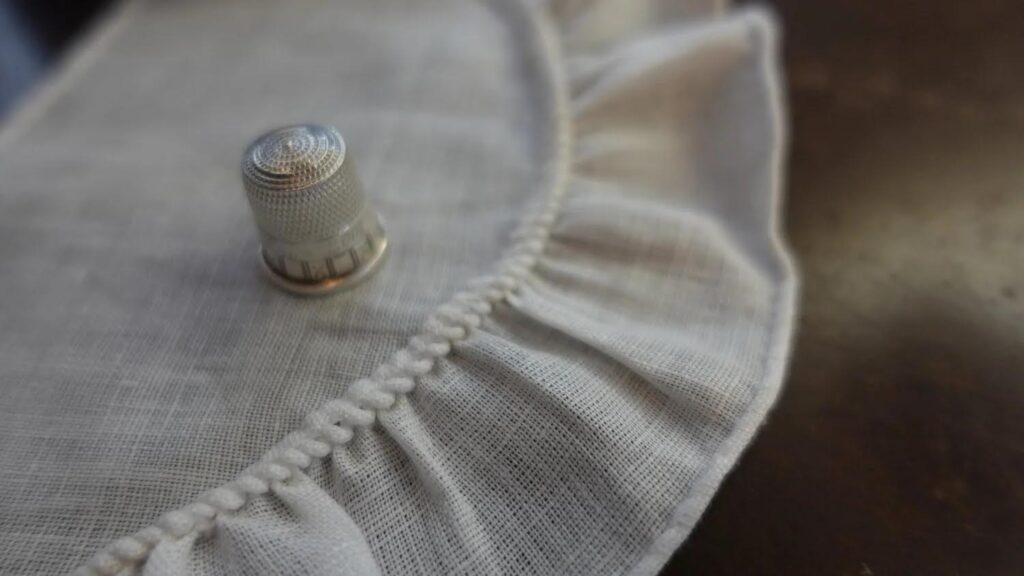
In this skill-building class we will practice two historic hand-sewn gathering techniques: stroke gathers and whipped gathers. These two techniques are uniquely suited for hand sewing because they were developed before the sewing machine was invented.
Stroke gathers are used to control light to heavy weight textiles to create cuffs, ruffles and waistbands. Whipped gathers are used to control lightweight linen, silk or cotton to create ruffles, cuffs and waistbands. During the class we will use needle, thread and our hands to stitch two samples: a sample cuff based on a 19th-century shirt and a whipped-gathered ruffle based on Sarah’s study of 18th and 19th-century accessories.
Both create a different but equally clean and beautiful finish.
As a maker learning these gathering techniques will hone your skills and deeply enhance your sewing practice. If you are a scholar of historic dress, learning these techniques will enhance your hand-sewn literacy when studying historical pieces. Allowing you to confidently identify stroke gathering versus whip gathering. These skills will bring more beauty and more opportunity for hand sewing into your sewing practice. Join Sarah to learn to hand sew from the past, to be more present so we can stitch a better future.
Class level: We suggest that students arrive having taken a basic hand sewing class before from TATTER or elsewhere. Skill wise you need to be able to thread a needle and do a running stitch.
Dates
Wednesday, April 29th, 2026
Time
12:00-2:30 pm ET
Location
Zoom, a link will be sent to participants
the day before class.
Recording
This class will be recorded and the recording will be shared with all participants for one month following the live session.
Cost
$75
Materials
Note: These two techniques use different fabric weights and materials. Please review each section carefully and prepare the appropriate supplies before class.
Technique 1: Stroke Gathers
Fabric
- Amount: ½ yard of 58’’-wide lightweight to medium weight linen
- Lightweight modern muslin may also be used for practice
- For sample-making, medium weight linen is recommended
Cut Pieces (Prepare Before Class)
- Mock shirt sleeve: 4 x 17.25 inches (10 x 44 cm)
- Mock shirt cuff: 5.5 x 8 inches (14 x 20 cm)
Thread
- Match thread weight to fabric weight
- For medium weight linen: 60/2 or 80/2 linen thread
- Alternative: 40-weight hand-quilting cotton (widely available)
Technique 2: Whipped Gathers
Fabric
- Amount: ½ yard of 58’’-wide lightweight linen or cotton
- Lightweight modern muslin may also be used for practice
- For sample-making, lightweight linen or cotton is recommended
Cut Pieces (Prepare Before Class)
- Band (to attach ruffle): 3 x 10 inches (7.5 x 25 cm)
- Ruffle: 2 x 20 inches (5 x 50 cm)
Thread
- Lightweight silk thread (preferred for strength and delicacy)
- Recommended: Gutermann silk thread
- Alternative: 40-weight hand-quilting cotton
Shared Tools & Supplies (Both Techniques)
- Beeswax: for waxing thread
- Needles
- Size 7-10 sharp, appliqué, or embroidery needles
- Use finer needles (size 9-10) for whipped gathers
- Pins: super-fine dressmaker pins, 1 ¼” long
- Embroidery scissors: small and very sharp
- Dressmaker scissors: 8-10 inches (20-25 cm), sharp
- Tape measure or seam gauge
- Pencil
- Thimble (optional but encouraged)
- Should fit the middle finger of your dominant hand
- Snug but not tight, secure without slipping off
Reference Video: Cutting Out Textiles
Our Teacher
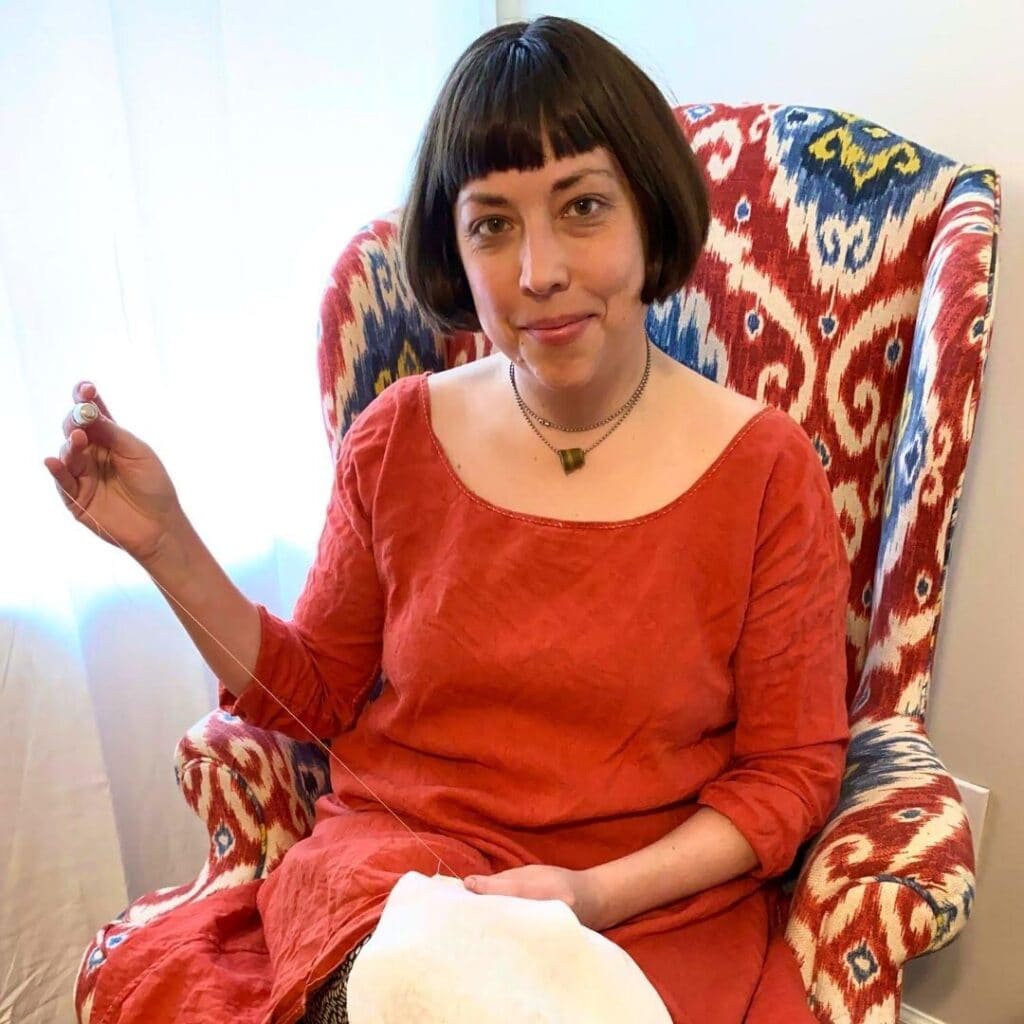
Sarah Woodyard is inspired by the labor of historical dressmakers. She spent seven years apprenticing at the Margaret Hunter Millinery Shop in Colonial Williamsburg to learn eighteenth-century mantua-making (dressmaking) and millinery (accessories). After completing her apprenticeship she became a Journeywoman mantua-maker and milliner. Sarah holds her M.A. in Material Culture from the University of Alberta. After ten years of sewing and interpreting at the Margaret Hunter Shop it was time to take this knowledge into the twenty-first century. She opened Sewn Company in 2019. Through Sewn she teaches historical hand-sewing to historical sewists and modern makers. She is passionate about preserving the skills and stories of hand sewing, through research, design and education. www.sewncompany.com