
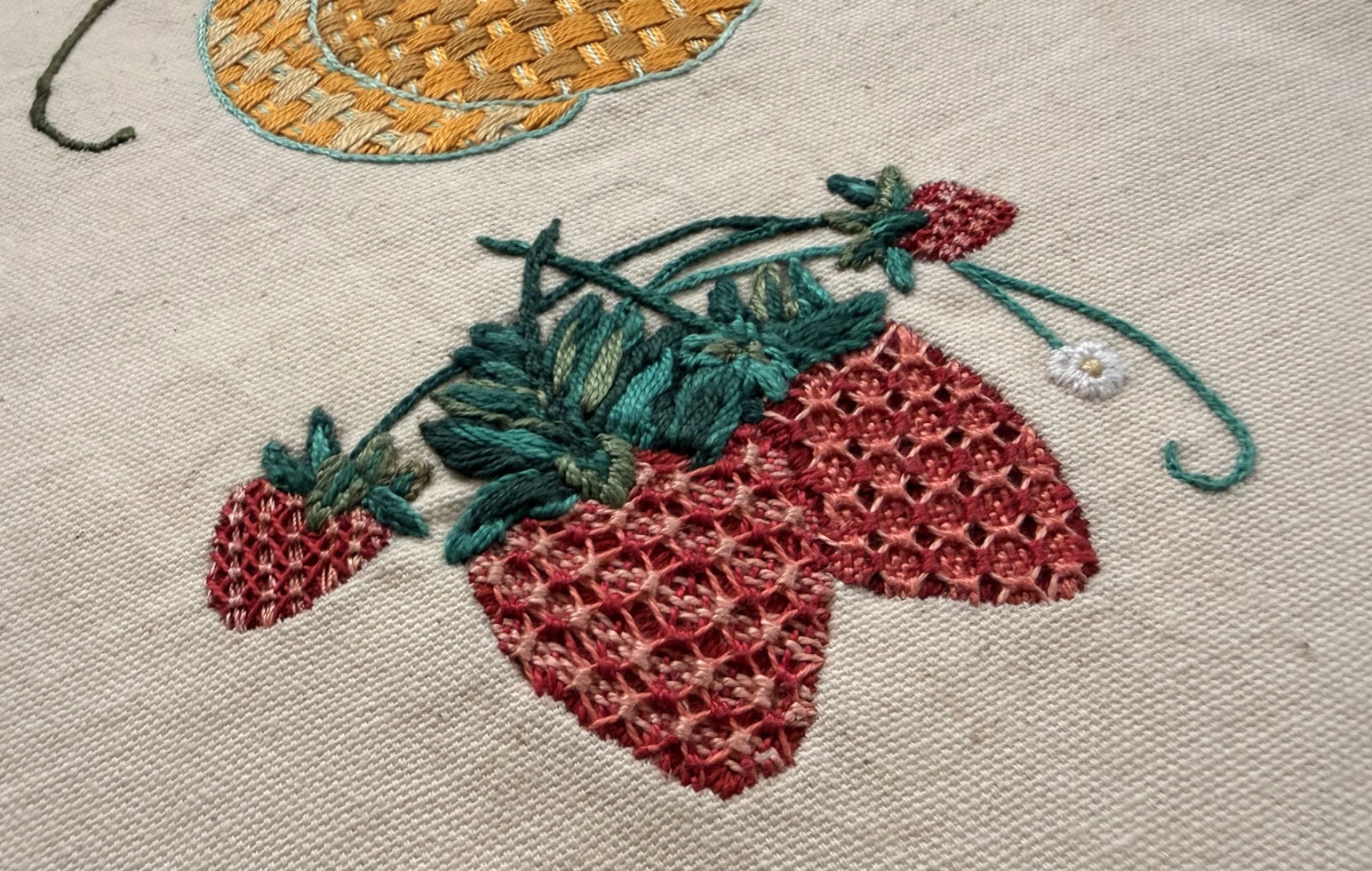
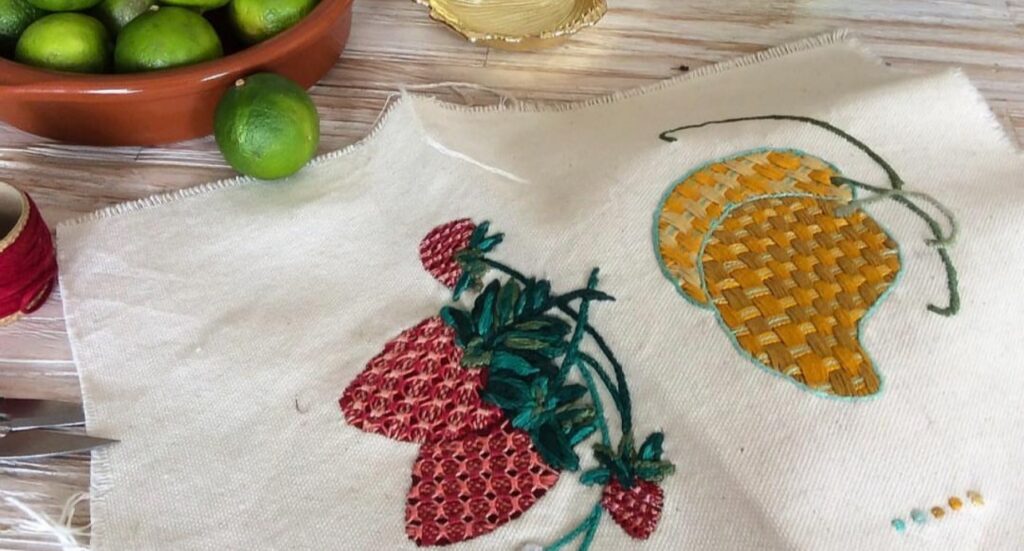
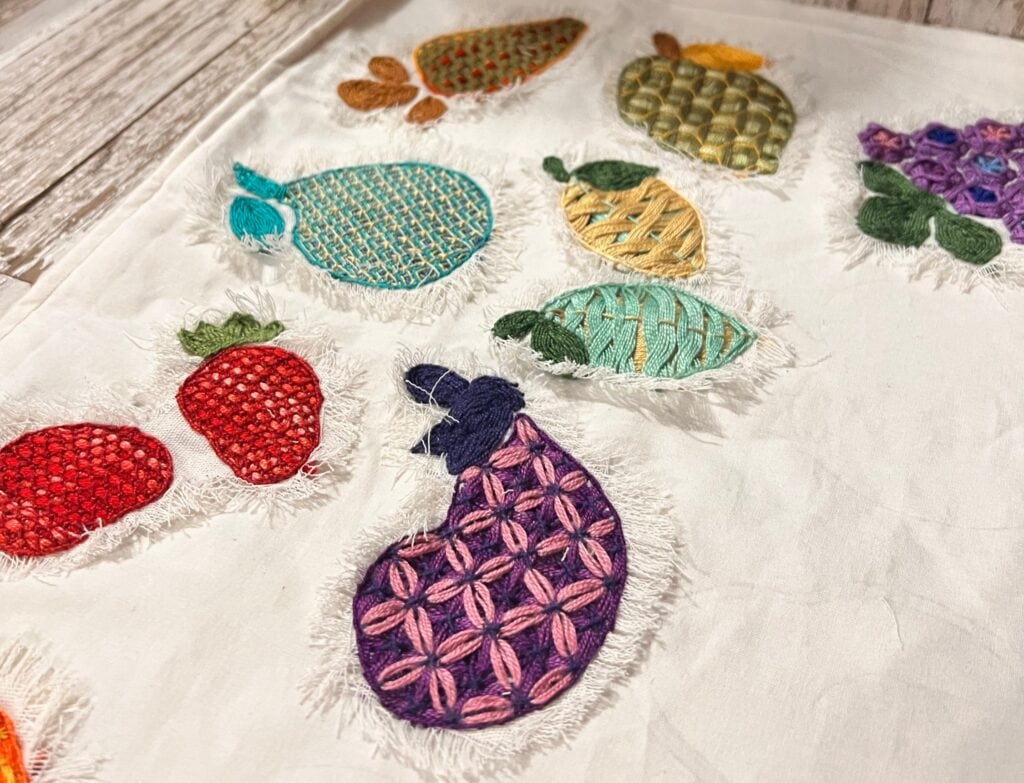
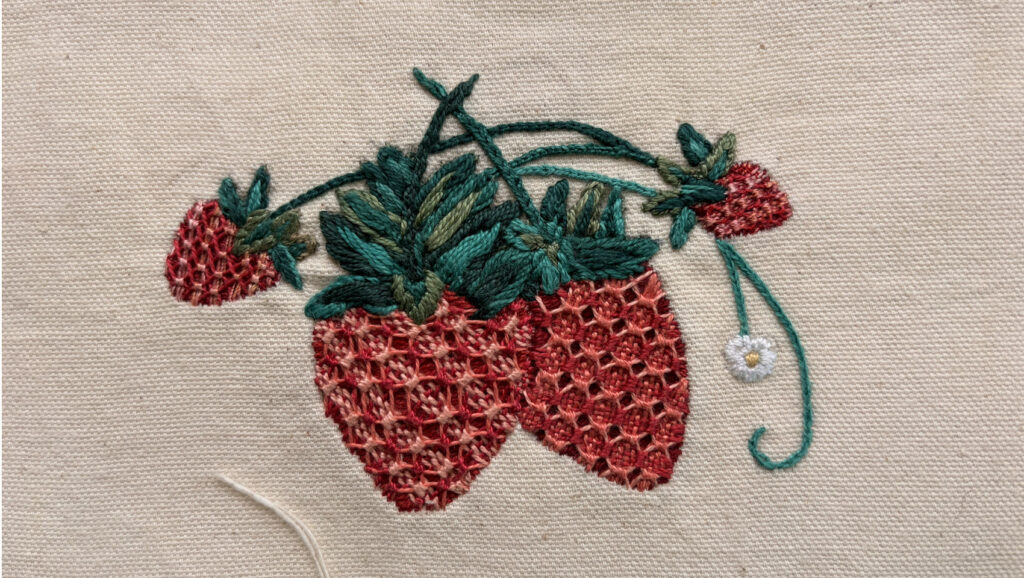
Mexico City is a city shaped by its streets, markets, shared meals, and the everyday gestures that bring people together. In this class, Mexican artist and author Gimena Romero introduces bordado callejero, exploring the cultural traditions, stories, and spirit of community that inform Mexican embroidery. Through storytelling, imagery, and historical context, participants will encounter the cultural and emotional landscape from which these stitches emerge.
Students will learn a family of intricate stitches rooted in traditional Mexican embroidery, exploring their rhythm, structure, movement, and expressive possibilities. These techniques will be applied to an everyday cloth inspired by the chiquihuite, a textile used to cover, protect, and keep food warm. Textiles have long accompanied the rituals of food preparation and sharing in Mexico, from wrapping tortillas and covering bread to bringing food to the center of the table. Through embroidery, these simple objects become expressions of nourishment, hospitality, and care.
Combining traditional techniques with color and personal expression, participants will begin creating their own embroidered cloth while exploring the relationship between textiles, food, and community. The class offers an opportunity to experience embroidery not simply as a technique, but as a way of looking, remembering, and preserving cultural histories through the objects that shape everyday life.
Date
Thursday, January 21st, 2027
Time
11:00-3:00 pm ET
Location
Zoom, a link will be sent to participants the day before class
Cost
$75
Recording
All World Embroidery Series sessions will be recorded. A link to each recording will be emailed to all registrants following the live session. Each link is live for three months after the live session.
Class Materials
- Pearl cotton embroidery thread (Perlé cotton): Size 3 or size 5, in your preferred color palette.
- All threads must be the same size.
- Embroidery needles: Size 20 or 22, with large eyes.
- Both sharp- and blunt-tip needles are recommended.
- Embroidery scissors.
- Embroidery hoop.
- Fabric with the pattern transferred
- Transfer the provided pattern onto your fabric, at least 16 cm (6.3 inches) wide.
- Pattern will be provided ahead of class
About the World Embroidery Series
TATTER’s World Embroidery Series is a celebration of global embroidery craft. Sewists will encounter an astonishing array of culturally specific techniques, and will have the opportunity to learn from accomplished practicing teachers who are equally purposed in preserving heritage techniques.
Bundle Discount
When four World Embroidery classes are added to your cart, a 25% off code will be automatically applied. All classes must be in a single order to qualify for the discount.
Scholarships
We have one scholarship seat available for this workshop. To be considered for a scholarship, please fill out this scholarship application form.
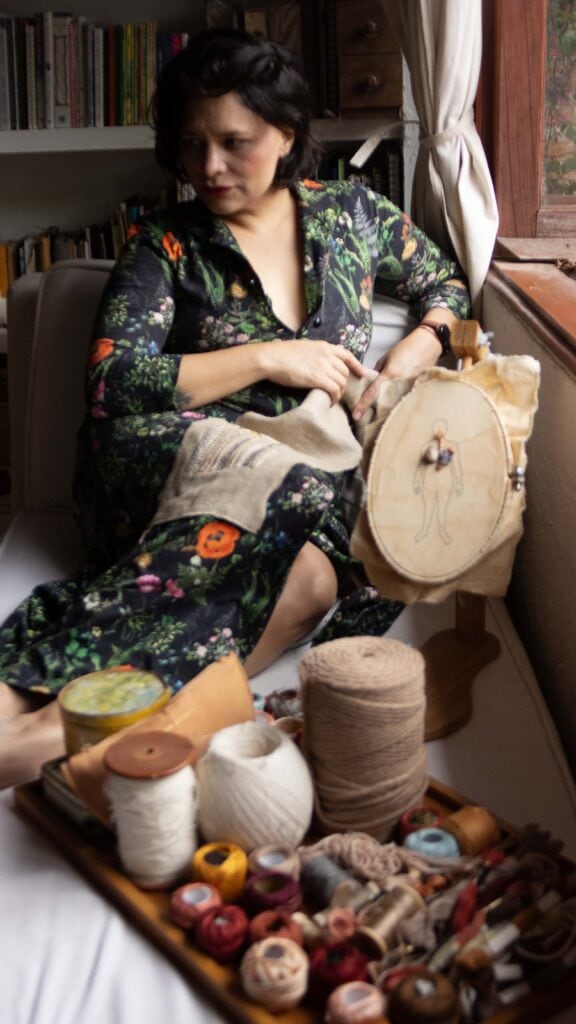
Our Teacher
Gimena Romero is a visual artist, author, and researcher based in Mexico City. She holds a BFA in Visual Arts
from the National School of Painting, Sculpture and Printmaking La Esmeralda and an MFA in Visual Arts Production and Research from UNAM. She also studied at the École Nationale Supérieure des Beaux-Arts de Lyon in France and pursued studies in symbolism.
Her practice is rooted in textile-based graphic processes, with embroidery as the central medium of her artistic production. She specialized in haute couture embroidery at
Maison Lesage in Paris; goldwork embroidery as a cofrade in Seville, Spain; and historical techniques such as blackwork and needle lace at the Royal School of Needlework in England. She has also conducted research at the Victoria & Albert Museum in London.
She has authored one of the earliest contemporary studies on Mexican embroidery. Her work has been exhibited in Mexico, Brazil, Argentina, France, Portugal, Ukraine,
Slovakia, Spain, and Switzerland, and is part of private and institutional collections, including the Banco de México and the Museum of Historical Memory of Sant Cugat, Spain.
Her publications include nine books of narrative, poetry, and textile research published by Thule Ediciones, Fundación Armella Spitalier, Editorial Gustavo Gili, and Editorial GG, with translations into English and Russian and international distribution. She collaborates with cultural institutions and museums, including the Franz Mayer Museum in Mexico City.
Her work intertwines memory, migration, territory, lineage, body, and alchemy through textile techniques that move between the ancestral and the contemporary. Romero’s work investigates embroidery as a symbolic and material language through which memory, lineage, territory, and the body are woven into contemporary visual narratives.