
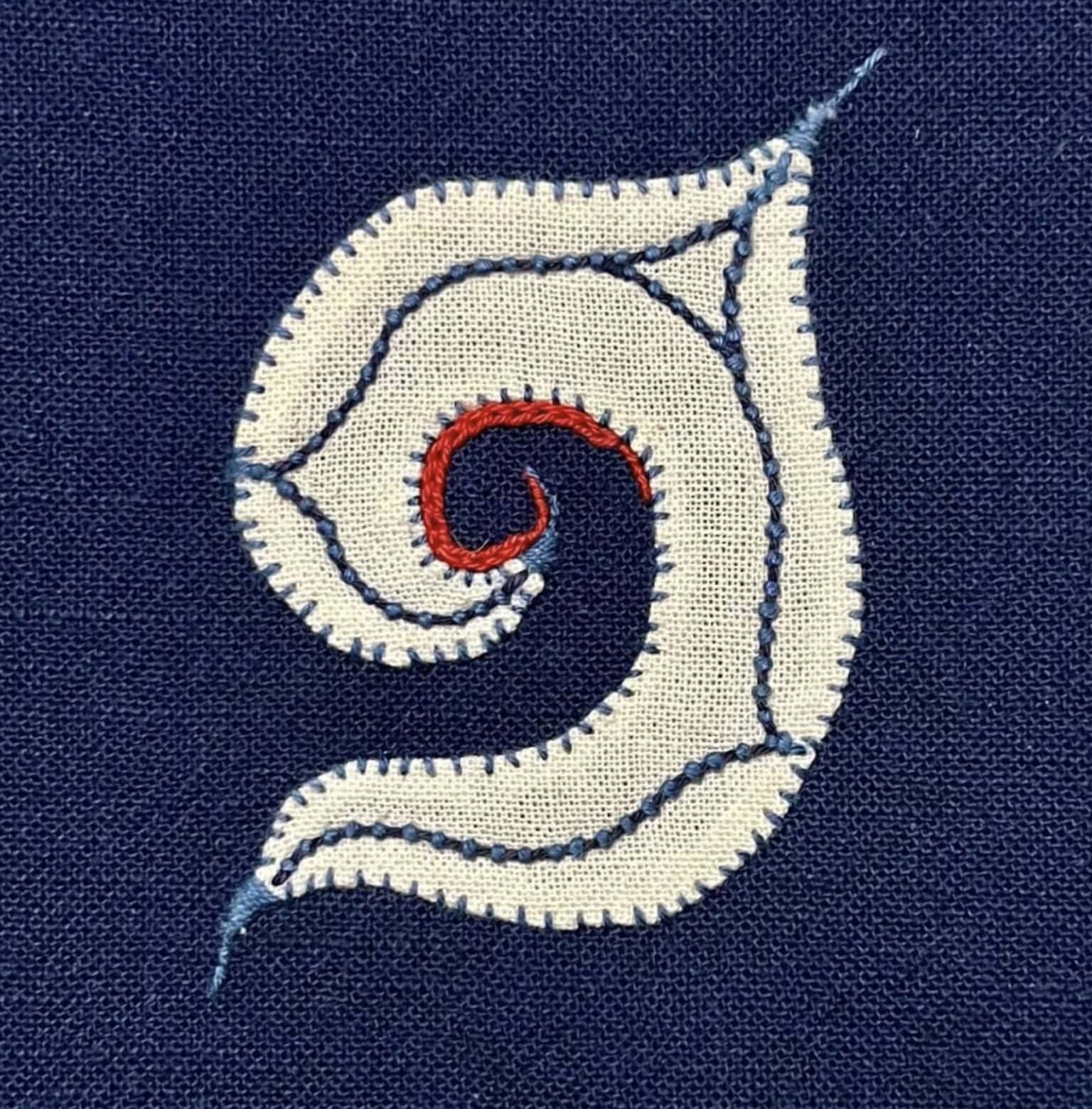
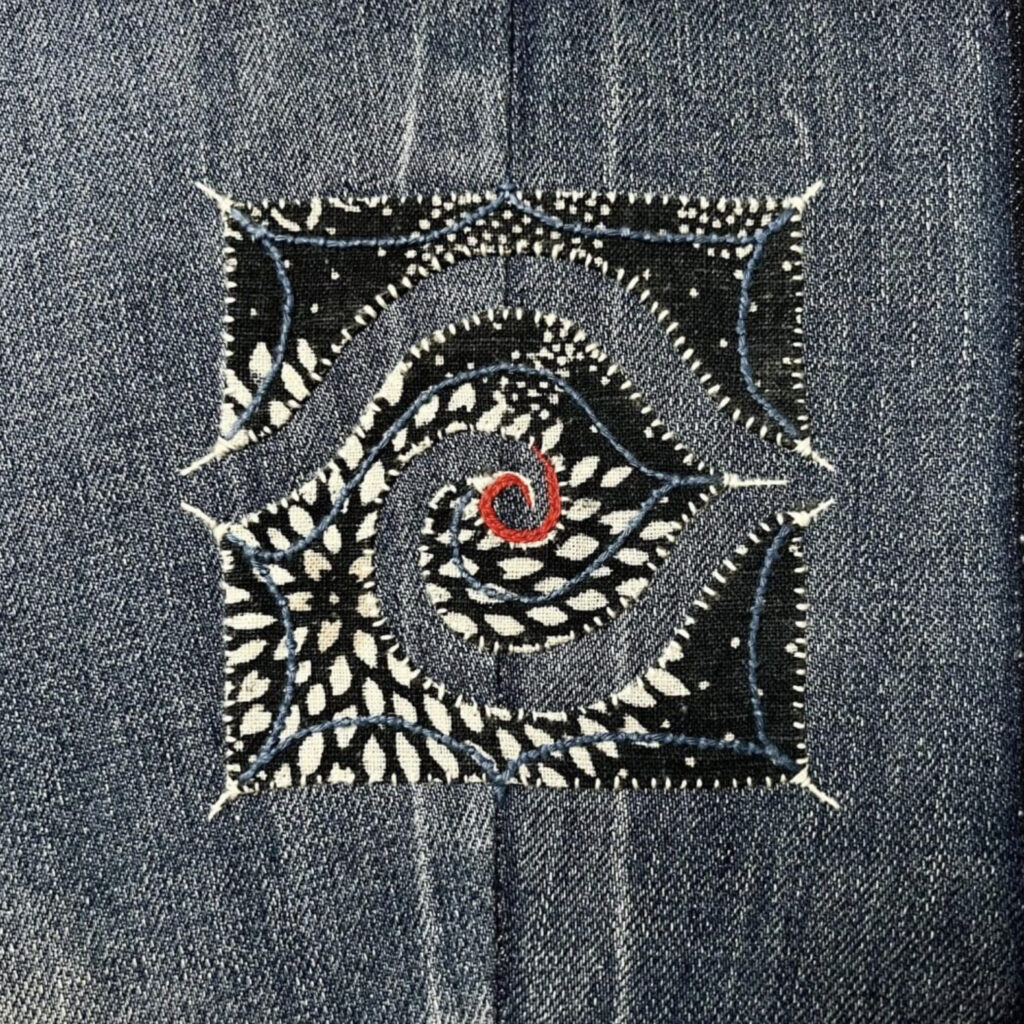
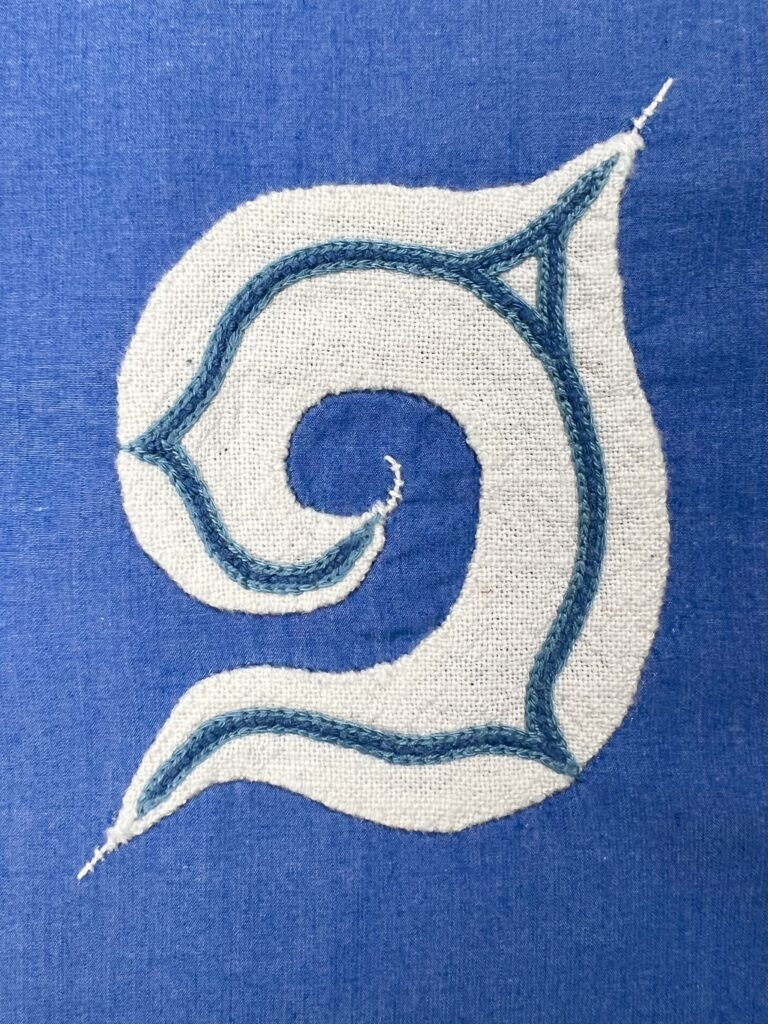
It’s believed in Ainu culture that textiles have souls and the power to ward off evil spirits. An Ainu woman puts her heart and soul into each stitch of her embroidery, because a garment made without passion would not have a soul. The Ainu, with their distinctive language, religion, and culture in Japan, have always lived in harmony with nature and showed gratitude to the natural world.
In this class, Selina will walk you through a brief history of the Ainu, share images of traditional Ainu textiles, and look into Ainu material culture. She will also discuss contemporary approaches from Ainu artists.
You’ll be invited to explore one of the Ainu embroidery techniques: Kaparamip, which means cutting and applying thin cloth. Selina will demonstrate the full process of this technique covering basting stitch, circular reverse appliqué, high density whip stitch, couching stitch and chain stitch. By the end of class, you will be able to create a sample of the basic Ainu motif, Moreu (spiral), and use these skills to explore more complex patterns.
A detailed PDF instruction on how to transfer the design pattern to fabric will be shared one week before the class, so that focus during class is on the stitching techniques.
Date
Thursday, October 22nd, 2026
Time
12:00-2:30 pm ET
Location
Zoom, a link will be sent to participants the day before class
Cost
$75
Recording
All World Embroidery Series sessions will be recorded. A link to each recording will be emailed to all registrants following the live session. Each link is live for three months after the live session.
Class Materials
- Base fabric (5x6in minimum): medium weight non-stretch woven cotton, linen, or denim. Lightweight fabric not recommended.
- Appliqué fabric (4×3.5in): lightweight non-stretch woven cotton fabric (poplin, bed sheet, shirt, Sarashi fabric). Wash, dry, iron all fabrics in advance to avoid shrinkage and color bleeding.
- Thick thread for couching stitch: Olympus Sashiko thread thick type, Daruma Sashiko thread thick type, DMC pearl cotton No. 8.
- Thin thread for whip stitch and chain stitch: Olympus Sashiko thread thin type, Daruma Sashiko thread thin type, DMC pearl cotton No. 8, other cotton threads for hand stitching.
- Thread for basting: any type of sewing thread in contrast color to the appliqué fabric.
- Hand stitching needles (2pcs): Assorted gold eye sashiko needles (in different length, thickness and needle eye size).
- A pair of small sharp scissors for cutting fabrics and threads
- Sewing pins (10pcs)
- Thin cardboard (minimum 8x7in) as a working surface: any scrap packaging materials like cereal boxes will do.
- Carbon paper for transferring design pattern to appliqué fabric (1pc): Olympus carbon paper. Use blue for light colored fabrics and white for dark colored fabrics. Alternatives: using light box and fabric markers to transfer the design pattern.
- Washi tape for tracing design pattern
- Ballpoint pen in any color for tracing the pattern
- Fabric marker: FriXion recommended
About the World Embroidery Series
TATTER’s World Embroidery Series is a celebration of global embroidery craft. Sewists will encounter an astonishing array of culturally specific techniques, and will have the opportunity to learn from accomplished practicing teachers who are equally purposed in preserving heritage techniques.
Bundle Discount
When four World Embroidery classes are added to your cart, a 25% off code will be automatically applied. All classes must be in a single order to qualify for the discount.
Scholarships
We have one scholarship seat available for this workshop. To be considered for a scholarship, please fill out this scholarship application form.
Our Teacher
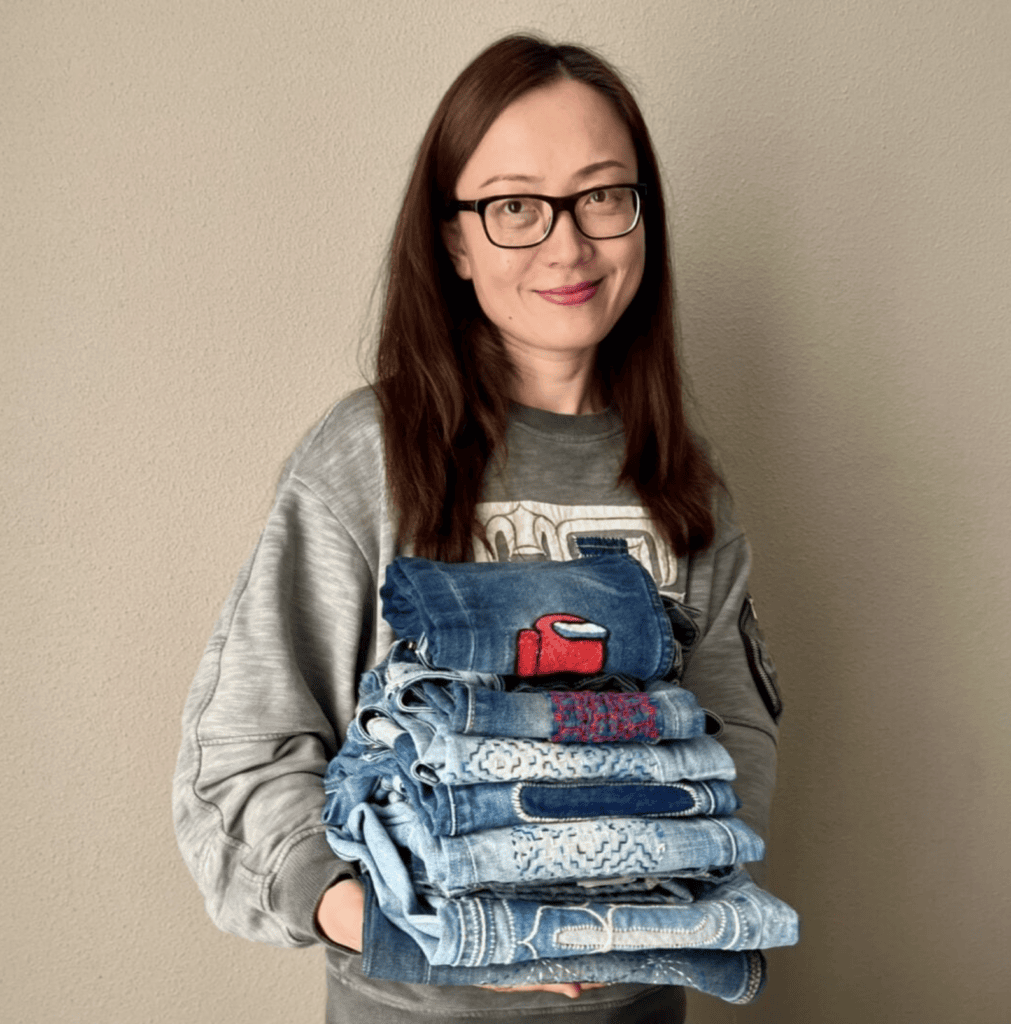
Selina Ben is a textile artist and mender based in Amsterdam, the Netherlands. With a professional background in textile product development, her passion for textiles has existed for as long as she can remember.
Selina is inspired by historical textiles around the world. Her curiosity about why the textiles were significant to a place, what materials were used and how they were made stimulates her creativity. With her practice, she hopes to preserve disappearing techniques, honor unknown makers and their cultural heritage.
Witnessing landfills overloaded with textile waste, Selina chooses to work with pre-used fabrics. All the signs of wear and tear on the fabrics are a source of inspiration for her creative process. With her hands, needles and threads, she brings the fabrics to a new phase of their lives so that people can start looking at our relationships with textiles differently.
Selina believes stitching by hand is the best form of meditation. The repetitive motions of arms, wrists, fingers, needle and thread bring peace of mind and a sense of accomplishment. As time goes by, the grounded feeling arises, the positive energy grows, and a new work is born.
Selina’s practice can be found at www.unwrittenstitch.com and Instagram @selinaam05.