
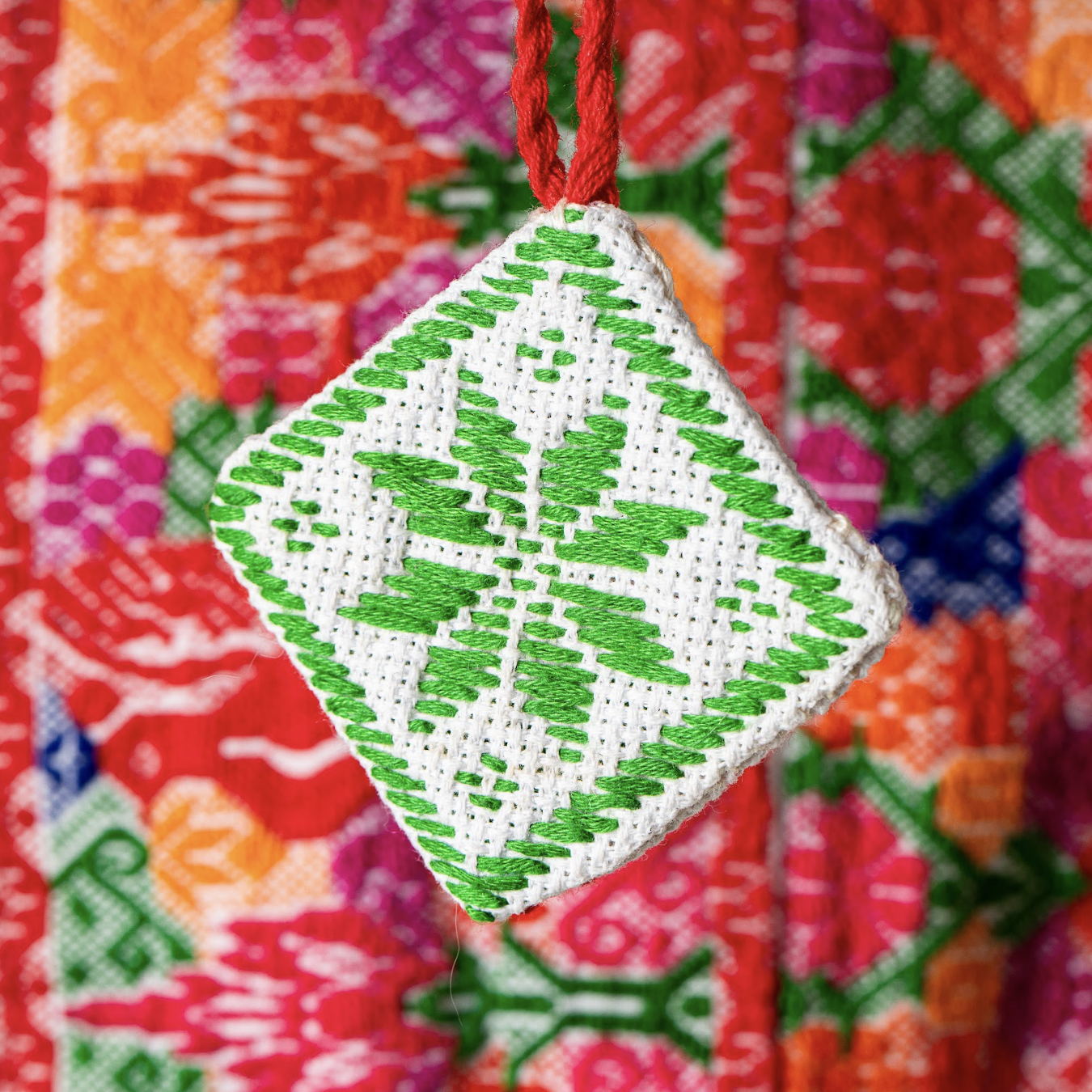
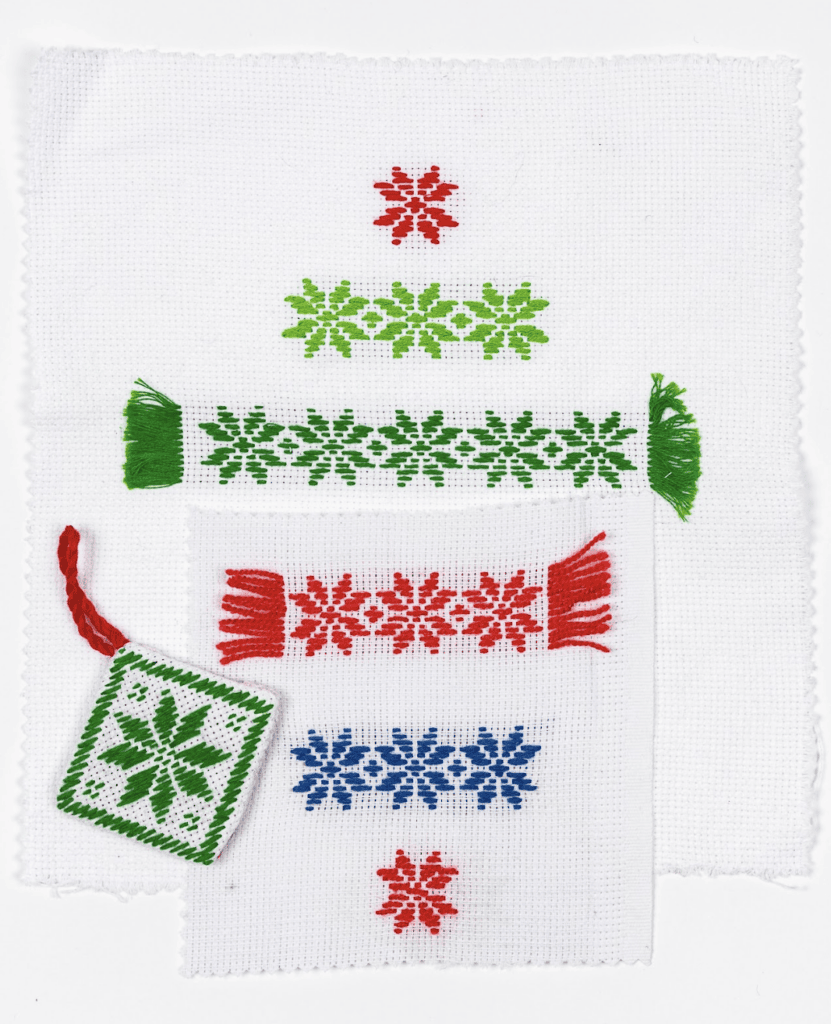
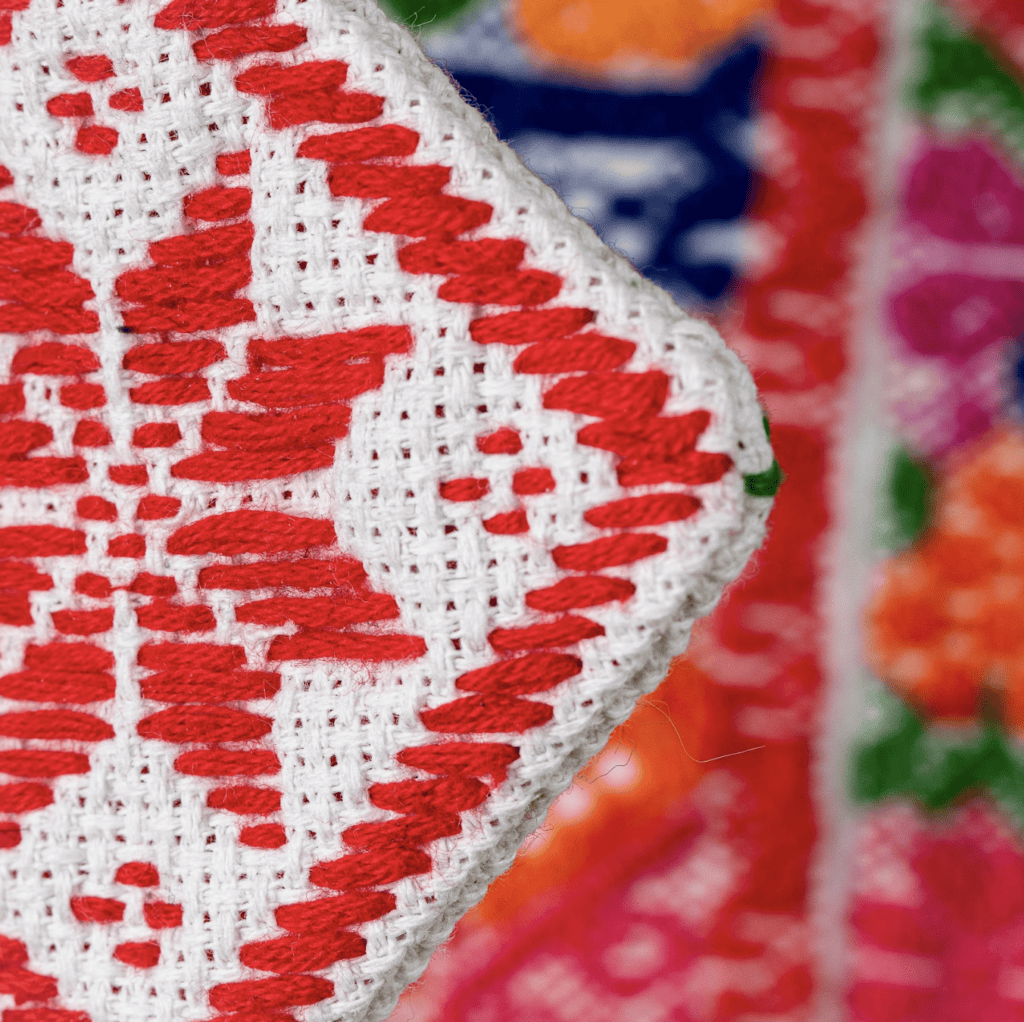
Mexico’s extraordinary biodiversity and cultural history are reflected in its vibrant textile traditions. Across the country, embroidery styles vary widely, even within a single region, where different stitches, textiles, and techniques coexist and evolve.
While there is no evidence of embroidery in pre-Hispanic Mexico, weaving has long been a foundation of textile artistry. On the backstrap loom, artisans developed a decorative method called supplementary weft, which introduces extra colors and motifs directly into the fabric. Closely tied to this practice is pepenado, a technique where threads of the warp are carefully picked up to create designs, adding both color and pattern to the woven surface. Over time, pepenado evolved into an embroidery tradition, carrying forward this weaving heritage.
The motifs of pepenado are deeply meaningful, drawing on cosmogonic and mythical imagery, scenes from daily life, and elements of the natural world. Common subjects include animals such as birds, turkeys, dogs, horses, donkeys, cats, rabbits, and pigs, as well as flora like corn, grapes, flowers, vines, leaves, and trees. Religious symbols, such as virgins and crosses, also appear frequently, alongside striking geometric patterns including triangles, rectangles, circles, and stars.
In this workshop, participants will be introduced to the history and cultural significance of pepenado embroidery, explore its wide vocabulary of motifs, and learn the foundational stitches of the technique. Together, we will discover how this centuries-old practice continues to be a living form of artistic expression, storytelling, and connection to nature and community.
Date
Thursday, August 20th, 2026
Time
12:00-2:30 pm ET
Location
Zoom, a link will be sent to participants the day before class
Cost
$75
Recording
All World Embroidery Series sessions will be recorded. A link to each recording will be emailed to all registrants following the live session. Each link is live for three months after the live session.
Class Materials:
- Needle
- A blunt (pointless) needle
- Any size between No. 20 and No. 24 is recommended, depending on the fabric’s weight
- Fabric
- Aida No. 10 or jute is ideal for beginners, but any plain fabric that makes the warp and weft visible will work
- Thread
- Cotton embroidery floss, acrylic thread, or wool can all be used
- For open-weave fabrics such as jute or Aida, it is best to use all six strands of embroidery floss, or a yarn with a thickness similar to the fabric’s threads
- Scissors
- Embroidery hoop (optional)
About the World Embroidery Series
TATTER’s World Embroidery Series is a celebration of global embroidery craft. Sewists will encounter an astonishing array of culturally specific techniques, and will have the opportunity to learn from accomplished practicing teachers who are equally purposed in preserving heritage techniques.
Bundle Discount
When four World Embroidery classes are added to your cart, a 25% off code will be automatically applied. All classes must be in a single order to qualify for the discount.
Scholarships
We have one scholarship seat available for this workshop. To be considered for a scholarship, please fill out this scholarship application form.
Our Teacher
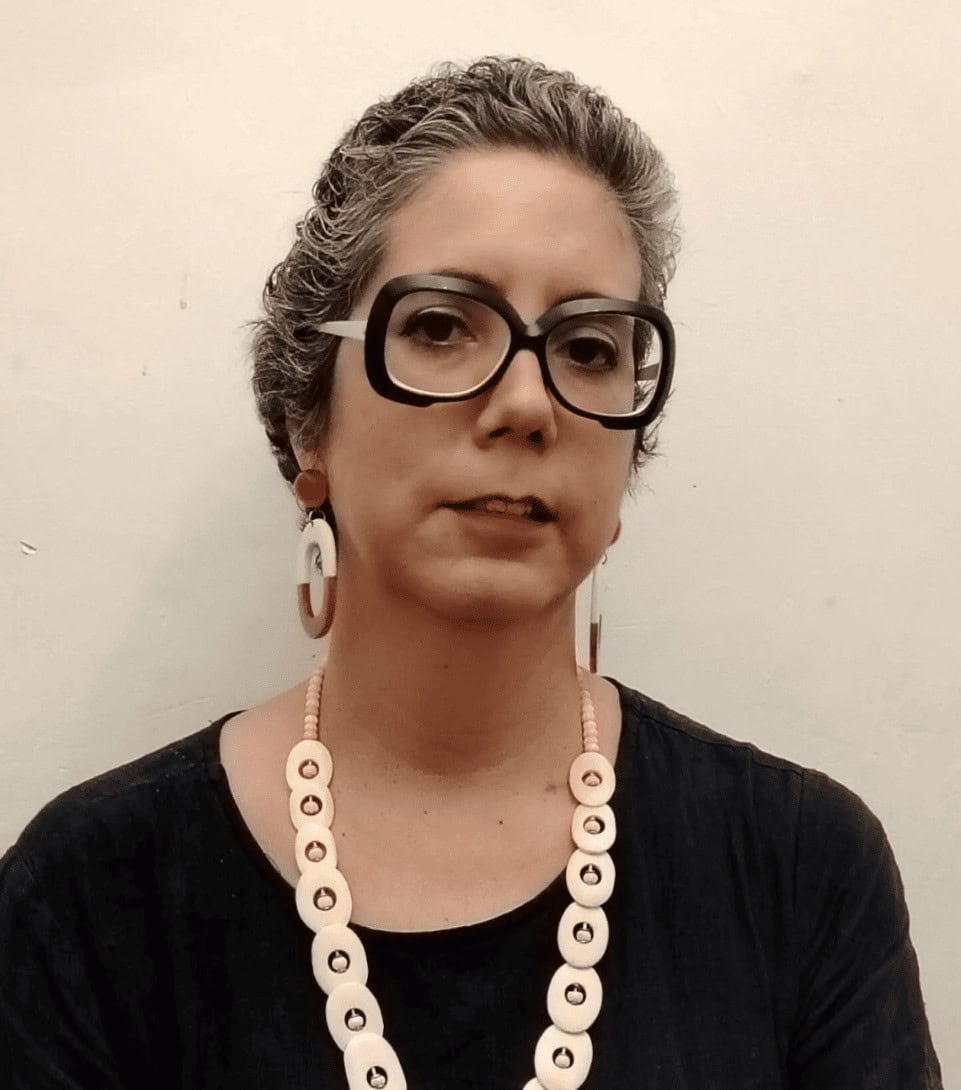
Maité Jiménez is a textile artist and teacher born and raised in Mexico City, where she has been surrounded by textiles all her life. As a child, Maité’s grandmother embroidered and made bobbin lace, while her mother and aunts would embroider, weave, and knit. This early exposure to textile creation led Maité to study Textile Design at the Universidad Iberoamericana in Mexico City, where she deepened her exploration of the textile arts. Maité went on to work in automotive textiles for 7 years with Guilford Mills in Mexico City, specializing in Jacquard weaving, but remained fascinated by her country’s rich textile traditions and began a self-guided immersive exploration of Mexican textile traditions. Maité has researched and studied traditional techniques with artisans from Oaxaca, Chiapas, Hidalgo, Puebla, and State of Mexico. Through this journey, Maité has learned how challenging it can be to find teachers of traditional Mexican textile techniques. Now, Maité makes these learnings more accessible to curious minds like herself by running an Airbnb experience in which she shares her passion for traditional Mexican textiles with textile lovers from around the world. Maité also works alongside her sister, making costume pieces for independent theater, film, and dance companies.