
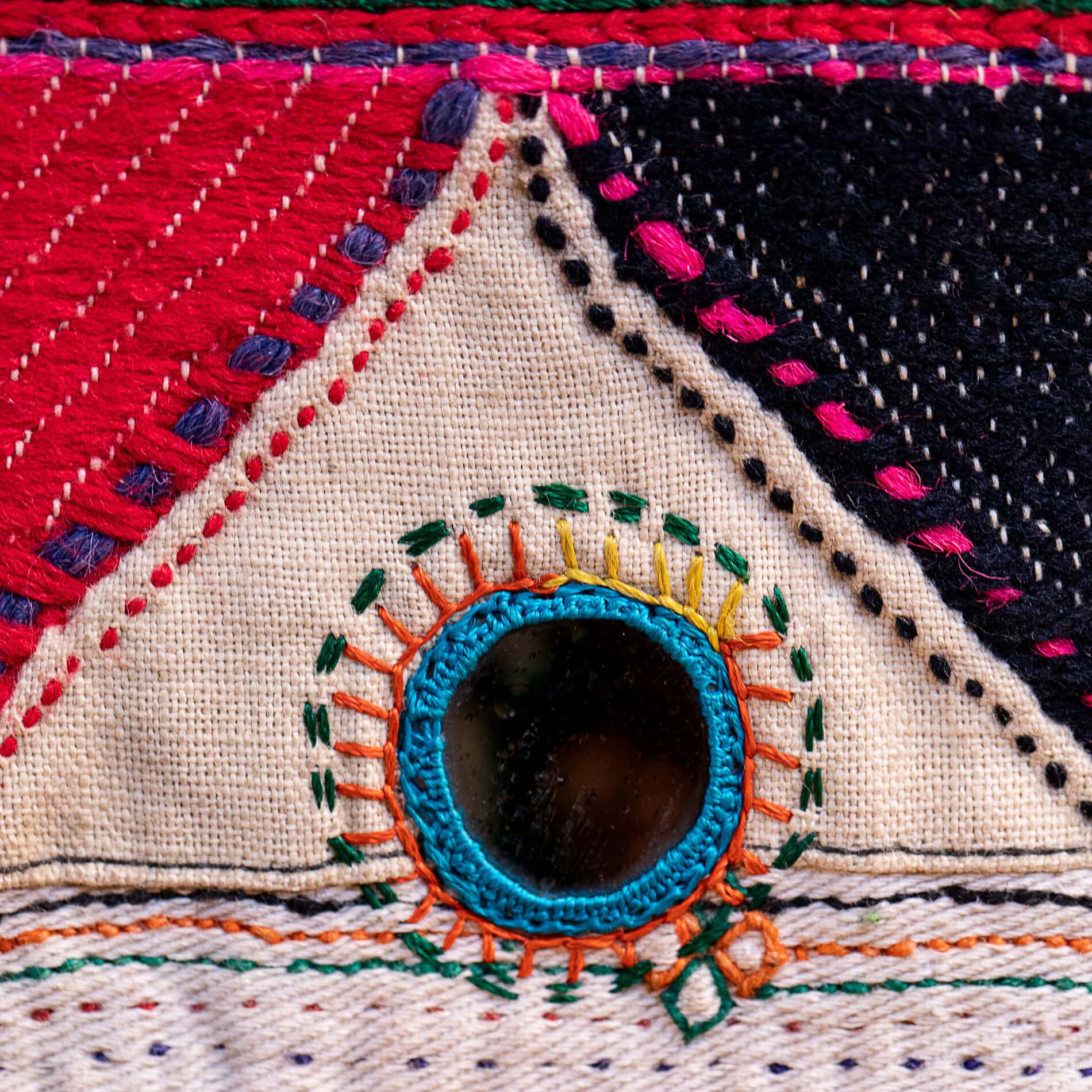
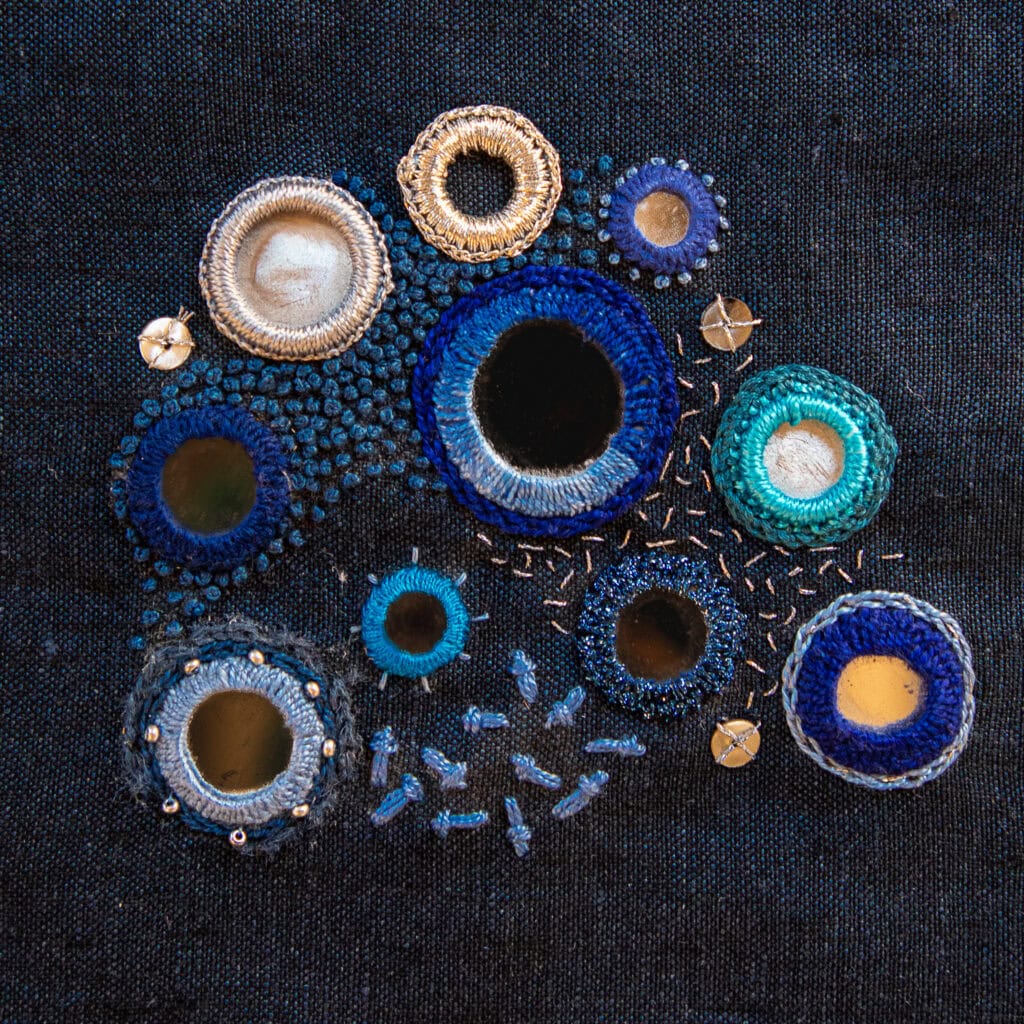
Indian mirror work, known as Shisha, is the ancient Indian embroidery technique of attaching tiny mirrors onto fabric. Developed during the 17th century, it is practiced widely throughout India and the East and has many variations.
In this class, students will be introduced to the history of Shisha, while learning the traditional technique of creating a grid across the mirror which can then be stitched open creating a border.
Students will be encouraged to reflect on the cultural significance of embroidery and what it can teach us about the history and traditions of our own and other cultures.
Date
Saturday, September 12th, 2026
Time
12:00-4:00 pm ET
Location
TATTER Textile Library: 505 Carroll Street, #2B, Brooklyn, NY 11215
Cost
$150
Class Materials
All materials will be provided.
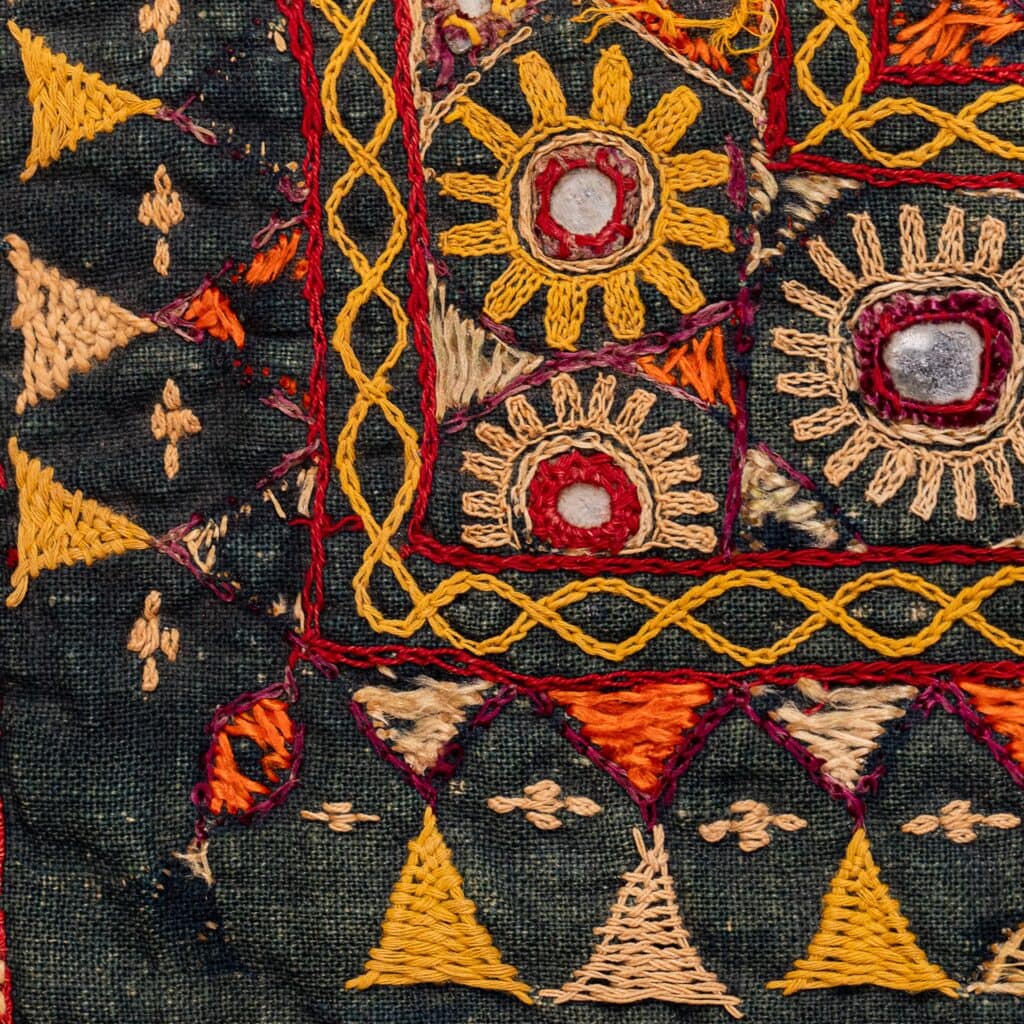
Shisha, Kantha, and Kachchh: South Asian Domestic Embroidery in the TATTER Collection is the first long-term exhibition in the Blue Library. Pulling together and highlighting pieces from our collection that present domestic textiles as works of art and their makers as artists, this exhibition will include shisha mirrorwork panels, kantha-stitched coverings for the home, and Kachchh (Kutch) dowry bags. These objects incorporate traditional motifs reflective of rural and nomadic life in the delta and desert regions of India, Bangladesh, and Pakistan. While they display the creativity and individual hands of the women and girls who made them, they also show signs of life in their wear and stains.
This exhibition emerged as a complement to our educational programming, lending materiality and context to the techniques our beloved veteran teachers, Ekta Kaul and Shahnaz Khan, have been offering our TATTER community for years. Shisha mirrorwork and Kachchh work, as taught by Shahnaz, are practiced by several nomadic communities in modern day India and Pakistan. Shisha is the process of attaching mirrors, coins, or otherwise reflective ornaments to cloth by encircling them with tightly stitched borders. Kachchhwork, also known as Sindhi Tarpoa or Sindhi Kadhai, originated in the Kachchh region and is created by stitching crosses side by side and then interconnecting them through a series of woven stitches. Kantha, as taught by Ekta, is an embroidery and quilting technique practiced for centuries by Bengali women in which cotton cloth, often reused from worn-out garments, is layered together for durability and embellished with brightly colored threads.
Our in-person exhibition will be available for early viewing to students attending Ekta’s Illustrative and Geometric Kantha classes on August 13th and 14th. The exhibit will be open to the public from September to December, with an expanded digital exhibition freely available on our Substack.

Our Teacher
Shahnaz Khan is an embroidery artist and educator focused on the preservation of traditional techniques and their use in contemporary art.
Connected through her cultural heritage to Pakistan and Greece, Shahnaz loves what can be gleaned about culture and history through the various adornments of cloth with a needle and thread.
Her embroidery practice has led her to work on a variety of projects including visual art collaborations and couture fashion. She has worked with Alexander McQueen, Burberry and was part of the team that created Chappell Roan’s look for the 2025 Met Gala.
An interview with Shahnaz is included in Jen Hewett’s 2021 publication, “This Long Thread: Women of Color on Craft, Community, and Connection”.
Shahnaz lives in New York City where she works as a costume tailor for Broadway, film, & television, while maintaining her embroidery practice.
Shahnaz loves teaching and hopes to be able to inspire her students to incorporate traditional embroidery techniques into their contemporary work.