
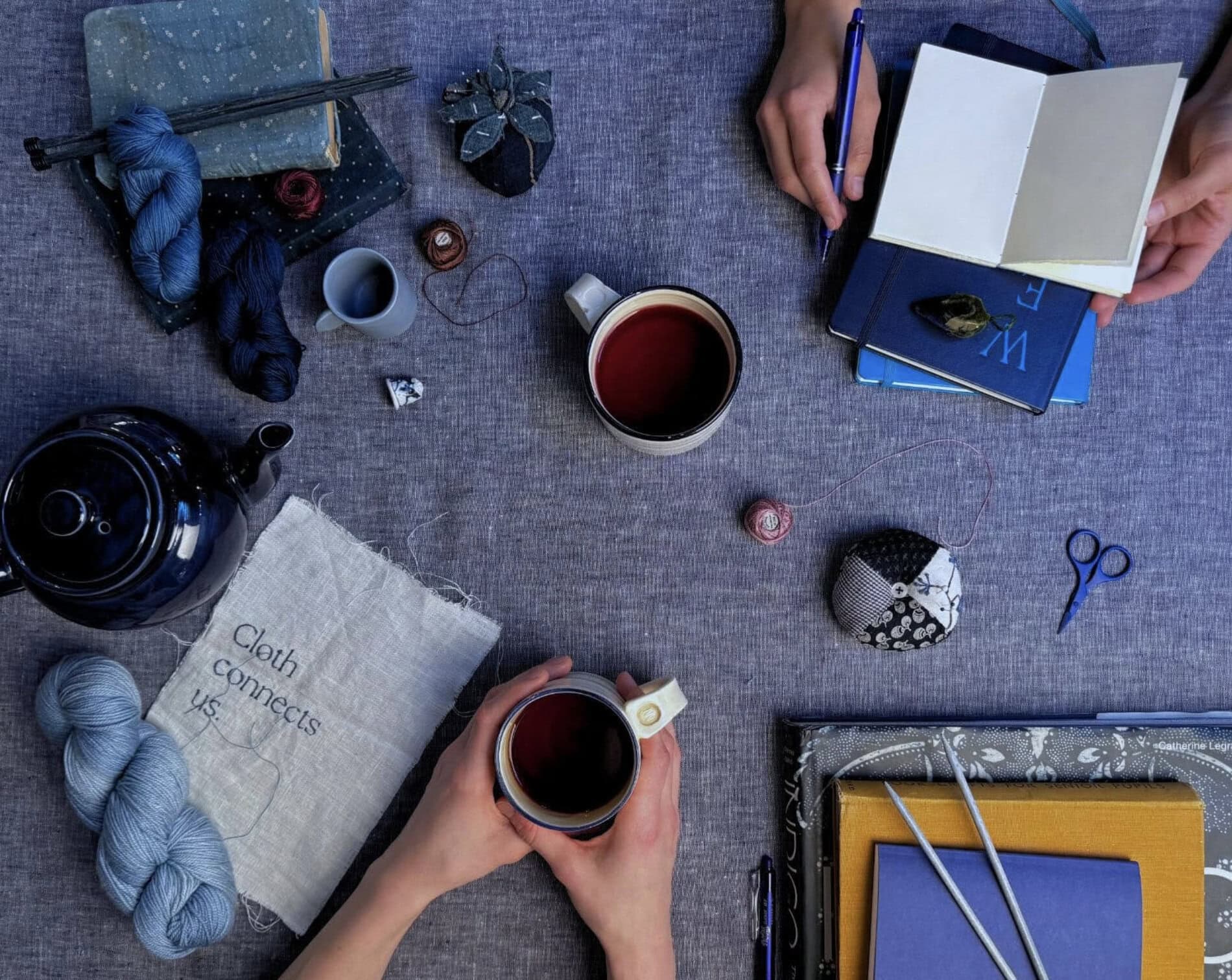
What does it mean to make something by hand? How does the act of making—slow, tactile, attentive—shape the way we think, relate, and imagine our worlds?
TATTER Reading Group invites you into a shared exploration of craft, creativity, and meaning. Together we’ll read a mix of essays, fiction, memoir, and myth, considering how acts of making—woven, stitched, written, worn—become ways of thinking and being. Each session will include guided discussion and, when it feels right, optional time for generative writing or simple hands-on making inspired by the readings.
We’ll meet once a month for three sessions, with plans to reconvene in the fall. You’re warmly invited to join us in person at the library or virtually. Online participants may listen live and contribute observations or questions via chat, which will be woven into the conversation.
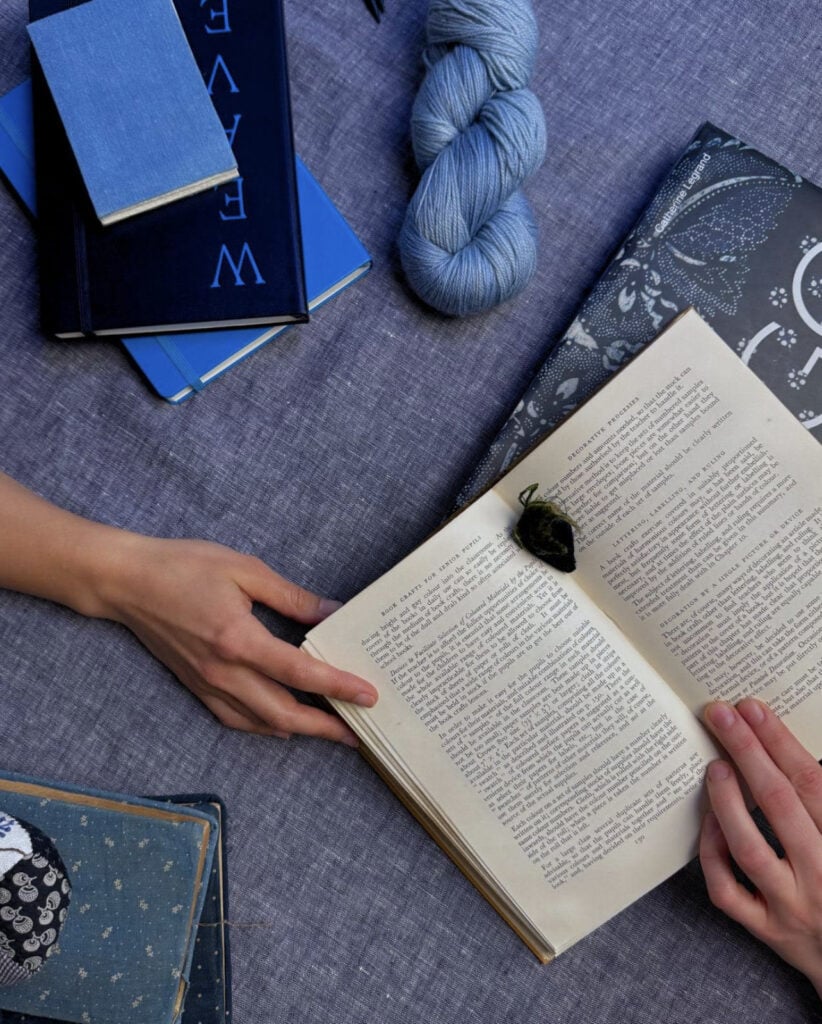
Session 1: Labor and Garment
Reading: “The Threaded Needle” by Merce Rodore or “The New Dress” by Virginia Woolf
Returning to the relationship between sewist and garment, we’ll read “The Threaded Needle” by Merece Rodoreda, who worked as a seamstress to support herself while in exile from Barcelona during Franco’s rule in the mid- to later-20th Century. If time permits, we can connect back to Woolf, whose “The New Dress” also considers the seamstress but from the position of the person wearing the dress rather than the one making it.
We’ll explore:
- Why do we sew garments and how does this shape our relationship to them?
- What’s in the space between maker and garment made?
- What are the social expectations of garments and what do they reflect about the makers and wearers?
Session 2: Poems About Making
Readings: Anne Boyer’s “Garments Against Women” by Anne Boyer, “Placebo” by Mei-Mei Bersenbrugge, “Tender Buttons” by Gertrude Stein, and “Poem to my Yellow Coat” by Lucille Clifton
This session will focus on poetry and the various forms and language poets have used to write about garments.
We’ll explore:
- How do these poems, with their various innovations of language, give unusual views of garments and making?
- Can poetic forms of writing be a method for thinking about our own textile practices?
- What are the language and forms of writing involved in our own making practices?
Session 3: Sewn Identity
Reading: “Troubling Love” by Elena Ferrante
In session, we’ll talk about how the narrator of Ferrante’s novel attempts to understand her mother through the clothing that she had associated with her and the clothing that she is surprised by finding after her mother’s death.
We’ll explore:
- How are memories of loved ones shaped by the things they make and wear?
- How can clothing be a personal history?
- What is inherited through a hand-made wardrobe?
Dates & Times
Sundays, October 11th, November 15th, and December 13th, 2026
12-1:30 pm ET
Location
This is a hybrid event. You’re welcome to join us in person at TATTER (505 Carroll Street, Suite 2B, Brooklyn, NY 11215) or participate virtually via Zoom. A Zoom link will be sent to registered participants a few days before each session.
Cost
$25 per session for in-person attendance
AND
$15 per session for virtual attendance
OR all three sessions at the discounted price
Recording
Because of the personal and conversational nature of the reading group, sessions will not be recorded.
Level
All are welcome. Whether you’re an experienced maker, an avid reader, or simply curious about the relationship between thought and touch, this group is open to you. Come ready to read, reflect, and take part in a thoughtful conversation about how making shapes the worlds we inhabit.
Scholarships
We have five scholarship seat available per session. To be considered for a scholarship, please fill out this scholarship application form.
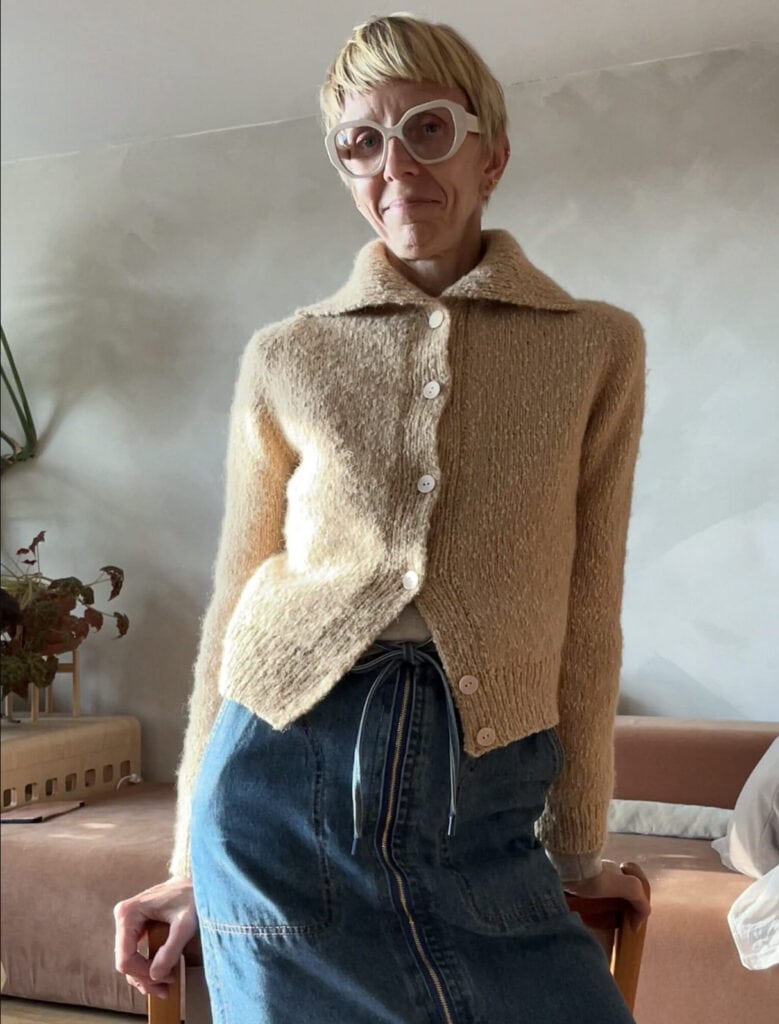
Our Conversation Starter
Vanessa Baish works in service of learning of all kinds, currently as a lecturer teaching literature at BMCC and in the public programs and exhibitions department of the Brooklyn Public Library. She first learned to knit as a child from her grandmother and learned the basics of sewing in middle school; she returned to both while in graduate school studying literature. Her thinking and making–wearable artifacts to thread journaling–are text/ile expressions of her love of material.