
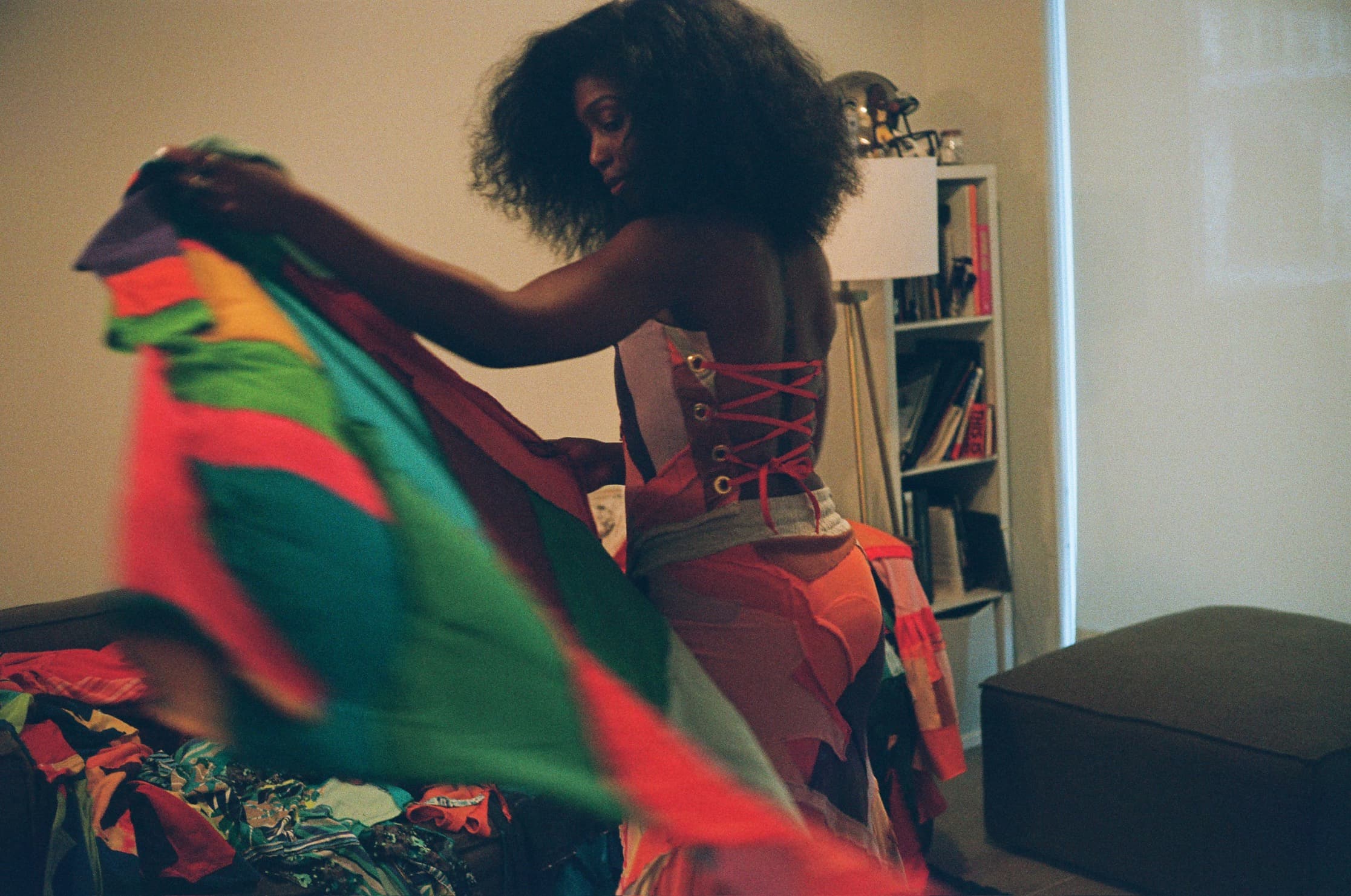
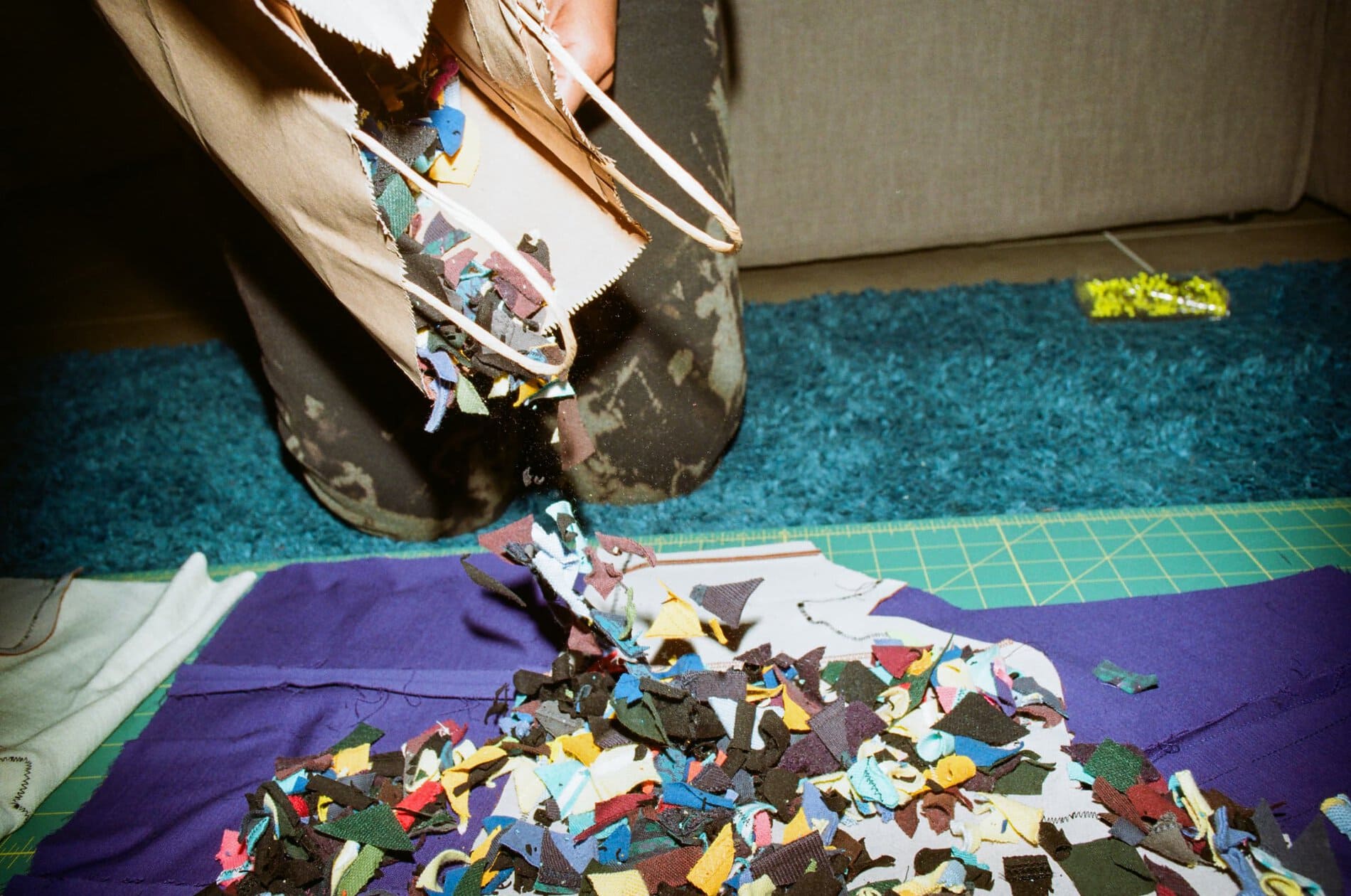
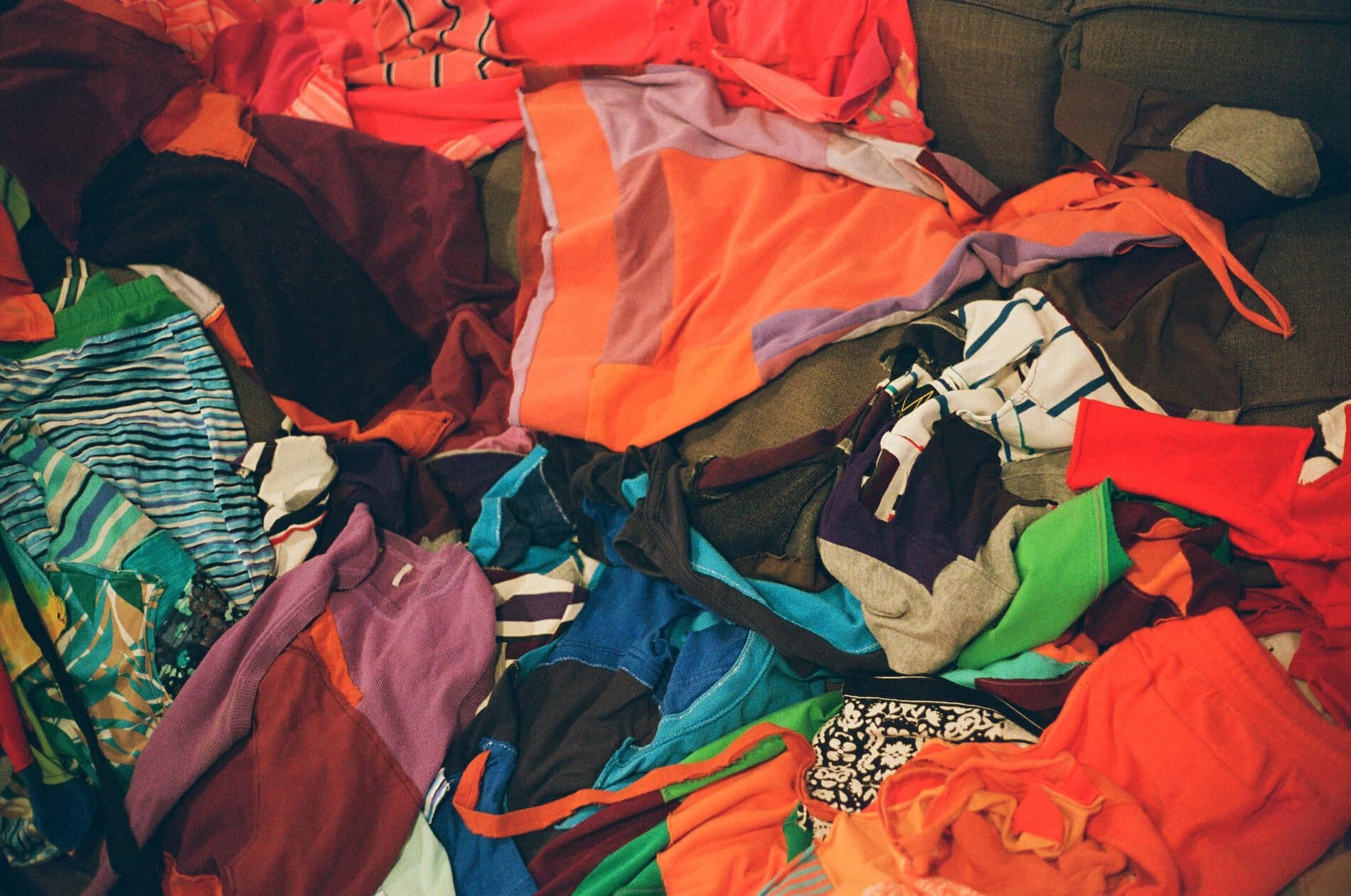
Mahdiyyah Muhammad’s passion for circular fashion began with her mother’s vintage discards: garments through which Muhammad found herself transported to distant moments and eras of fashion. If a piece was too large, Muhammad would pin it or make clothes for her dolls from the fabric. Everything could be reused.
As an artist and educator, Muhammad teaches history through materiality, with the understanding that everything (people, structures, textiles) has an origin story–and that these stories constantly intertwine. Muhammad’s own material preference for cotton, for instance, is wrapped up in the history of slavery of Black women like her. Cotton, which comes from and returns to the earth, becomes a valuable tool for understanding both the troubling history of enslavement and the regenerative properties of materials that hold its memory.
“As an artist and educator, Muhammad teaches history through materiality, with the understanding that everything (people, structures, textiles) has an origin story–and that these stories constantly intertwine.”
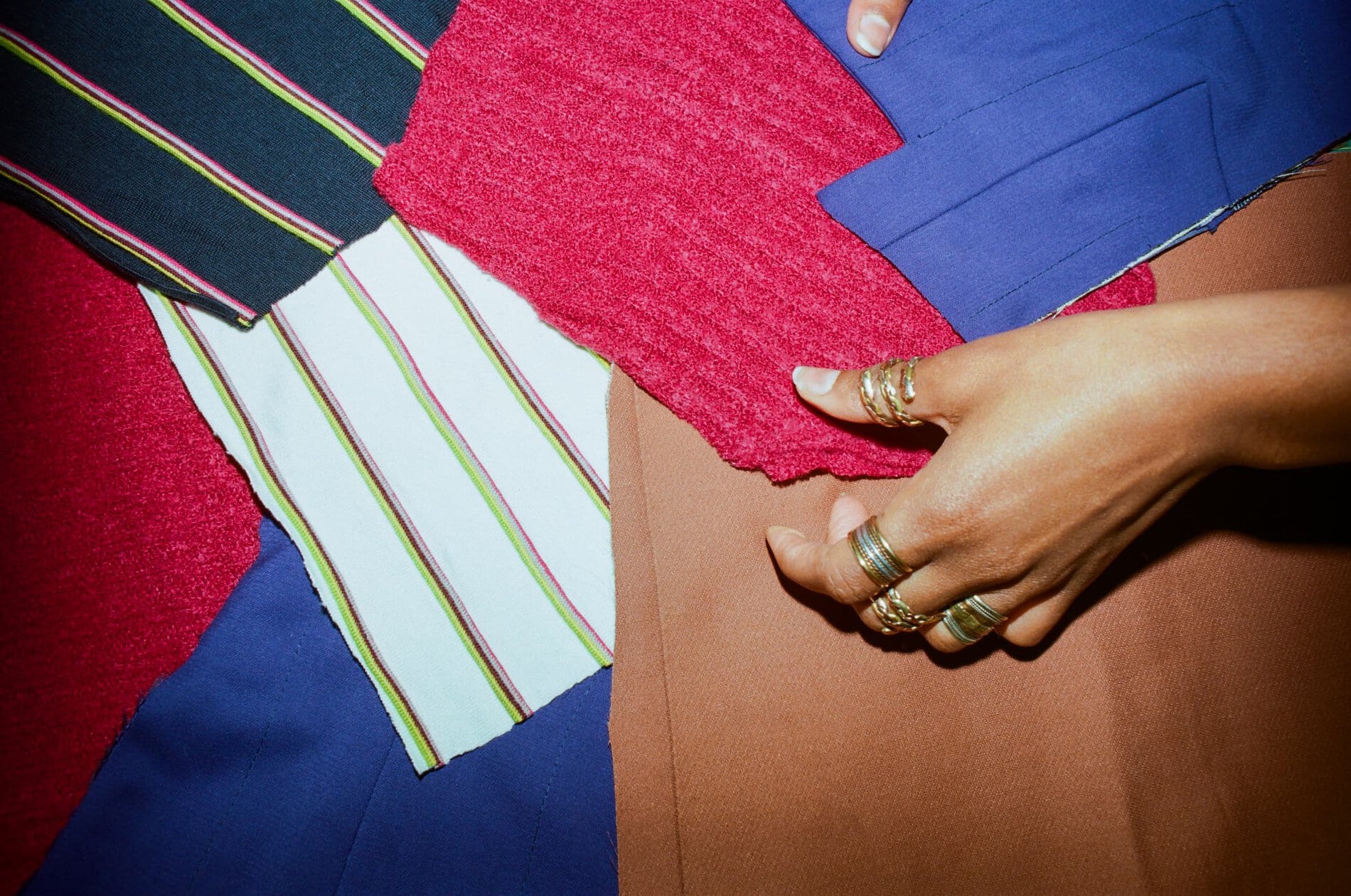
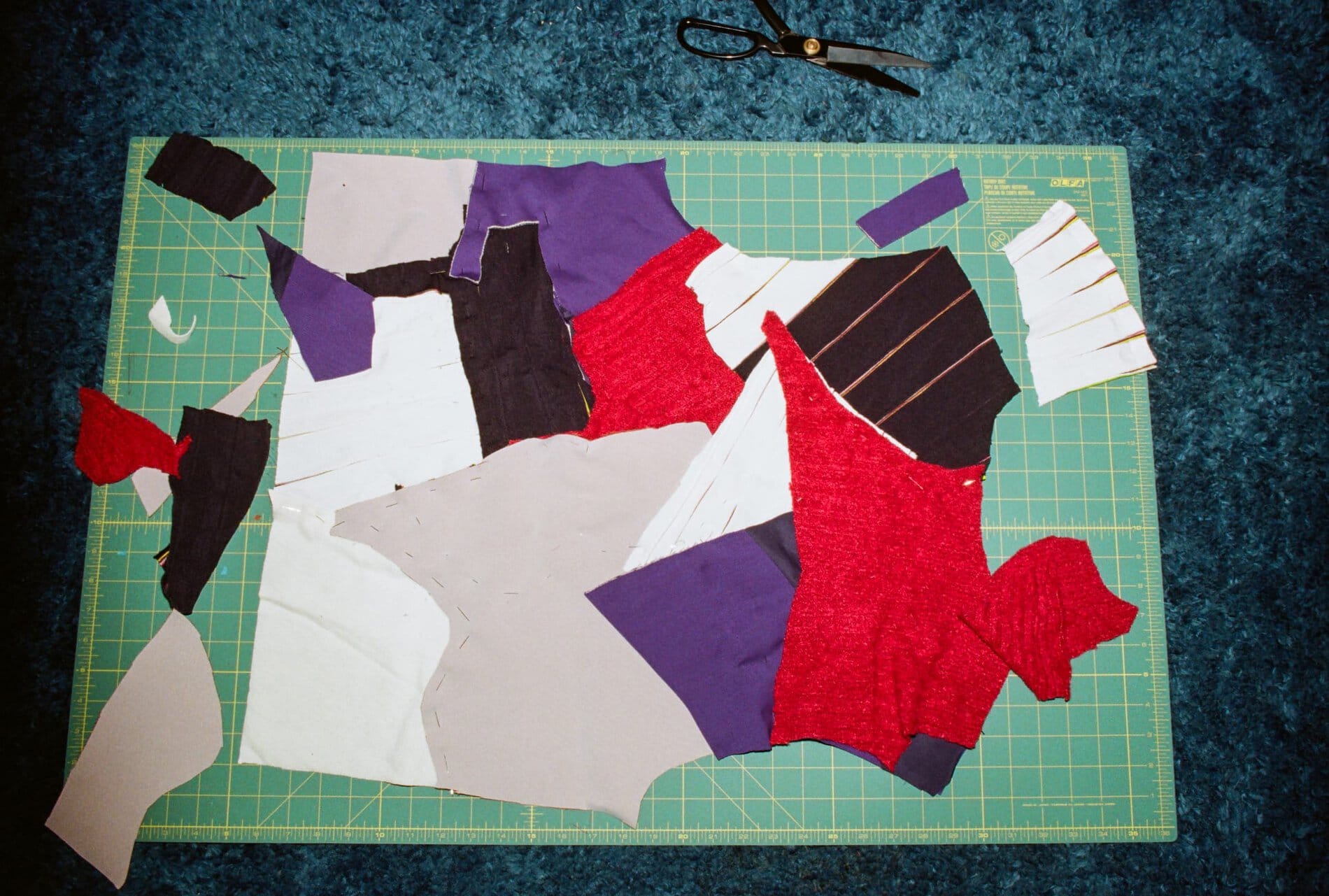
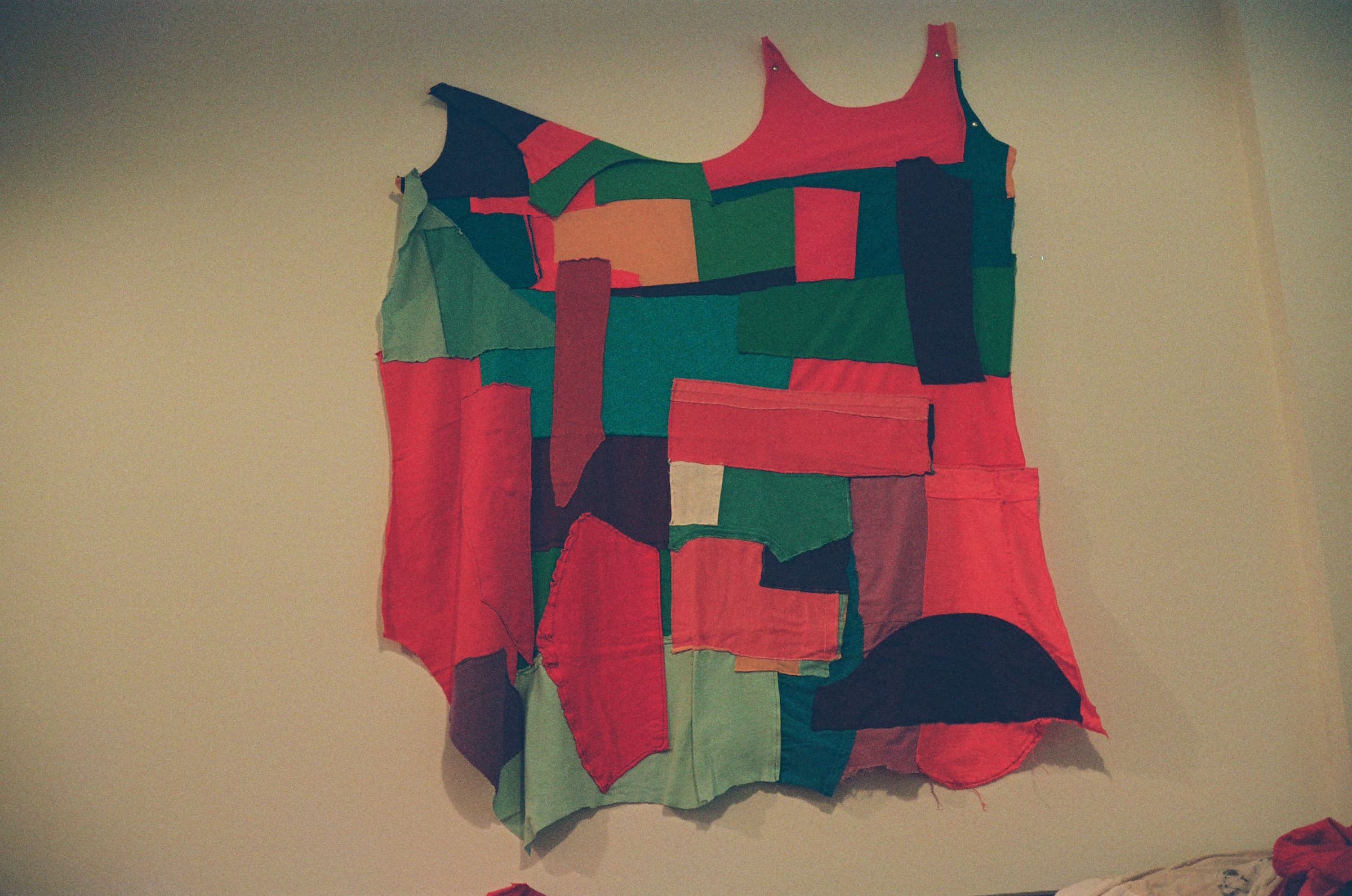
Muhammad describes a community as a sub-group in an ecosystem. Communal methods of teaching and learning create safe spaces for our elders to connect with younger generations and share sewing, patchwork, and quilting techniques that are sometimes dismissed as antiquated skills. These safe spaces foster conversations about sustainable practices. Muhammad’s workshops teach Black women of all ages about the preservation of our history through fabric. She opens the space to discuss environmental consciousness with two prompts: “Let’s discuss the clothing you all are wearing. Now, let’s discuss the sheets that you all sleep on.” Her inquiry process leads to the deconstruction of a cycle, centering textiles, community, and sustainability as three parts of the economic system that must be in communication as we strive to create an ethical future. Muhammad doesn’t just teach label literacy and vocabulary terms such as “polyester” and “microplastics”; she drives the conversation toward solutions, creating a full-circle practice to reclaim ancestral habits and knowledge. Muhammad calls this the “DNA technology” of Black and indigenous people whose practices have always been eco-friendly. These practices consider the beginning and end of life.
Currently, Muhammad quilts as a form of pleasure. Muhammad quilts to tell her own life’s story and to recapture the essence of her childhood. We must understand that we are in a relationship with what we wear because we are in direct contact with the materials of the world. Muhammad encourages us to invest in pieces that we can hold onto forever. Ultimately, her work is informed by a single question: What kind of ancestor am I becoming?
“Muhammad doesn’t just teach label literacy and vocabulary terms such as ‘polyester’ and ‘microplastics’; she drives the conversation toward solutions, creating a full-circle practice to reclaim ancestral habits and knowledge.”
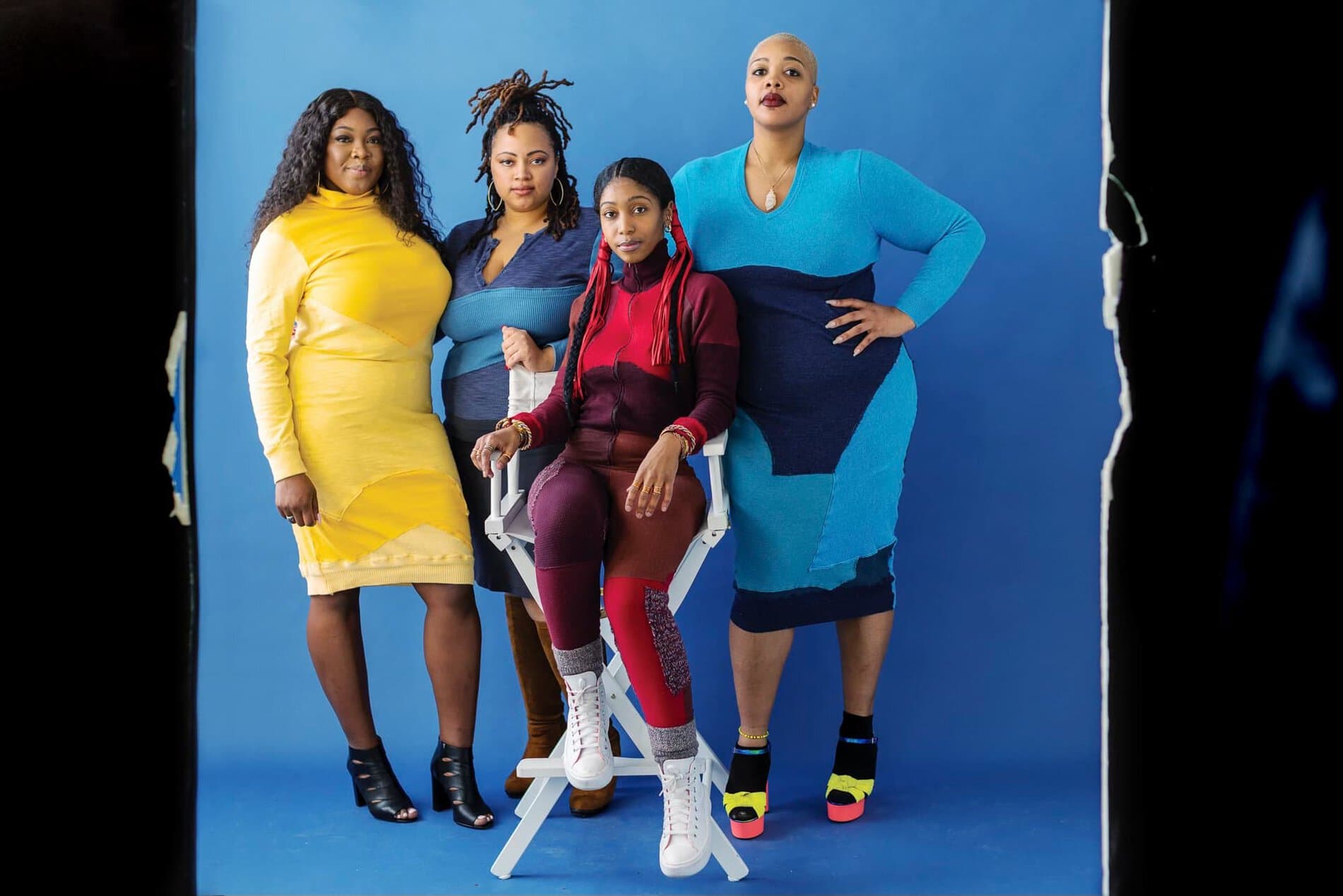
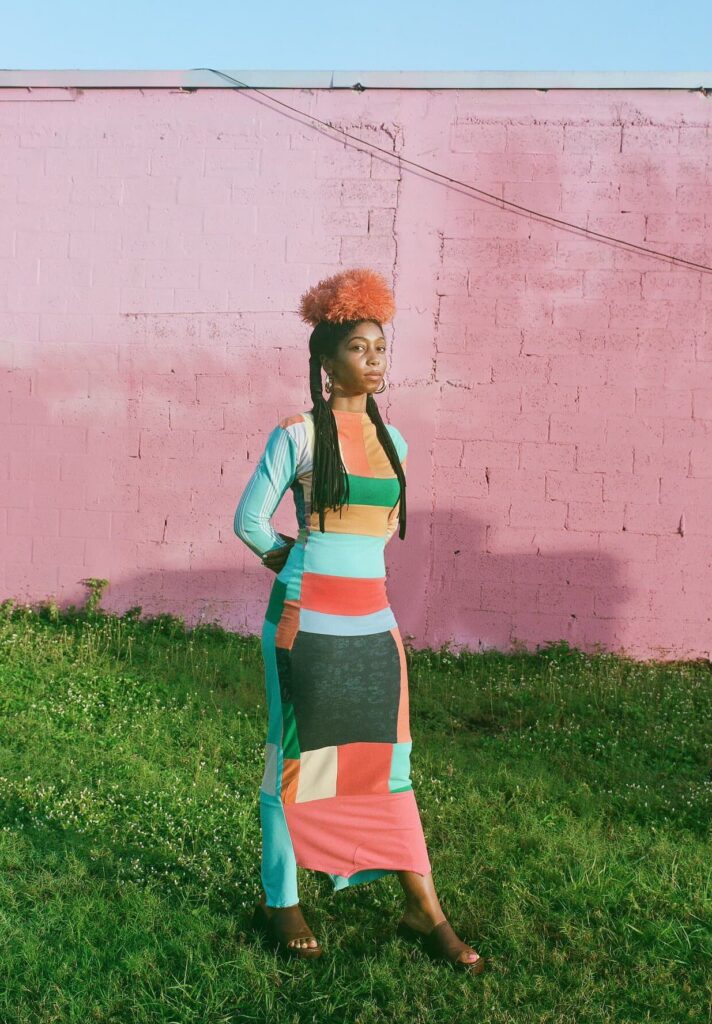
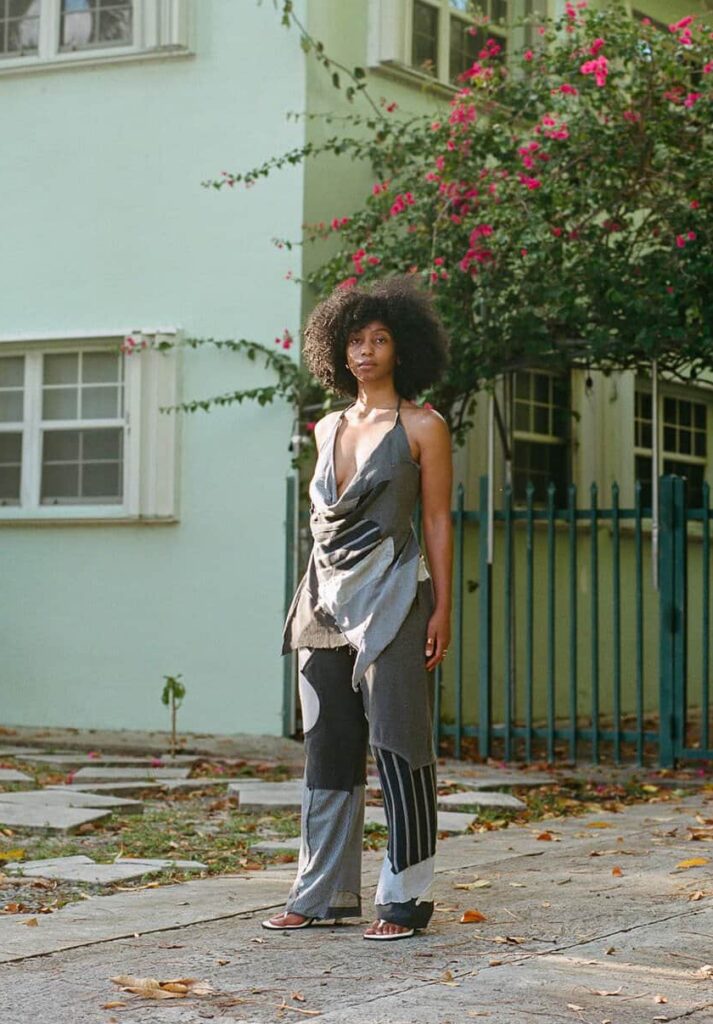
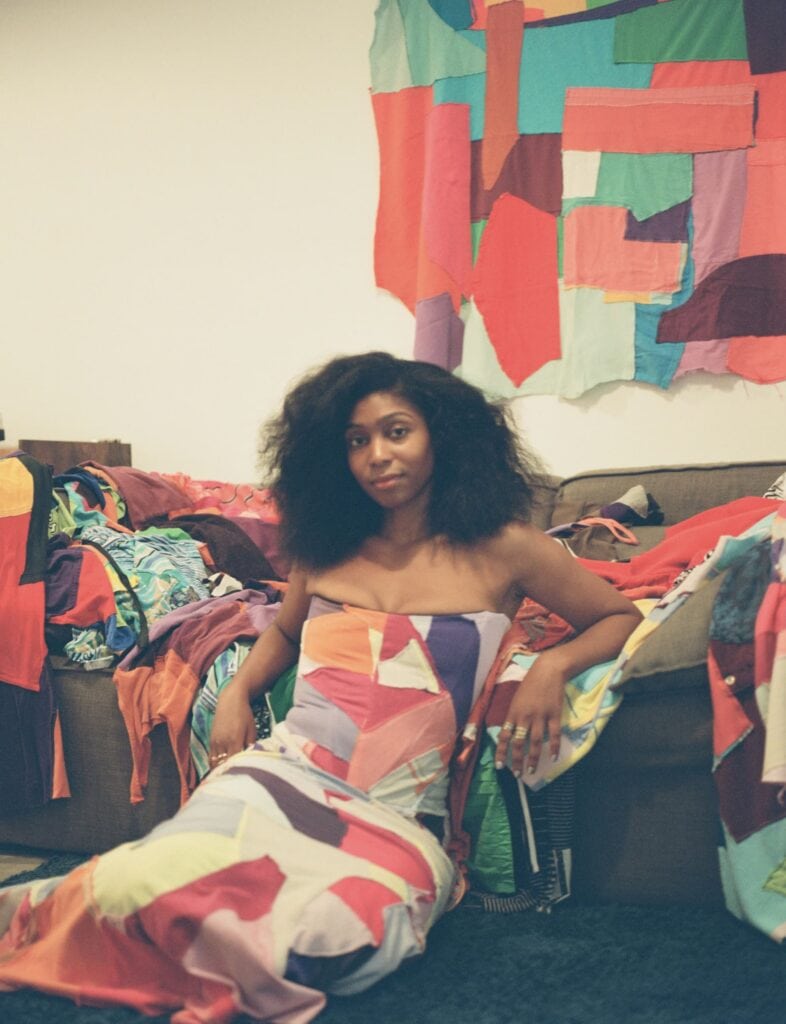
Mahdiyyah, the Fabric Alchemist, is an Upcycle Textile Artist, Circular Fashion Instructor, and Textile Waste Manager. Her skill of patchworking discarded scraps mirrors the regenerative design, master quilting and pioneer upcycle skills of her African ancestors. Her process of Fabric Alchemy throughout design + education is her approach to calling on ancient techniques like repurposing (upcycling) and mechanical recycling of discarded materials from nature, to alchemize them into more useful garments and textile art. This process is what she centers her educational workshops on, which ultimately considers the life cycle of clothing, the health of its wearer, and the reverberations of outdated textile systems felt throughout communities of the global majority. Mahdiyyah has been a recipient of the Fibers Fund Fibershed Grant, Slow Factory Garment 2 Garment Grant, a board member of the Black Fiber Textile Network and a winner of the Wear We Are Going Eco-Design Program. She has facilitated her workshop series with Cornell University, Cooper Hewitt Smithsonian Design Museum, Fibershed, San Jose Museum of Quilts and Textiles, Oko Farms, Good Life Garden, East New York Farms, Harlem Children’s Zone High School, and more. Her work has been featured in Vogue, Forbes, WWD, and on shows like Tamron Hall, Showtime’s The Chi, and FuseTV’s Upcycle Nation. Some of Mahdiyyah’s speaking engagements include The Fabric Act: Live at The Canvas, Earthday: Global Fashion Exchange in partnership with Fashion Revolution USA and Greeningfullife, and Conscious Fashion Collective: Demystifying Financial Sustainability in Slow Fashion.
To learn more about the work of Mahdiyyah Muhammad visit mahdiyyah.co / @mahdiyyahofficial
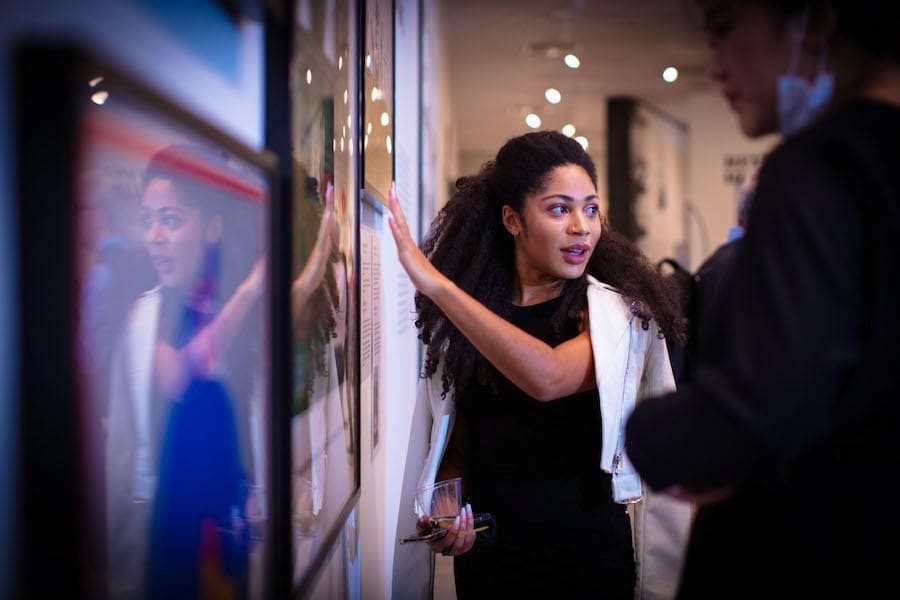
Es-pranza Humphrey is the Assistant Curator of Collections at Poster House in New York City. She received her BA in History from the University of New Haven and her MA in American Studies from Columbia University where she examined American history, literature, and culture as it interacts with countries around the world. Her research has incorporated interdisciplinary approaches to spotlight the Black feminine identity expressed through various forms of performance art and fashion. She has been featured in The New Yorker, ABC Here and Now, National Public Radio (NPR), the Fashion and Race Database and a number of international publications for her curatorial work on the graphic language of the Black Panther Party. Her current exhibition Act Black: Posters from Black American Stage & Screen focuses on Black American theater and film posters from the 1870s to the 1940s.
To learn more about the work of Es-pranza Humphrey visit @_espranzahumphrey