
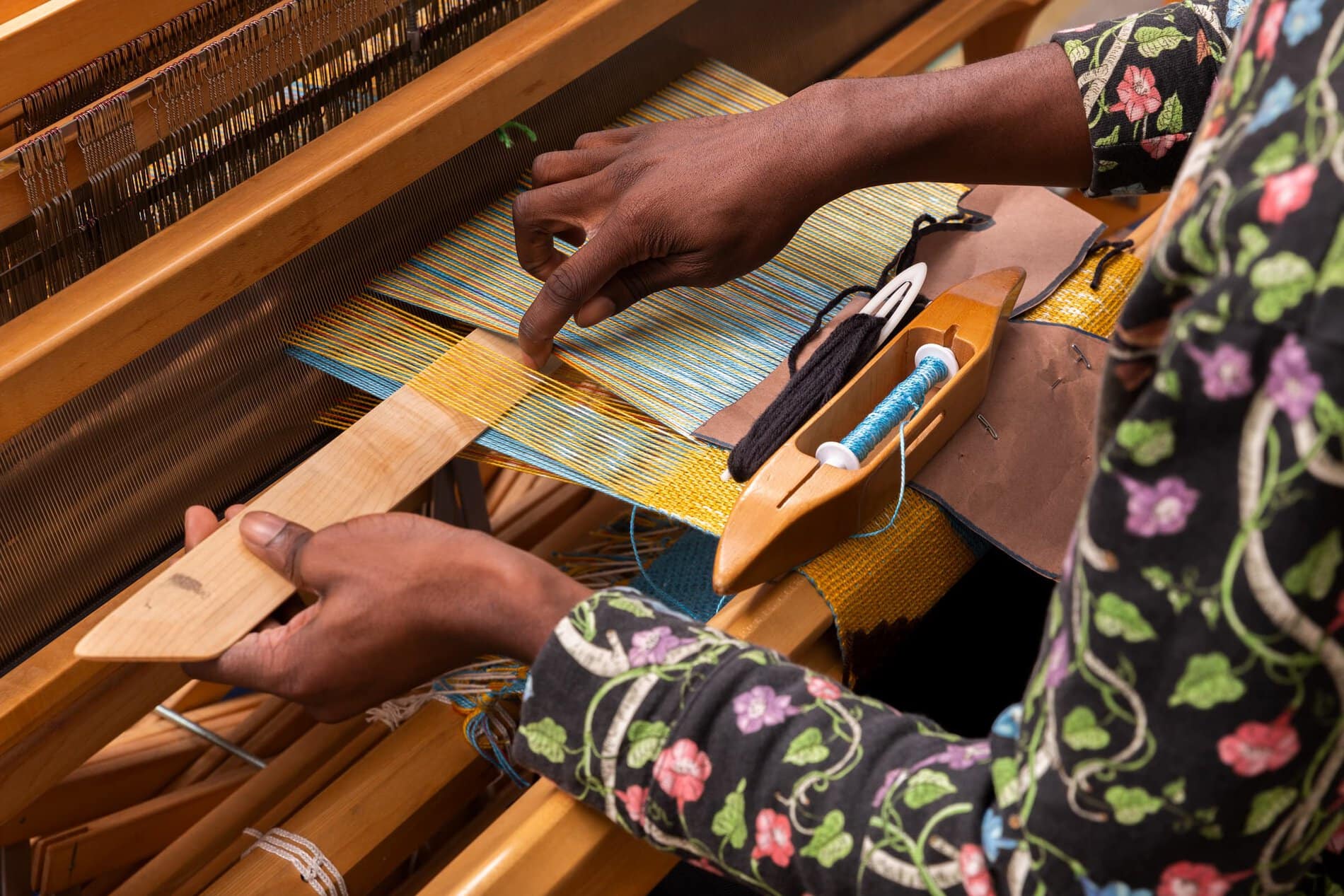
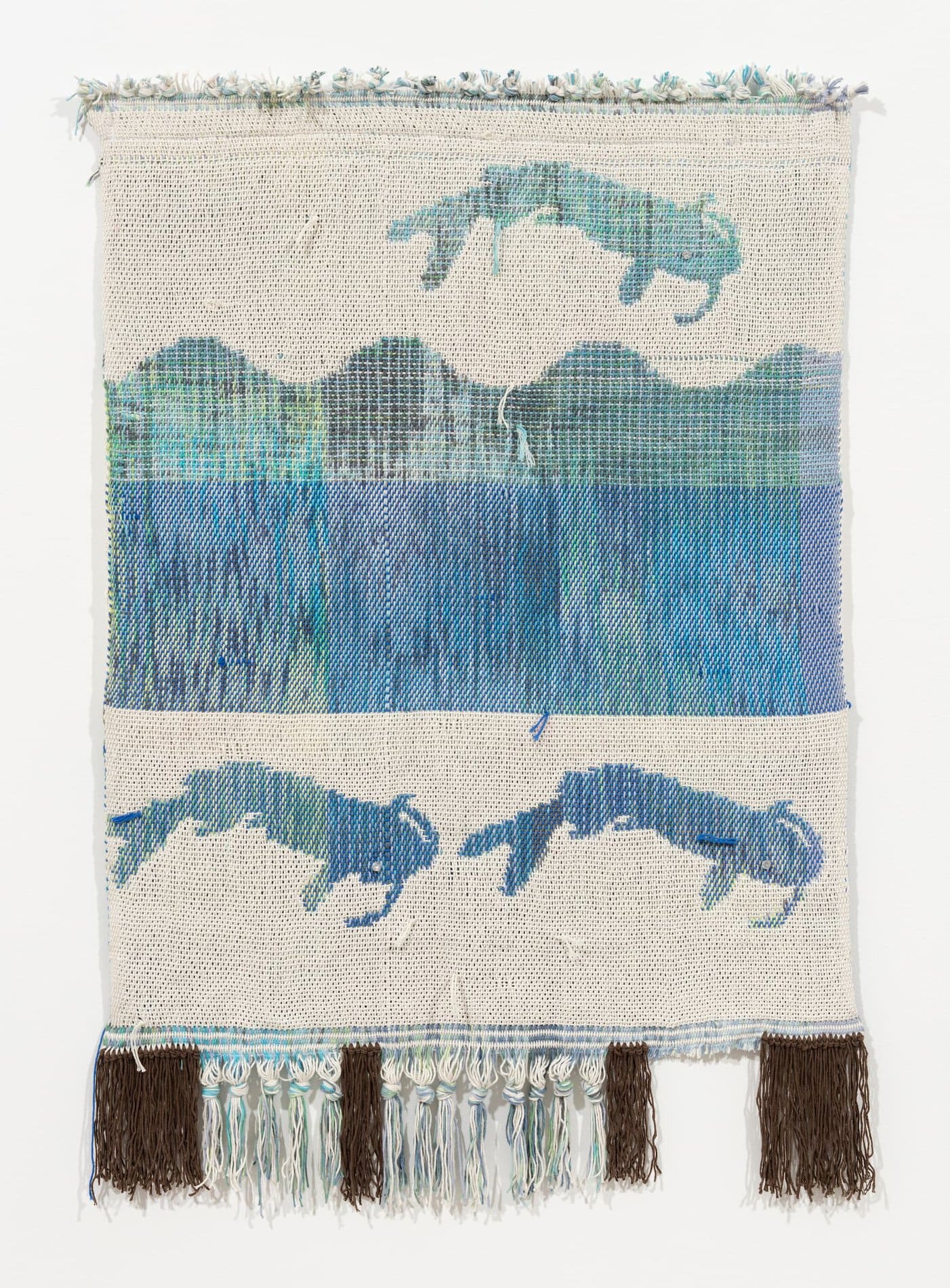
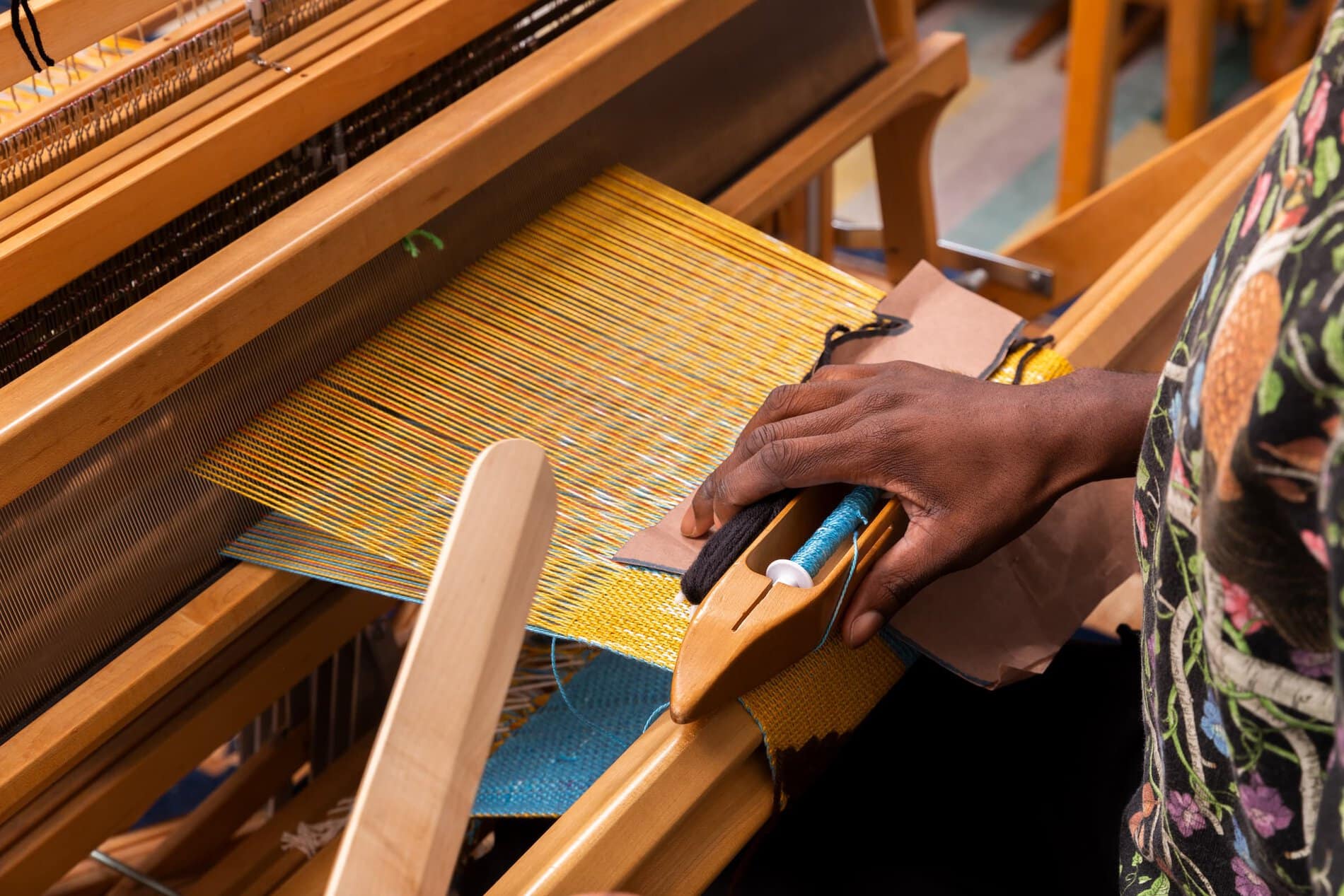
Diedrick Brackens takes a conceptual approach to weaving. He is not overly focused on technical mastery; rather, he adheres to a personal set of criteria to determine when a work is complete. When Brackens sits down to weave, he sets aside conscious thought and positions himself as collaborator with his loom. Out of this dynamic exchange between human and machine emerges something profound and synergetic.
In his essay “Perpetual Motion,” curator and craft historian Glenn Adamson proposes that storytelling is an artisan form of communication, arguing that the weaver in a state of flow becomes the “perfect receptacle for ancient narratives.”1 At the loom, Brackens becomes a griot; his weavings–his textiles–are his tales. As his work takes shape, Brackens locates himself at the center of an age-old storytelling tradition, guiding us toward liberation.
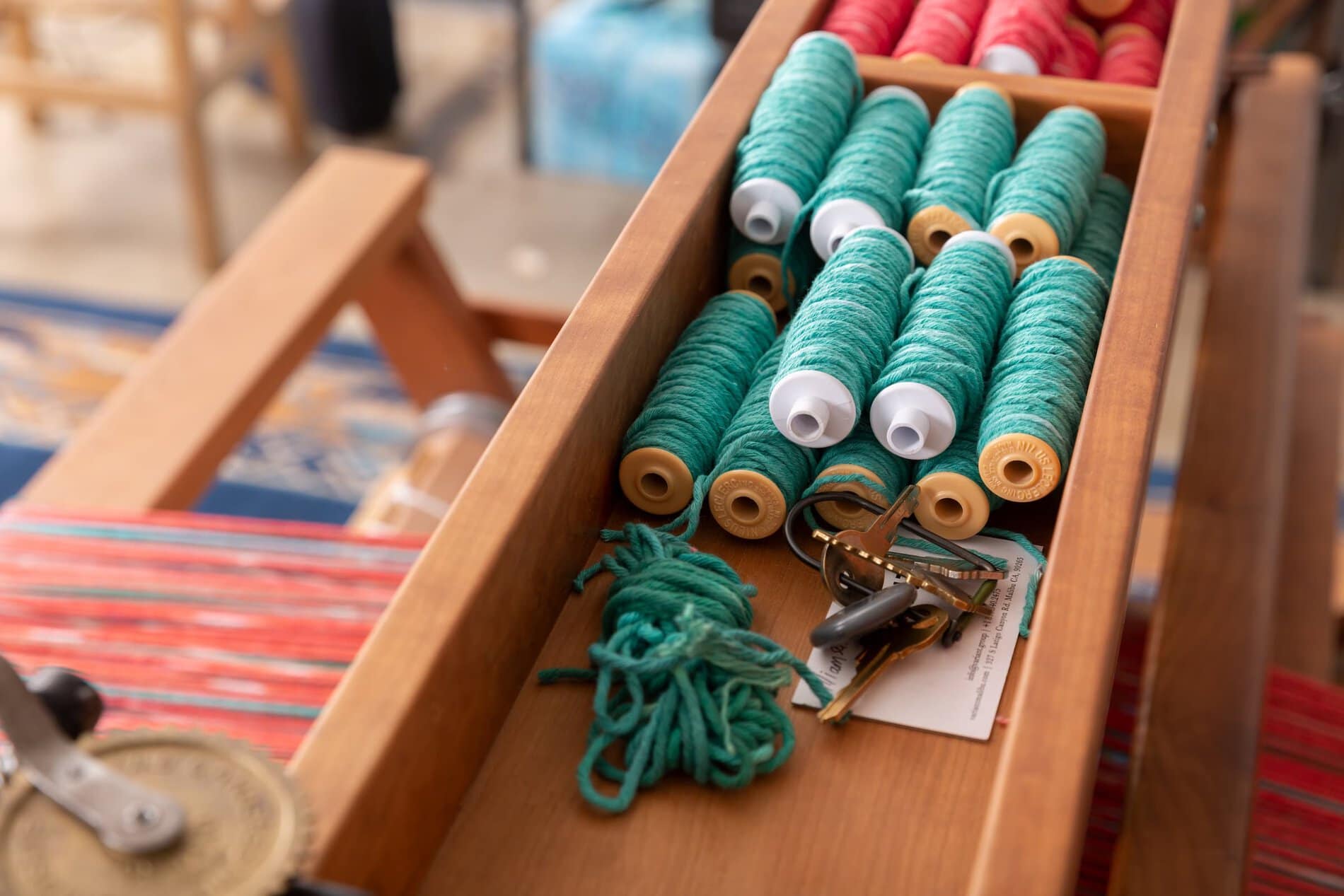
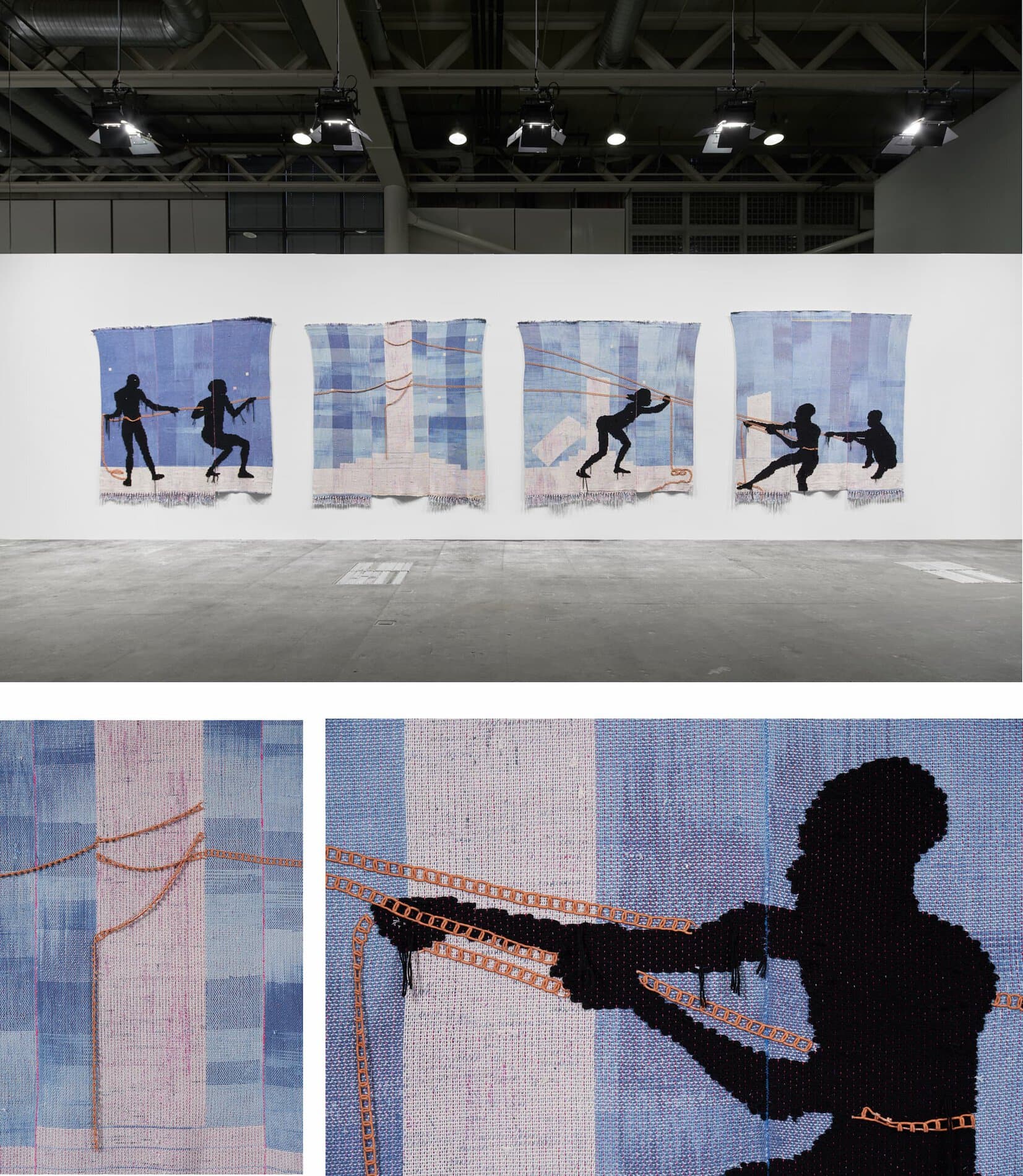
Weaving observes a specific set of rules. Warp and weft engage in a rhythmic over-under routine to create cloth. Brackens, however, is not afraid to syncopate. He employs double weave and adds embellishments to his tapestries using techniques akin to embroidery. His works often depict figures in his likeness, who appear to be simultaneously in harmony and at odds both with each other and with the regularity of the woven textile. These techniques and figures reach beyond the grid, evoking surprise and transcending narrative expectations.
1Glenn Adamson, “Perpetual Motion,” in Hand + Made: The Performative Impulse in Art and Craft ed. Valerie C. Oliver (Houston: Contemporary Arts Museum, Houston, October 31, 2010), 21-25.
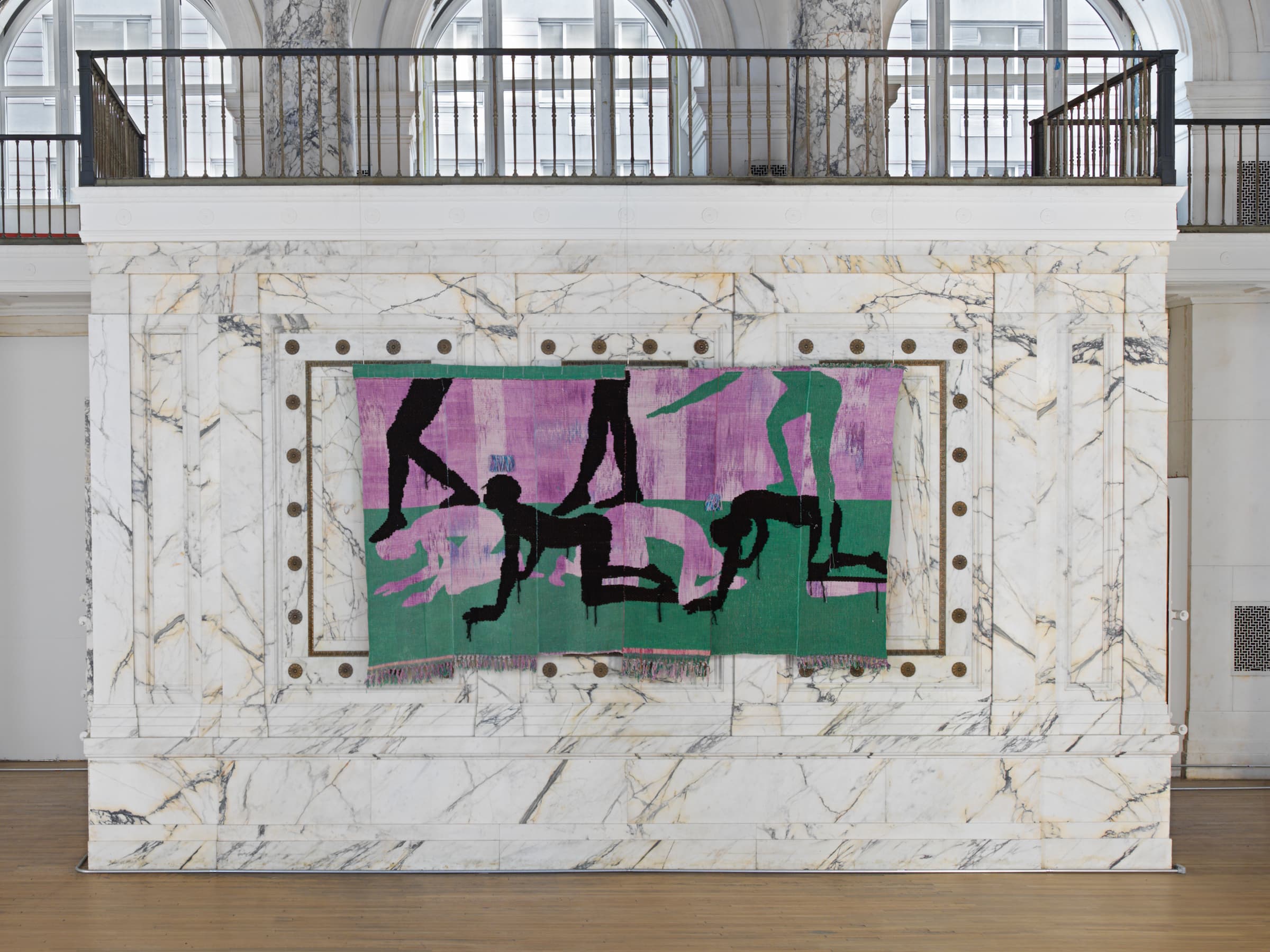
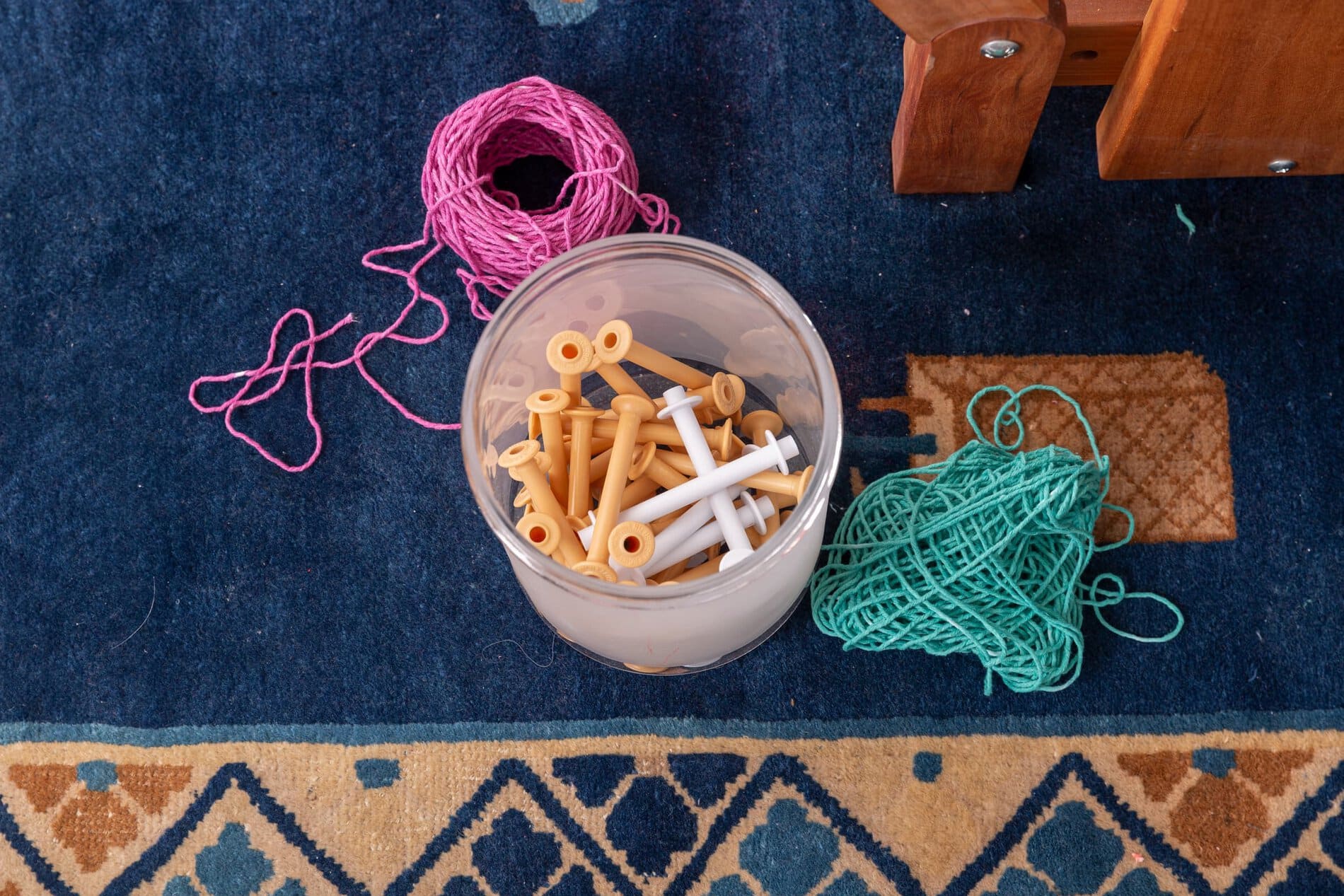
Featuring commonly demonized animals such as catfish, pigs, and snakes, Brackens’s weavings are acts of redemption. Through his choice of symbolism, he challenges viewers to confront their relationships to othering, misrepresentation and acts of repair. When viewed from the back, each work presents a terrain of improvisation, revealing a world unto itself. As Brackens sends the shuttle back and forth across his warp, he assumes the role of a documentarian, social critic, and historian, creating in the wake of artists such as Faith Ringgold and Sam Gilliam. Brackens’s hands tell stories inspired by African folklore, Greek mythology, the Black church, the American South, and turns of phrase unique to his homeland in Texas.
Brackens’s woven works bring into focus generations of women and men denied the right to read or write, their gifts stifled within them. They tell of quilters who fought to leave their marks on the world using materials they had on hand. They also show a young boy finding himself with a needle and thread–and a queer Black man grappling with, contemplating, searching for something at the loom. Even with his contemporary concerns at the forefront, Brackens actively connects to the past, channeling the African continuum and engaging with a pre-colonial history that is firmly embedded in his memory and hands.
“Weaving observes a specific set of rules. Warp and weft engage in a rhythmic over-under routine to create cloth. Brackens, however, is not afraid to syncopate.”
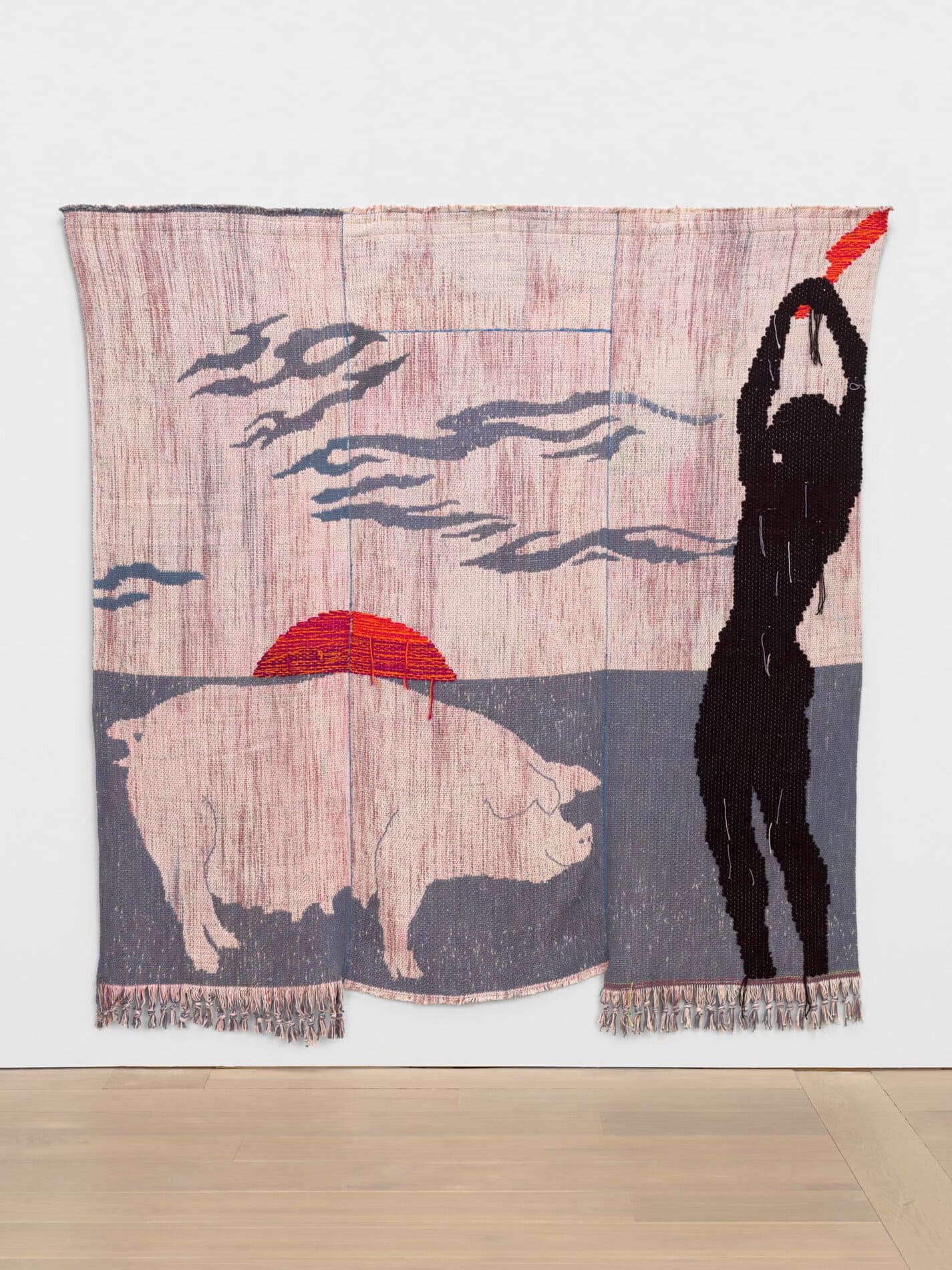
“Even with his contemporary concerns at the forefront, Brackens actively connects to the past, channeling the African continuum and engaging with a pre-colonial history that is firmly embedded in his memory and hands.”
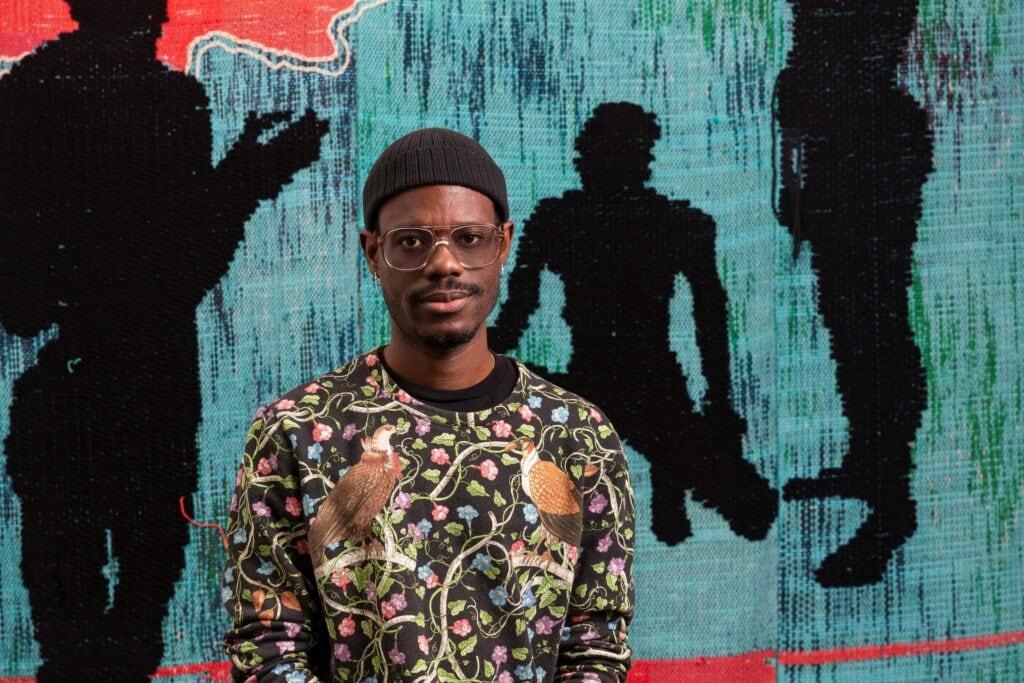
Diedrick Brackens is an LA-based textile artist, originally from Mexia, Texas. Brackens received his Masters of Fine Arts from California College of the Arts in San Francisco, CA. His work is included in the permanent collections of the Hammer Museum in Los Angeles; Museum of Contemporary Art, Los Angeles; Museum of Fine Arts, Houston; Whitney Museum of American Art; New Orleans Museum of Art; Studio Museum in Harlem, and others. He has been the recipient of numerous prizes and awards, including the Joyce Alexander Wein Prize in 2018, the Marciano Artadia Award in 2019, Louis Comfort Tiffany Foundation Award in 2019 and the American Craft Council Emerging Voices Award in 2019.
For more information about the work of Diedrick Brackens, visit @deedsweaves
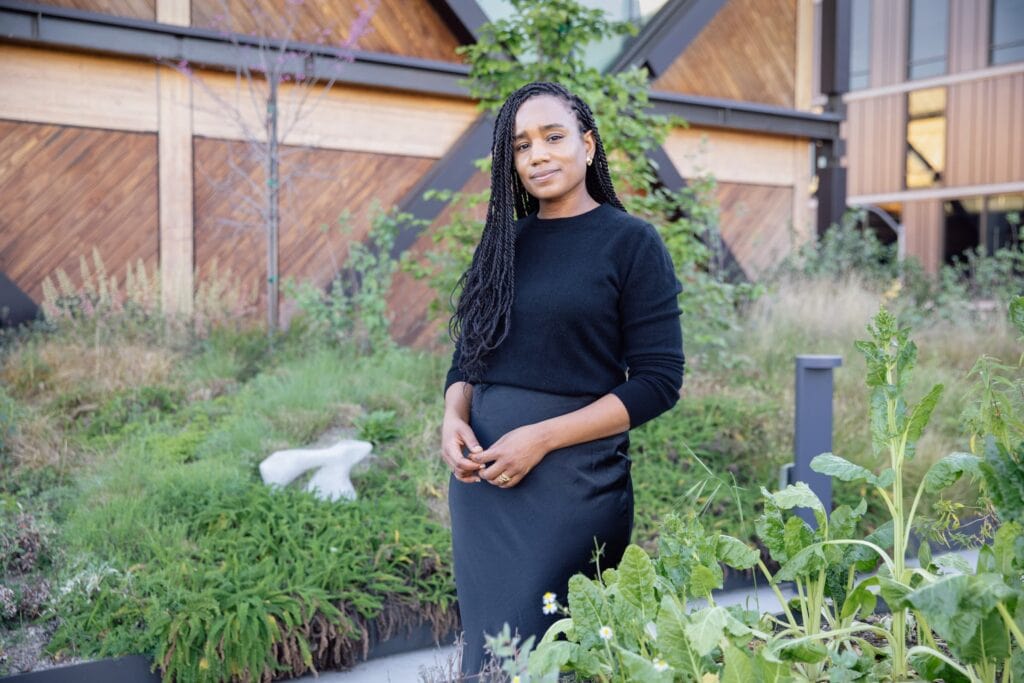
Jasmine Narkita Wiley is an interdisciplinary artist, writer, and educator who uses craft, textiles, the body, and the image to create mixed media installations, participatory art, and works on paper. Her exhibitions include presentations at the Institute of Contemporary Art San Francisco, Museum of Contemporary Art in Denver, and Boulder Museum of Contemporary Art. Her writing has appeared in College Art Association’s Art Journal Open, Surface Design Journal, and Rewind Review Respond. Wiley holds an MA in Arts Politics from NYU Tisch and an MFA from the California College of the Arts.
For more information about the work of Jasmine Narkita Wiley visit jasminenarkitawiley.com / @jasminenarkita