
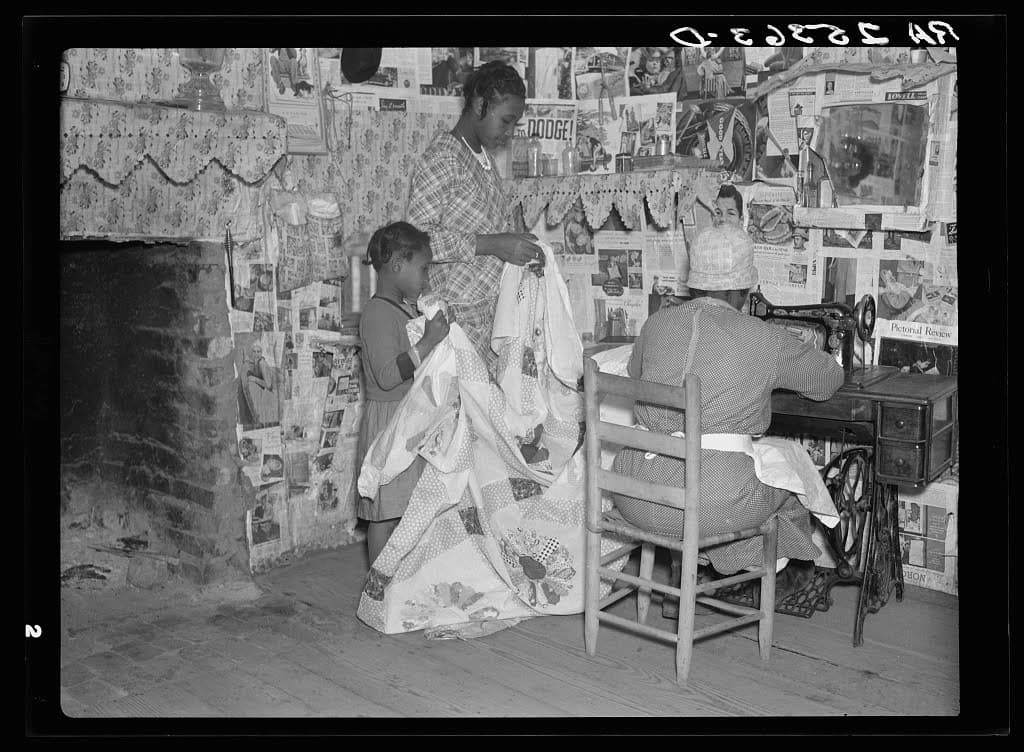
You sit in your grandmother’s room, talking softly as the day draws to a close. Seated on the bed, you fuss with a loose thread on your grandmother’s quilt. She stops her story. “I’ve been meaning to fix that,” she says. She begins to recount the way she learned to sew from her mother, the dedication to mending that she got from her mother. It’s a familiar story. Before long, you are wading back through time.
Though seemingly inanimate, our quilts are embedded with the lives and histories of Black families across North America. Black quilts are both assemblages of patterns and time-traveling objects. More than heirlooms, our quilts are colorful, abstract, resourceful, and organic. A new visual language emerges from a timeline of stitches, challenging forces of industrialization and racism as these quilts move through the hands of each generation. Such objects are surely imbued with great wisdom. What does a quilt know? What has it seen? What has it learned in its eras of love, rupture, and repair? While art critics often describe the quilts made in the historically Black town of Gee’s Bend, Alabama as rivaling the world’s greatest post-modernist abstract paintings, Dr. Bridget R. Cooks, Professor of Art History and African American Studies at the University of California, Irvine, reminds us to admire the aesthetic without losing ourselves in it. Each quilt speaks of a sovereign narrative, intertwining history, emotion, and resilience with alluring beauty.1 We must bear witness to all of it.
Your time traveling lands you back in 1865. The Black Code has prohibited free Black people from convening in public spaces.2 Hidden in living rooms and churches, quilt gatherings are rare opportunities for our community to practice resilience, to participate in mutual aid, and to swap stories. Quilting during this time is a symbol of Black social reclamation, and these gatherings are inherited from our foremothers who sewed out of necessity, sometimes for slaveholder profit. Exchanged over the rhythmic motion of stitches, the stories told at these gatherings will fossilize into oral history: an intergenerational truth-telling, an archive.
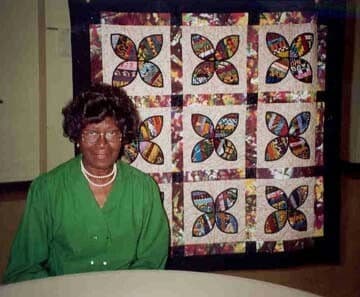
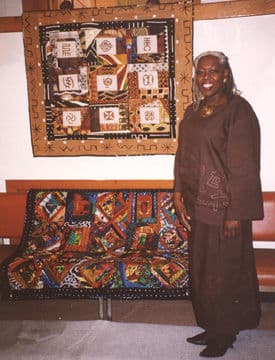
You wade through time again and find yourself in 1979, the year that retired Army seamstress Viola Canady founds Daughters of Dorcas, North America’s oldest running Black quilt guild. “We have lost so very much of what our people did,” says Canady. “Quilting is what we were about. If you wanted to stay warm, you had to quilt.”3
1 High Museum of Art, A Conversation About Black Quilts, YouTube video, 15:32, published May 15, 2023, https://www.youtube.com/watch?v=qF3KBSepDeU.
2 Nadra Kareem Nittle, “How the Black Codes Limited African American Progress After the Civil War,” History, August 4, 2023, https://www.history.com/news/black-codes-reconstruction-slavery.
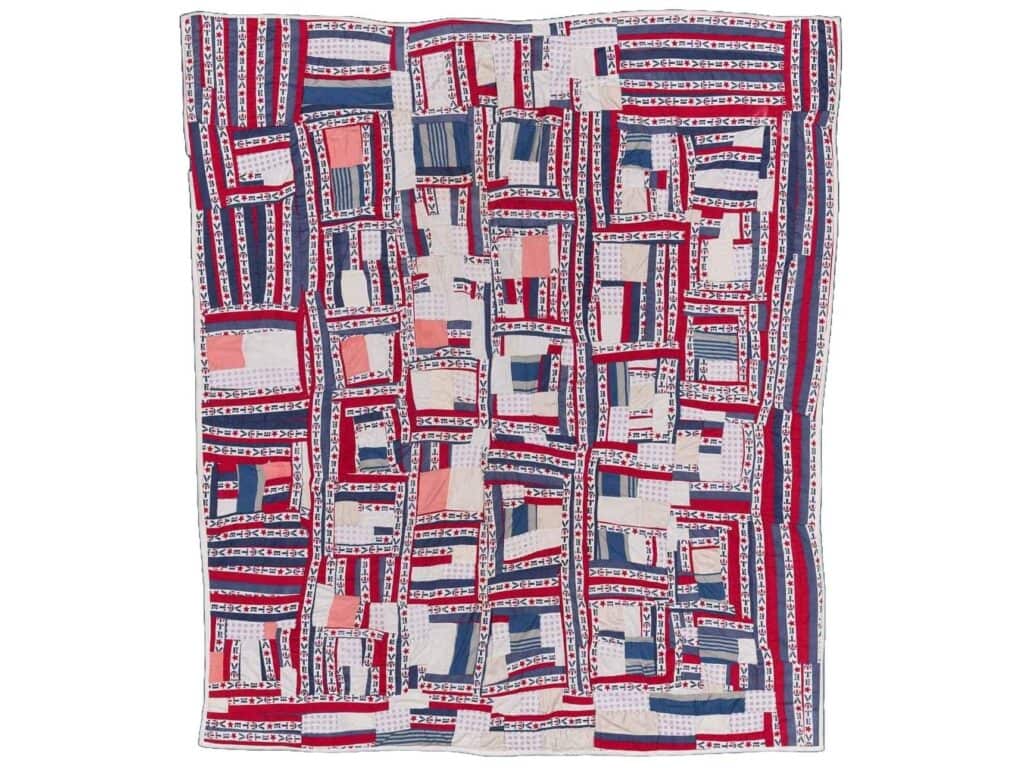
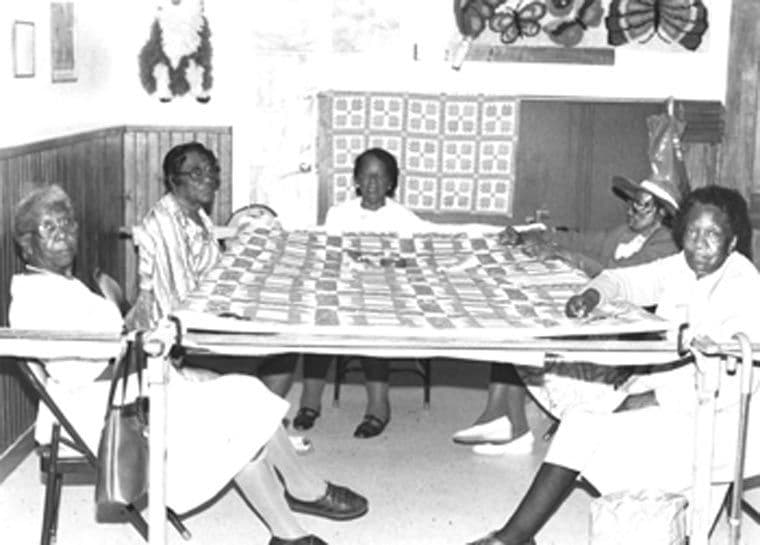
“Though seemingly inanimate, our quilts are embedded with the lives and histories of Black families across North America. Black quilts are both assemblages of patterns and time-traveling objects.”
Eventually, in a move toward greater gender inclusivity, Daughters of Dorcas will become Daughters of Dorcas & Sons. This welcoming community of quilters of all ages has brought people together across the diaspora in creative care.
Intergenerational conversations ground us in time and space, activating a collective memory processing that is healing and generative for elders, adults, and youth. With this necessity in mind, we, Carey J. Flack and Ashley Jane Lewis of the Technologies of Black Care Collective, launched MEMORY PATTERN in the spring of 2024. MEMORY PATTERN united thirty-five Black textile enthusiasts from across Canada and the U.S. Participants ranged in age from eighteen to eighty years old, and represented all experience levels. Together, this cohort created a community quilt honoring the Daughters of Dorcas and Sons. Funded by the Ardis James QSOS Scholars program, our initiative provides a platform for participants to explore Black quilting history and to discuss themes emerging from Black quilters featured in the QSOS archive. In the spirit of Viola Canady’s vision for inclusivity, MEMORY PATTERN has welcomed non-binary and trans quilters, recognizing them as important memory keepers in our community. By fostering an inclusive virtual space, we aim to bridge Black communities in warm dialogue to counteract the divisive legacies of colonialism above and below the border while preserving Black patterns and techniques. In the face of national erasure of Black history, this kind of creative intergenerational community is more important than ever.
Like other cultural artifacts of the African diaspora, such as music and food, our quilts showcase the ingenuity, love, and resilience of Black people–especially those of oppressed genders–and our ability to reshape pain into care. Black women’s feminized labor has been used to serve every interest but their own, resulting in disproportionately high rates of anxiety and post-traumatic stress. Yet our creative power to alchemize cotton can’t be overstated—our survival has depended on it. For Black women, the steady motions of hand or machine offer a rhythm by which to process trauma, a means by which to impress their existence and worldview upon the world, a reflection of the satisfaction that comes from community. “It’s about people getting together, enjoying each others’ company, do you know what I’m saying?”4
3 Patricia Leigh Brown, “Life’s Thread Stitched Into Quilts,” The New York Times, April 4, 1996, https://www.nytimes.com/1996/04/04/garden/life-s-thread-stitched-into-quilts.html.
4 Ibid.
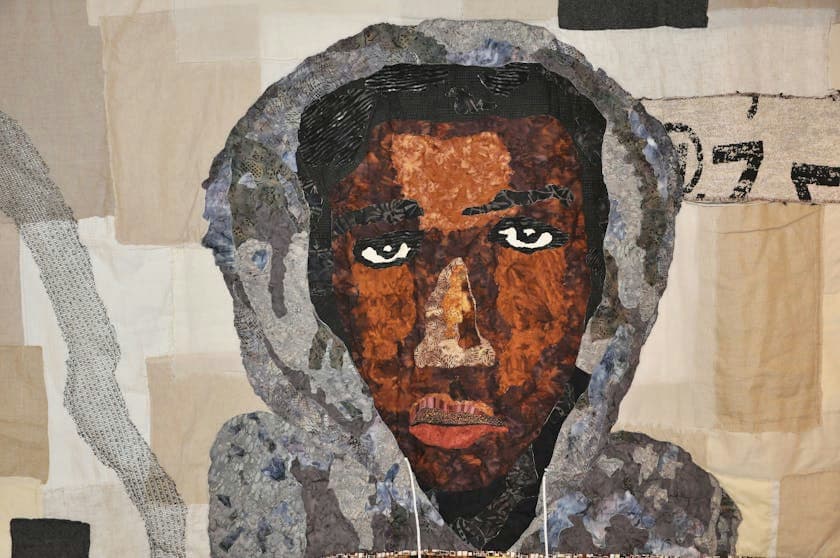
“...while change is inevitable, time proves that the essence of tradition persists. Like the familiar sounds of an ancestral melody, old customs continue to resurface in fresh forms.”
Quilts, crafted and inherited, gently grace the closets, couches, and beds of many Black households, carrying the lives of those who came before us. From commemorating weddings and the arrival of new family members to capturing pivotal historical moments, quilts serve as tangible records of Black hope, resilience, and collective memory. They also mark somber chapters of history, reflecting shifts in Black experience, consciousness, and the ongoing struggle for justice. From early slave quilts to the election of President Barack Obama, to the tragic murder of Trayvon Martin four years later, our quilts fuse past struggles, present realities, and future aspirations into living artifacts of cultural memory that travel through the fabric of time.
Yet as experienced quilters ponder the fate of this tradition, questions arise: Will a $15 Walmart throw eventually replace a centuries old cultural practice of storytelling, survival, and warmth? How do we maintain traditions that express love through space and time? How do we honor those who used quilting to process stories through their very bodies and threads? Through MEMORY PATTERN, we’ve witnessed a renewed interest among younger generations in creating quilts and textiles that reflect their unique experiences, histories, and abilities. Imagining the trajectory of quilting’s future might be as simple as examining all that we’ve alchemized so far through centuries of culture. Octavia Butler tells us that while change is inevitable, time proves that the essence of tradition persists.5 Like the familiar sounds of an ancestral melody, old customs continue to resurface in fresh forms.
Whether material objects or digital creations, the quilts of tomorrow will likely inspire questions that carry us across time and space—the same way your grandmother’s frayed 1920s quilt did as it was handed from generation to generation. What does it know? What has it witnessed? What has it learned in its eras of love, rupture, and repair? Collectively, we will uncover the answers to everything.
5 Octavia Butler, Parable of the Sower (New York: Four Walls Eight Windows, 1993), 3.
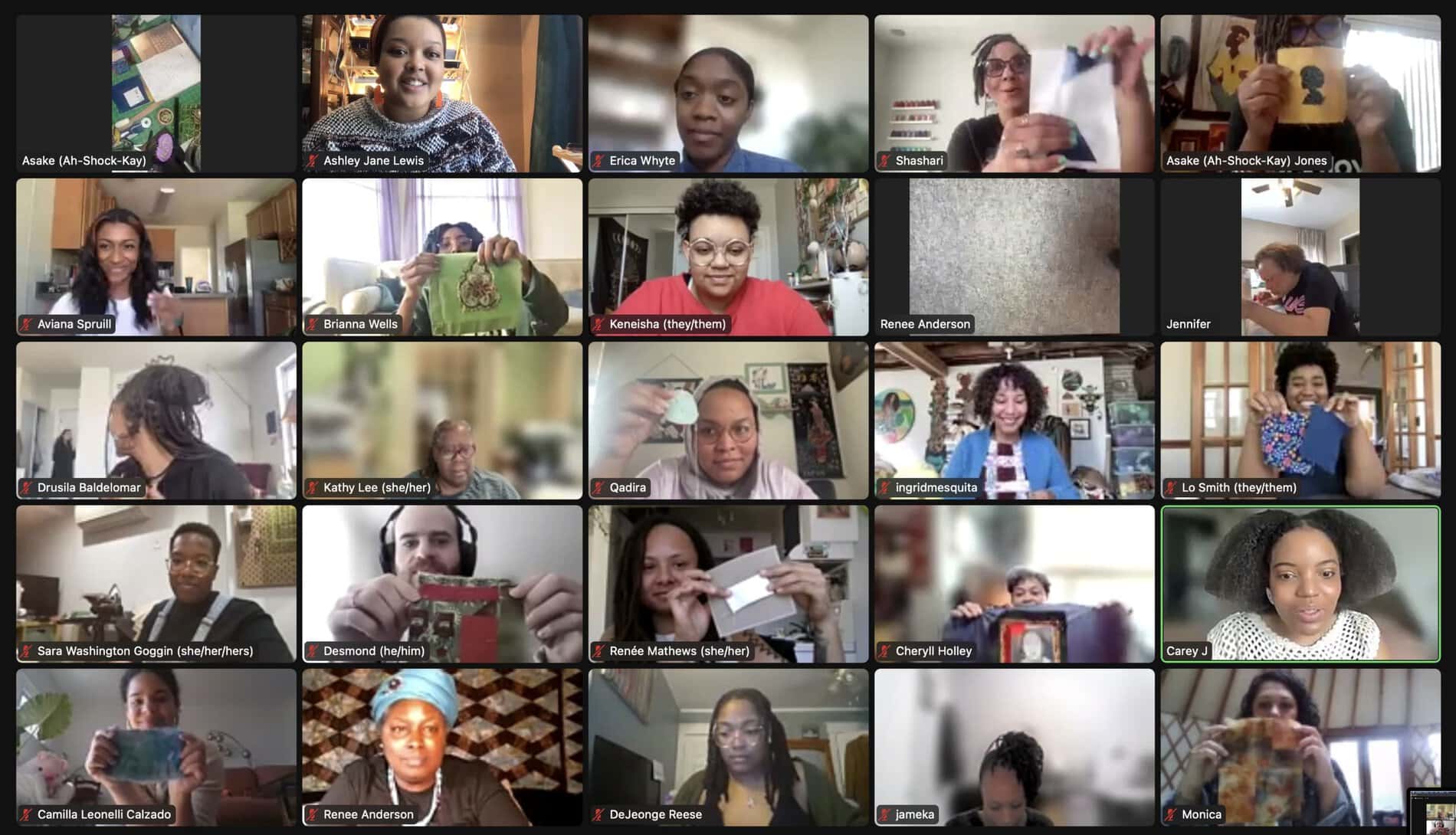
Technologies of Black Care Collective
In pursuit of the diasporic kinstellation, the Technologies of Black Care Collective (TBCC) aims to manifest creative depictions of Black past, presents and futures through exhibitions, collective gathering, technology, folk arts and education. Co-Directors Carey J Flack and Ashley Jane Lewis use archival processes and speculative design to preserve Black culture, connect ancestral knowledge and consider new tools for liberated worlds.
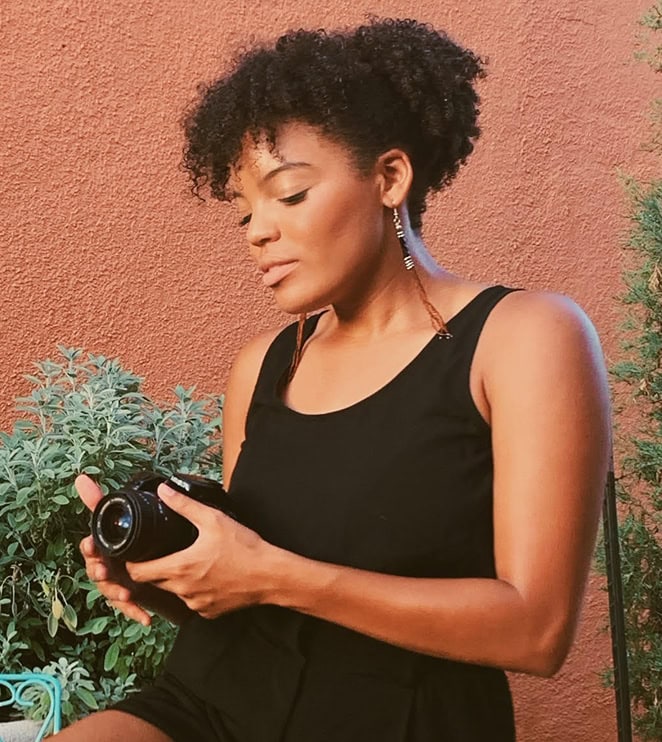
Carey J. Flack is a creative technologist, writer, archivist, and educator based in Oakland, California, with roots 40 miles southeast of Tulsa, Oklahoma. Her work focuses on enduring Black Southern memory and aesthetics — expressed through archival research, courses, and art that explores Black ecologies, place-making, embodied memory, and slow craft.
As the archivist behind @pressed.roots, she documents Black land and plant histories across the American South, with a focus on healing the ecological and cultural impacts of slavery; she is also the researcher behind Mapping Black Oklahoma, a community GIS project highlighting the state’s Black and Afro-Indigenous spatial memory.
Carey has taught at the School for Poetic Computation and was featured in Seventeen Magazine as a “Power Girl” for her work in technology.
For more about the work of Carey J. Flack visit careyflack.com / @pressed.root
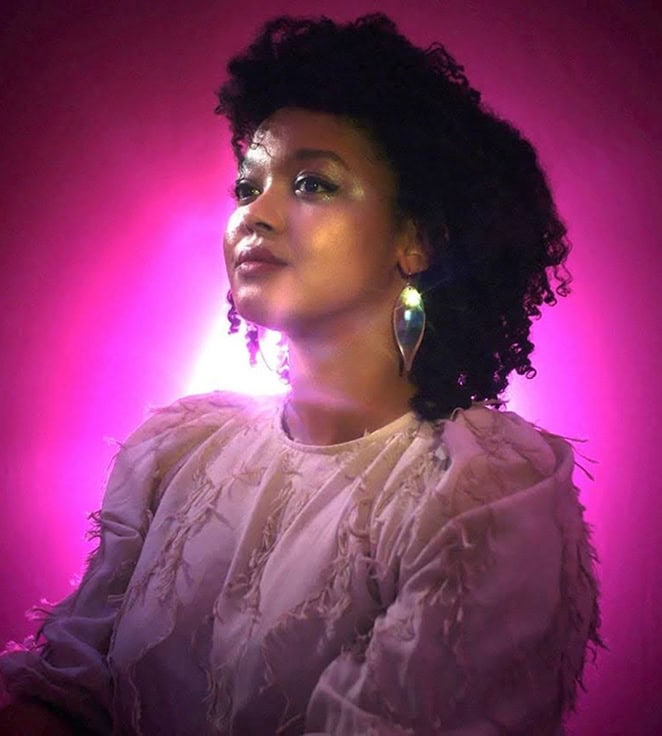
Ashley Jane Lewis is a new media artist, creative technologist and speculative designer. She holds a BFA in New Media Art from Toronto Metropolitan University and a masters from ITP at New York University’s Tisch School of the Arts. Her research creation practice explores identity through computational and analog mediums including coding, machine learning, fabrication, data weaving, textiles, microorganisms and live performance. Listed in the top 100 Black Women to Watch in Canada, her award winning work has exhibited across North America. Ashley is Viola Desmond Award winning creative, currently pursuing a Postdoctoral Fellowship in the inaugural cohort at the Black Scholarship Institute at Toronto Metropolitan University.
For more about the work of Ashley Jane Lewis visit ashleyjanelewis.com / @ashleyjanelewis