
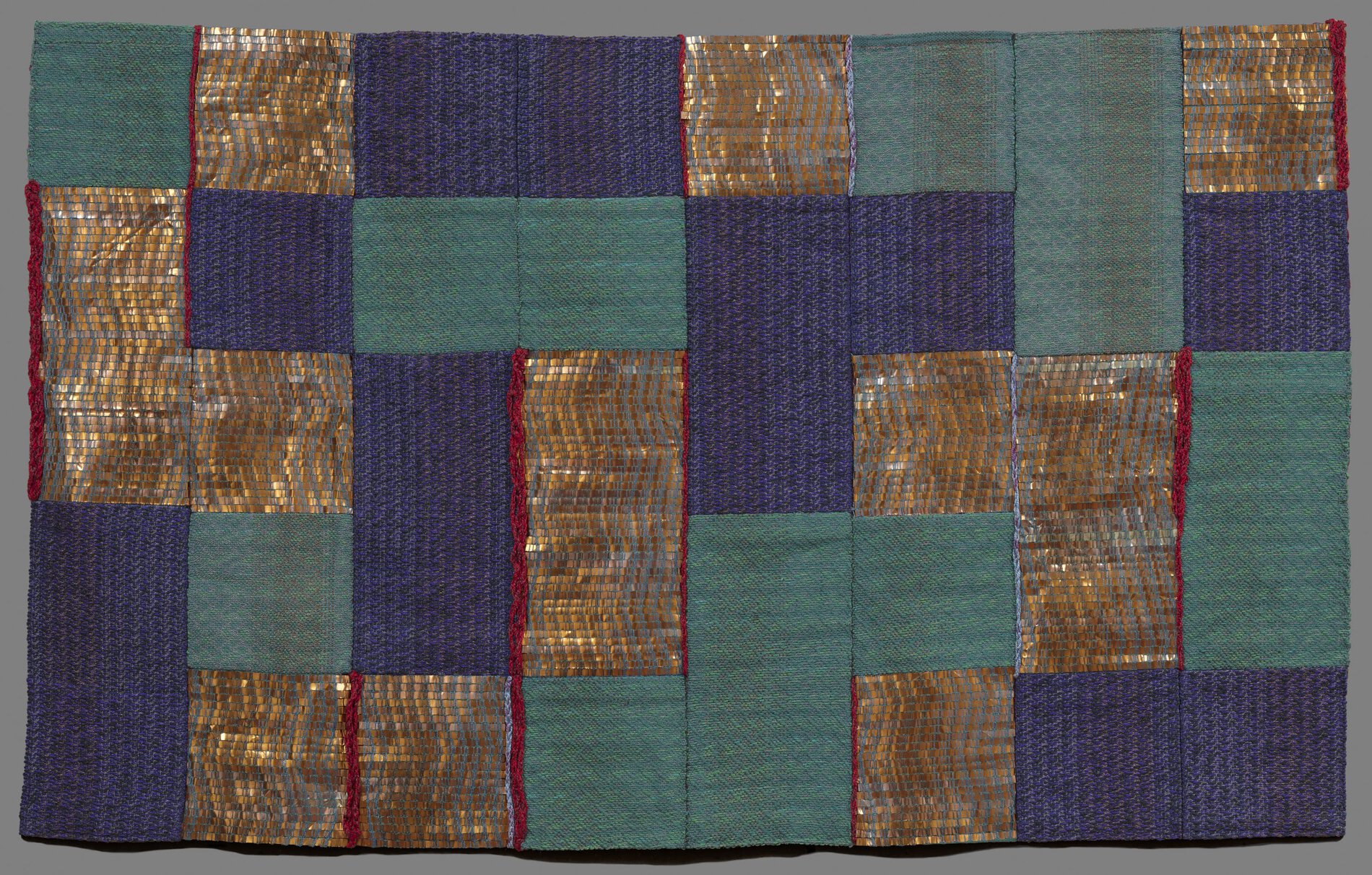
“Some family members earned a living (through craft), others did not, but everyone understood that making with one’s hands was a transcendental practice through which one could access a space of freedom: the freedom to be human having a pure human experience.”
The creation of cloth is an age-old metaphor for language and storytelling. The word text derives from the Latin texere, meaning “to weave.” The same concept is illustrated by a creation myth of the ancient Dogon people of Mali in which the creator God, Obataloa, speaks as an active weaving loom: his tongue a shuttle, his voice the threads, his teeth the reed beating and constructing cloth. As he speaks, the whole cloth of life rolls from Obatala’s mouth and the cloth becomes the Word.1
“Don’t stop weaving. Continue to make things with your hands.” These were the last words my father Bertram said to me before he died in 2013. Bertram C. Brewer was the descendant of a multi-generational family of artisans living and working first in North Carolina and later Northern Ohio. My father understood handmade craft as a vessel for the preservation of family legacy and an activity to sustain the mind and spirit throughout one’s life.
Working and living as free Black craft artisans, the Brewer family can be traced back to 1800 in Orange County, North Carolina. After a major economic downturn and tightened racial restrictions in the 1830s, Dametrius Brewer, a barrel maker, fled with his wife Sarah and their toddler son Lafayette to Northern Ohio along with hundreds of other free Black North Carolinians.2 Demetrius and Sarah went on to raise thirteen children in Cuyahoga County, Ohio–most of whom became skilled craft artisans as adults. In 1884, Lafayette Brewer, their eldest child, established the Van Wert Dye Work in Van Wert, Ohio, specializing in textile dyeing and needle arts.
1 Marcel Griaule, Conversations with Ogotemmêli: An Introduction to Dogon Religious Ideas (London: Published for the International African Institute by the Oxford University Press, 1965).
2 Catherine W. Bishir, Crafting Lives: African American Artisans in New Bern, North Carolina, 1770-1900 (Chapel Hill: University of North Carolina Press, 2013), 98.
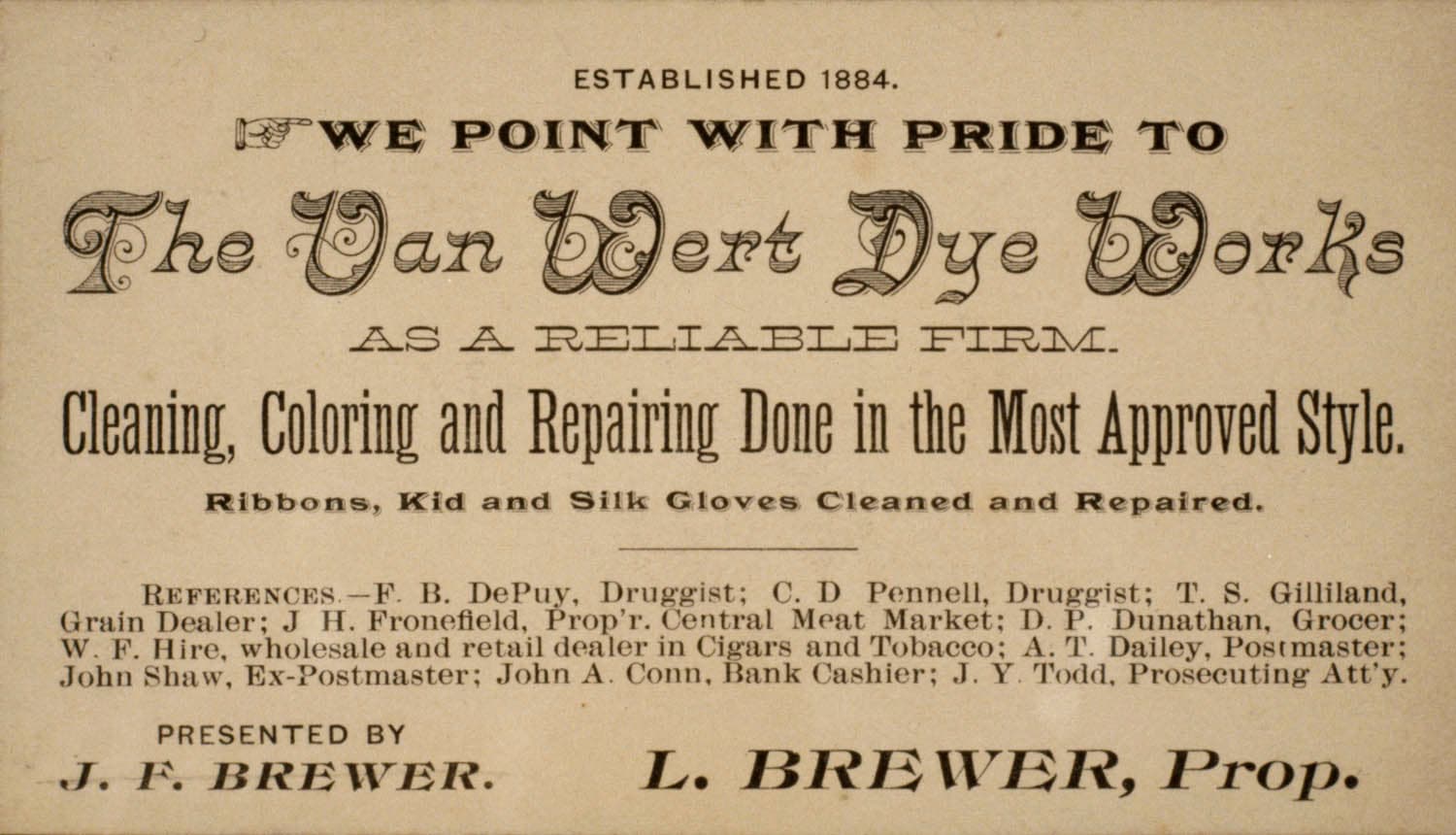
I grew up in the 1960s with a father and relatives who were always making things, working their projects “on the table.” Some family members earned a living that way, others did not, but everyone understood that making with one’s hands was a transcendental practice through which one could access a space of freedom: the freedom to be human having a pure human experience.
My cousin Jewell earned her living as a tailor’s tailor and Black Hollywood pastry chef. She could make any garment—coats, suits, dresses—while the oven was humming with pound cake, brownies, and/or dinner rolls. Shirley, Jewell’s daughter, was mean with a crochet hook and knitting needles. She mostly produced clothing and home goods for friends and family–I sleep every night under a blanket she crocheted my father for his birthday one year.
I began weaving in 1987 as an undergraduate student at the California College of Arts and Crafts (now California College of the Arts). Disappointed by the school’s metalsmithing program in which I had been intending to concentrate, I enrolled in a beginning weaving course at the encouragement of a work-study colleague. As I sat at the loom that first semester, I fell into a spiritual, transcendental vortex which consumed my attention for hours. I could not rationally explain my attraction; it was beyond words. I changed my degree focus to the textile arts shortly after that course, but it was not until five years after I had graduated that I learned about my ancestor Lafayette Brewer and his business in the textile industry. It was then that I understood the hold of ancestral memory.
As an artist, I study how the intersection of perpendicular lines in woven textile construction invokes contemporary “digital” thinking–spatial planning, symbolism, coding and composition making. My work blends hands-on technology, craftsmanship, and an investigation of the innate relationship between textiles and human culture.
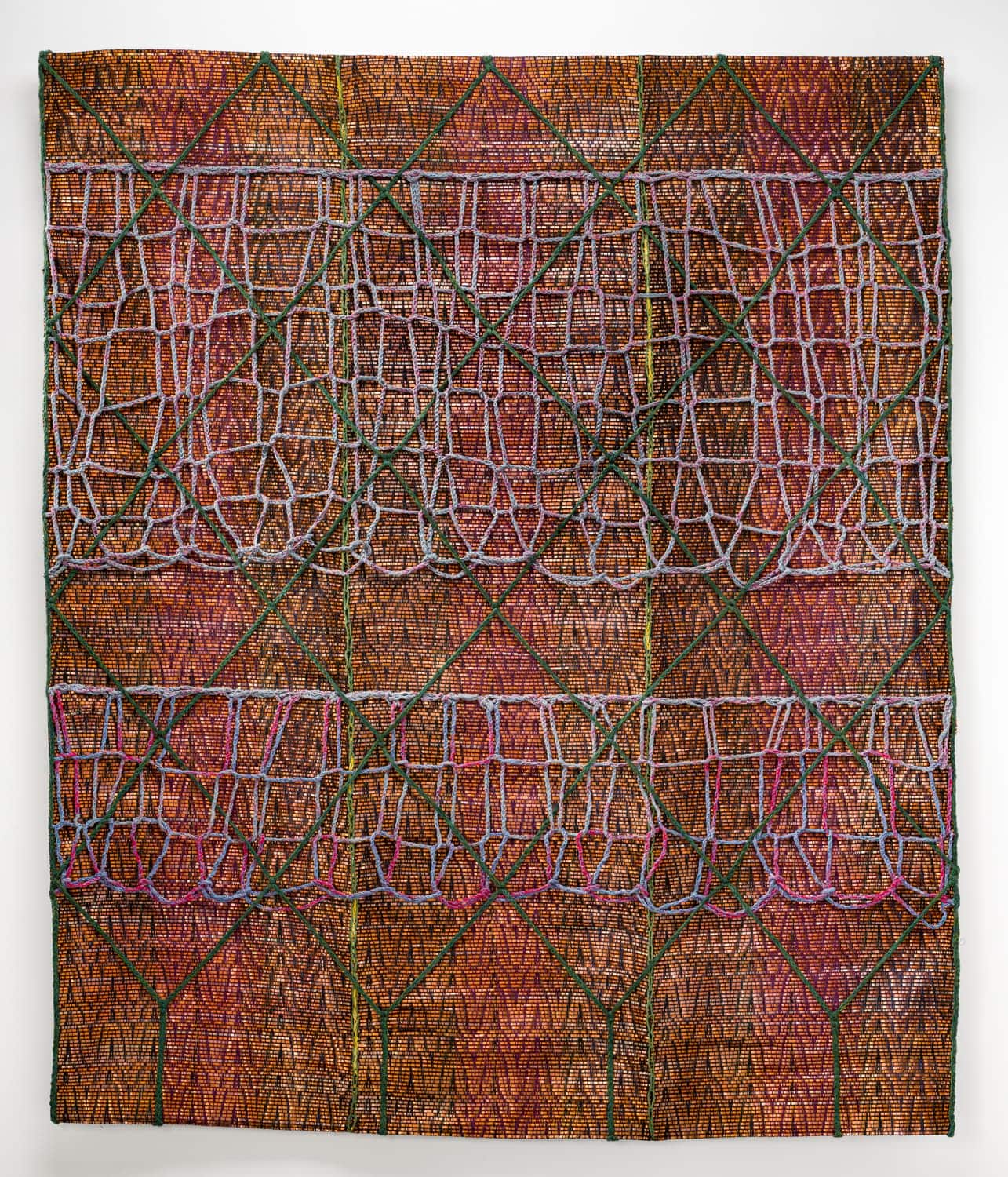
Valentine (2021) is a love letter to the textile artistry practiced by my immediate family members. The copper woven ground is my voice, the knitting and crochet speaks to what Shirley made and taught me, and the macrame netting is a testament to the hours my father spent tying macrame knots in his garage studio. We have all constructed textiles exploring different techniques, which has kept us engaged, moving onward and upward.
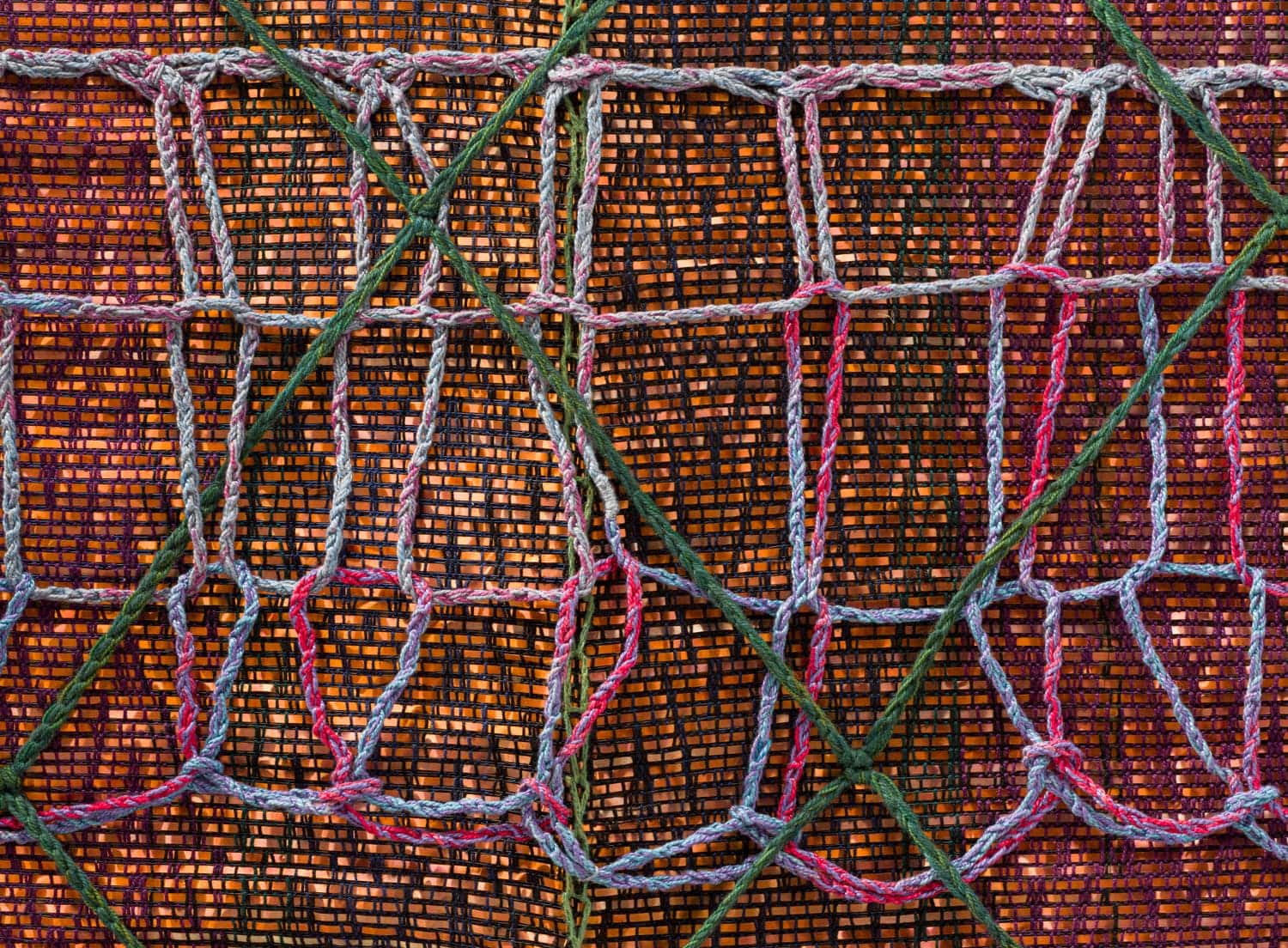
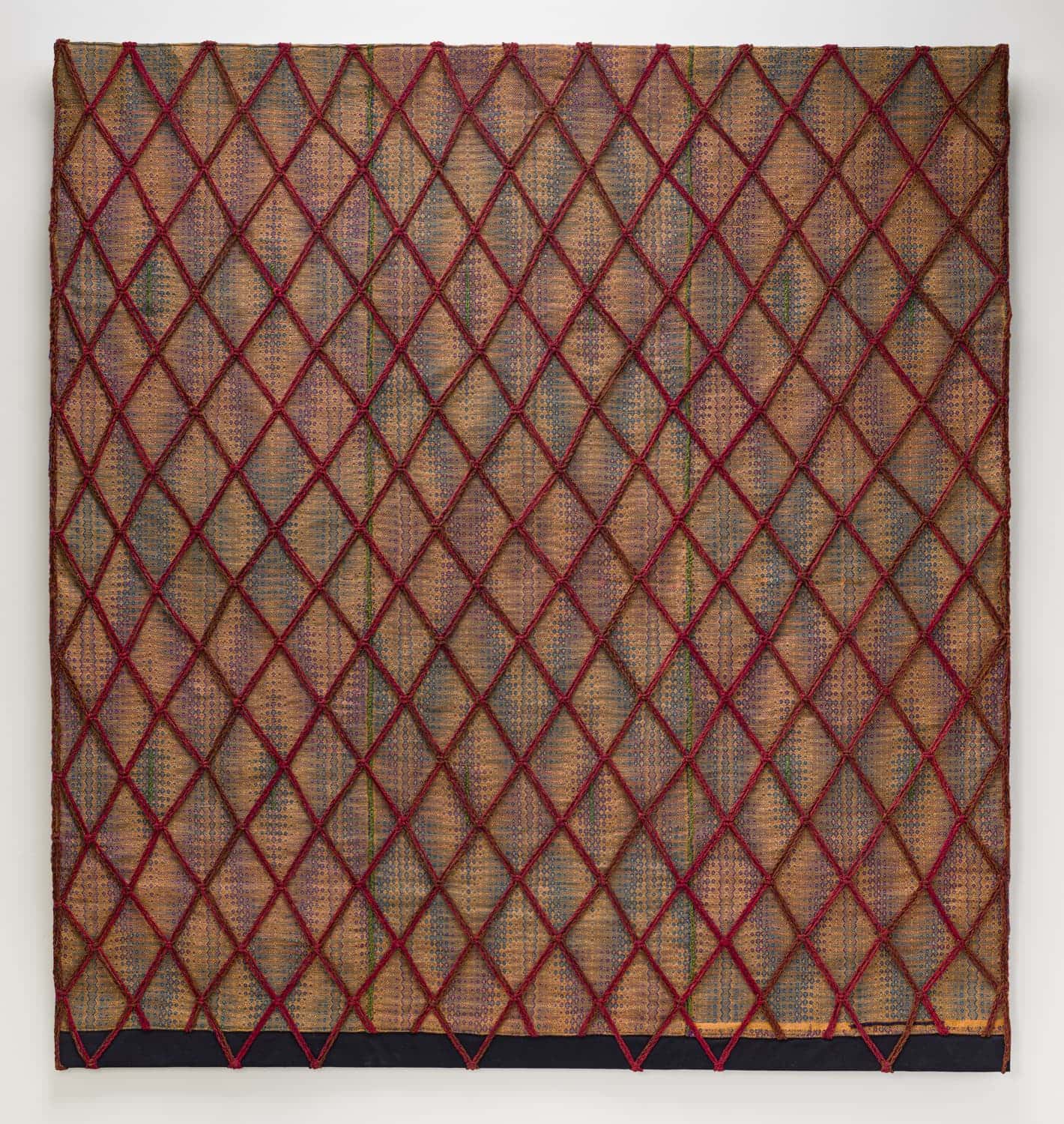
My father’s last words to me went on: “Continue to make things with your hands. It will sustain you through your old age. Don’t stop.” As I work in my studio many years later, manipulating yarn and paper to create tangible objects that once lived only in my imagination, Bertram’s words ring in my ears. I feel myself guided by a legacy gifted me by my father, placed in my hands by his. That legacy is freedom.
“Continue to make things with your hands. It will sustain you through your old age. Don’t stop.”
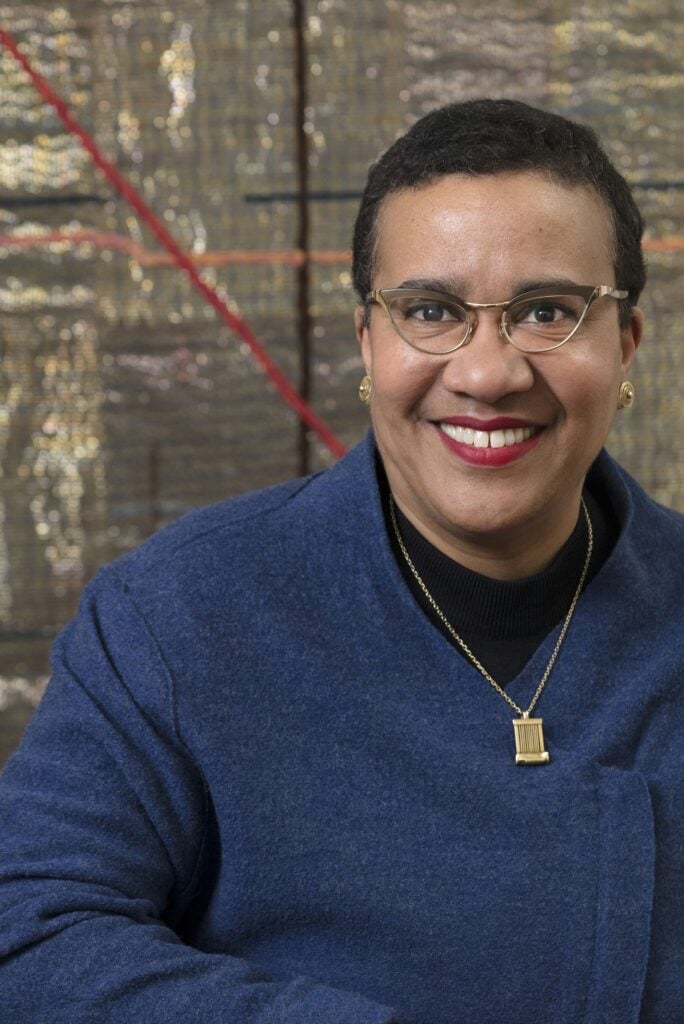
California native Camille Ann Brewer is a hand weaver and dyer based in Detroit, Michigan. Ms. Brewer studied textile design and construction at the California College of Arts and the University of Michigan, where she earned her BFA and MFA respectively. Ms. Brewer served as the inaugural curator of contemporary art at the George Washington University Museum and the Textile Museum. After completing her MLIS, Ms. Brewer served as the executive director of the Black Metropolis Research Consortium, a Chicago-based membership association of libraries, universities, and other archival institutions, based at the University of Chicago.
To learn more about the work of Camille Ann Brewer visit @cab_textiles