
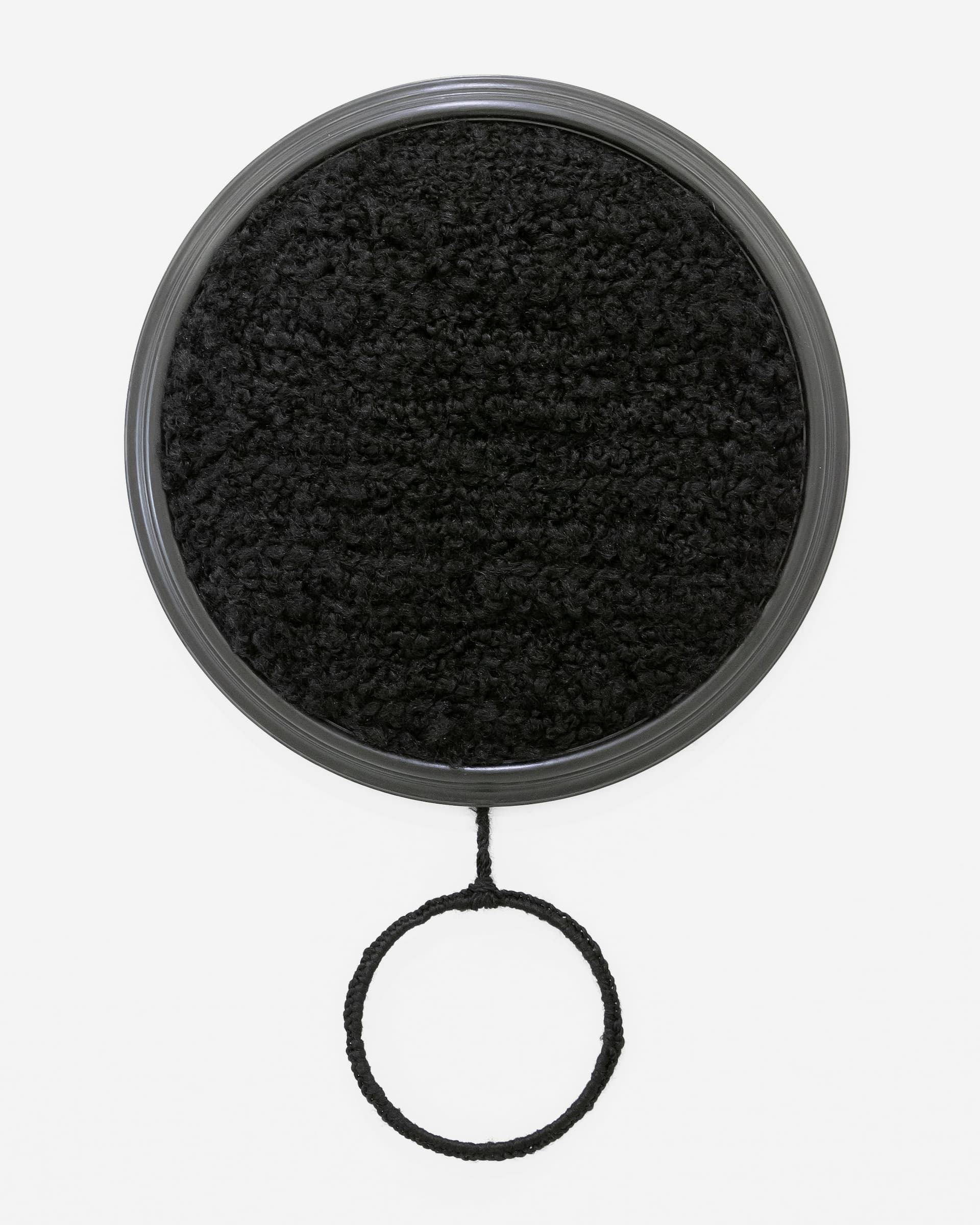
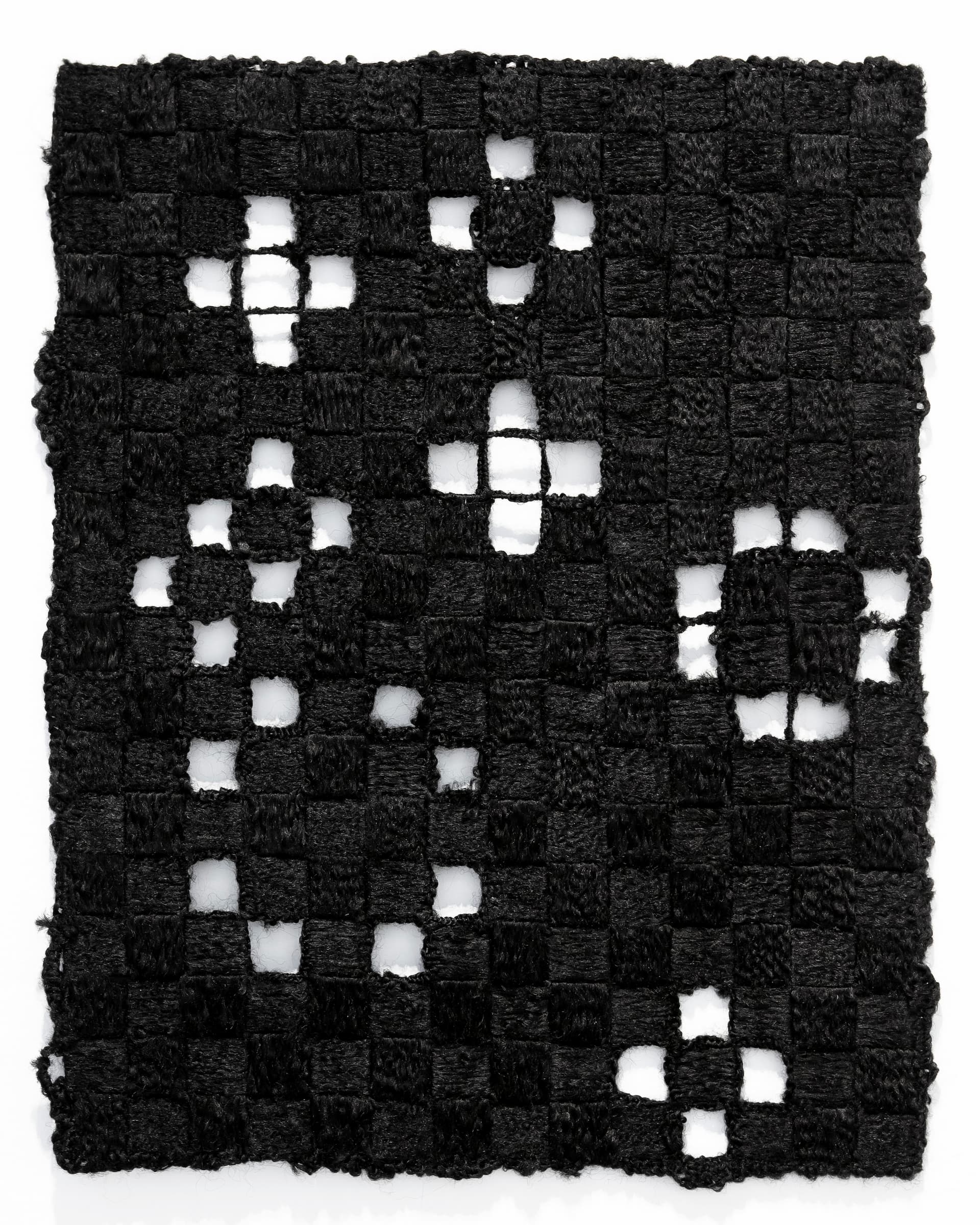
I recently had the pleasure of speaking with artist Angela Hennessy at her home in Oakland. Hennessy’s studio practice is shaped by what it means to call upon the dead as a pathway to contemplate and process individual and collective grief. Having been introduced to her practice years prior, I was grateful to be in community with an artist who shares my material vocabulary. As Black women, we both are aware of the social and political landscape that renders our bodies hypervisible yet disposable. Black hair becomes a methodology to interrogate this paradox. In this thinking, we root our conversation in the expansiveness of Black hair as a site for inquiry, discovery, and healing.
“...early on I understood my own hair as a failure to obey. But this kind of disobedience is something I appreciate and highlight now in my work. I’m always looking for the unruly moments because that is where you will find the truth.”
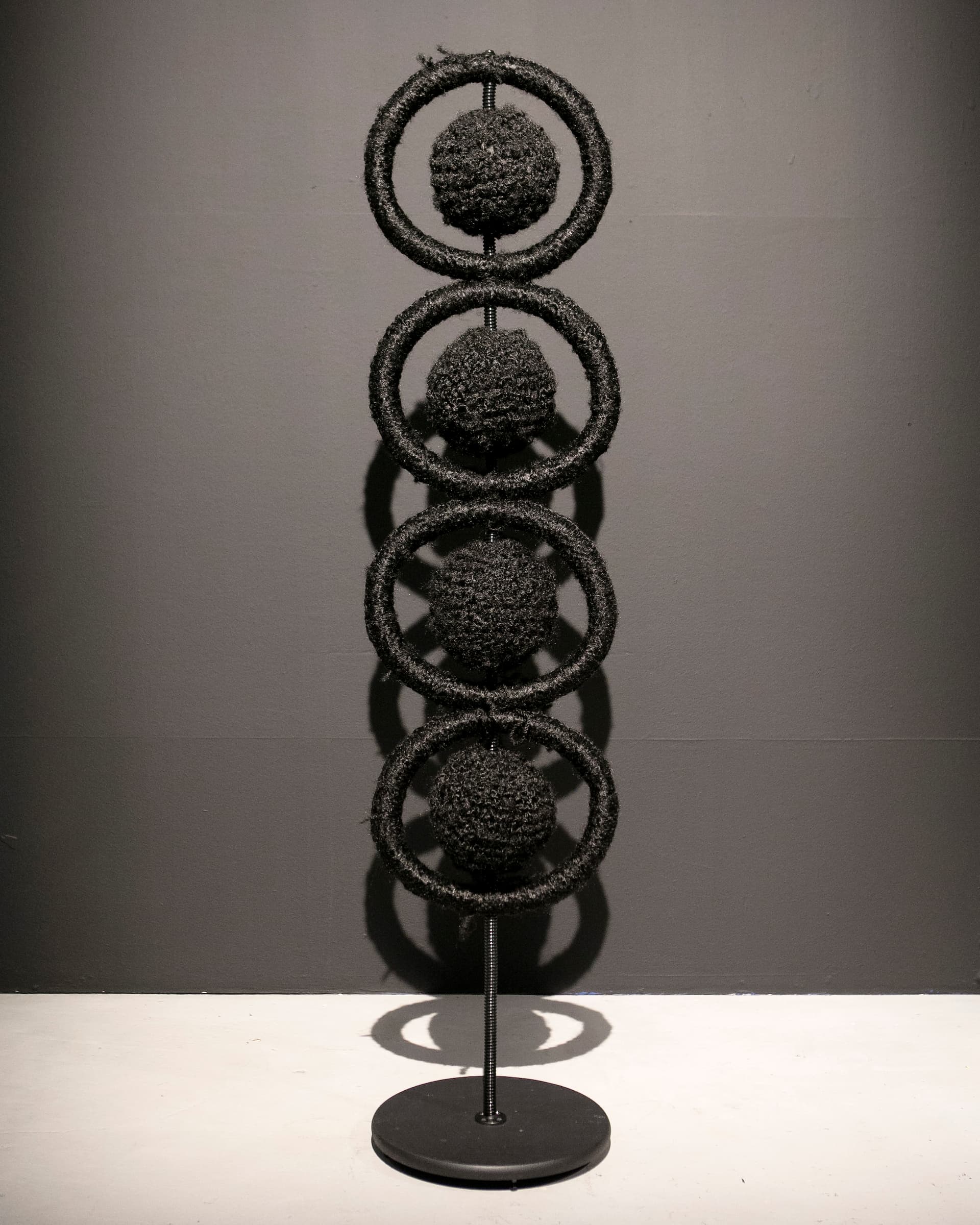
Nneka: Can I start with where your hair sensibilities began? Hair exists with us throughout our lives, physically and socially, constantly reshaping and transforming, as we do ourselves. How did this awareness of hair begin for you?
Angela: I don’t remember not being aware of hair, whether it was mine or someone else’s.
I grew up in a time when feathered hair was all the rage, so early on I understood my own hair as a failure to obey.
But this kind of disobedience is something I appreciate and highlight now in my work. I’m always looking for the unruly moments because that is where you will find the truth.
I also grew up with a lot of well-intentioned white women who were always trying to do something to my hair depending on the current trending desires of whiteness. My grandma had my hair straightened when I was eleven but it didn’t even work. Then suddenly curly hair was in. White women were getting perms and the Denise Huxtable look was hot and my hair was very popular.
“Angela’s work makes space for confrontation, grief, and tending to…Her work is an act of remembrance, a gesture of love.”
Nneka: The nature of textiles and fibrous material fosters an invitation to touch. When reflecting on the lineage of Black hair and its treatment under dominant European exoticism, I feel there is both accessibility to touch and, conversely, a suppression of anything phenotypically Black. How do you contend with these complex issues of touch within your work?
Angela: Touch is a human way of knowing and understanding something as distinct from one’s own body. It requires proximity and is therefore always intimate. It is how we cross our boundaries. To touch is to be touched. Which is to be changed. I’m hearing Octavia Butler’s words in my head.
Touch can also represent a claim, a kind of ownership–and without consent, a violation. I’m very aware of these complexities in general, but especially once the work leaves my studio and transitions to gallery or museum spaces. That desire to touch is a form of seduction I use strategically, perhaps to make opportunities to then say no. No, you can’t touch me.
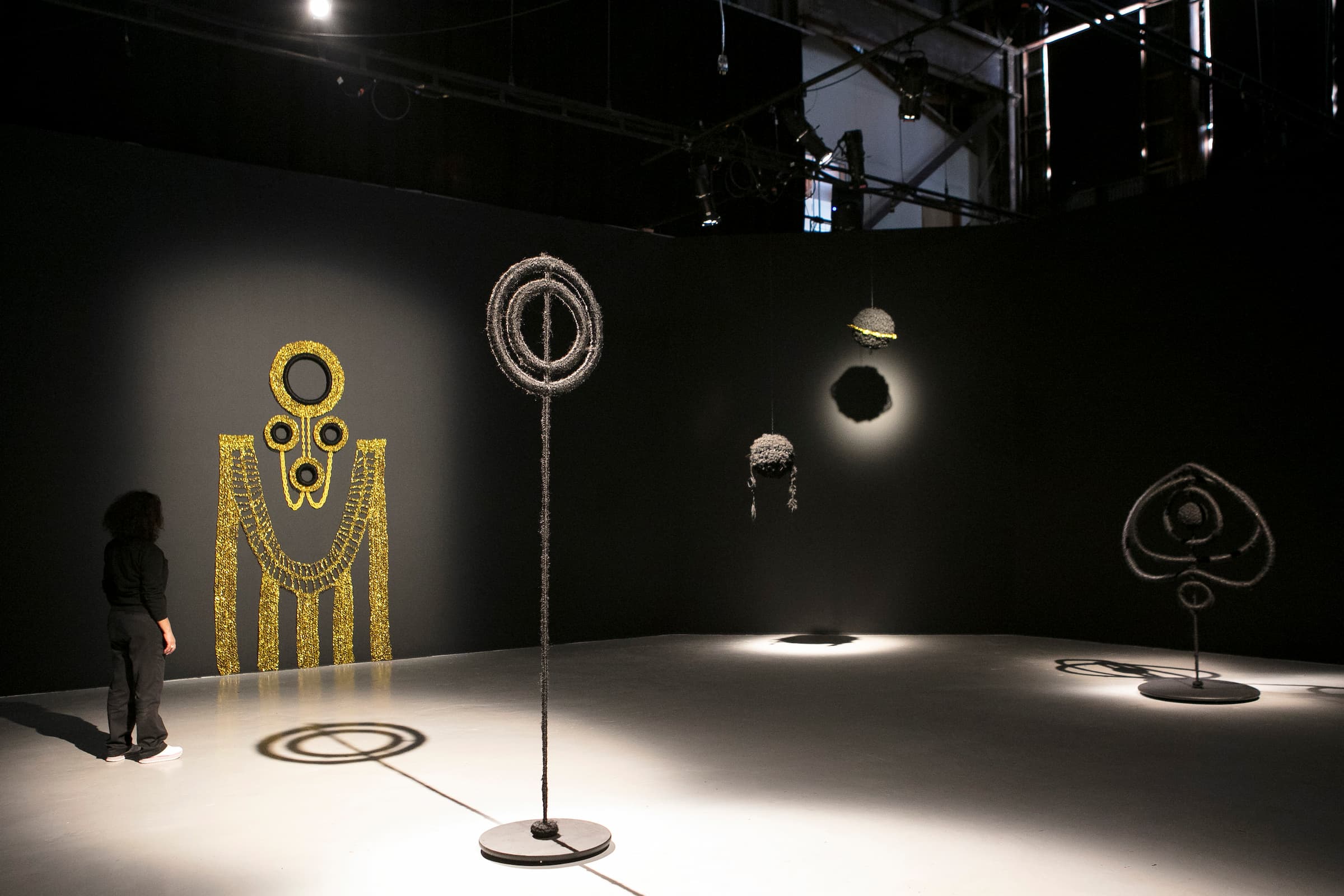
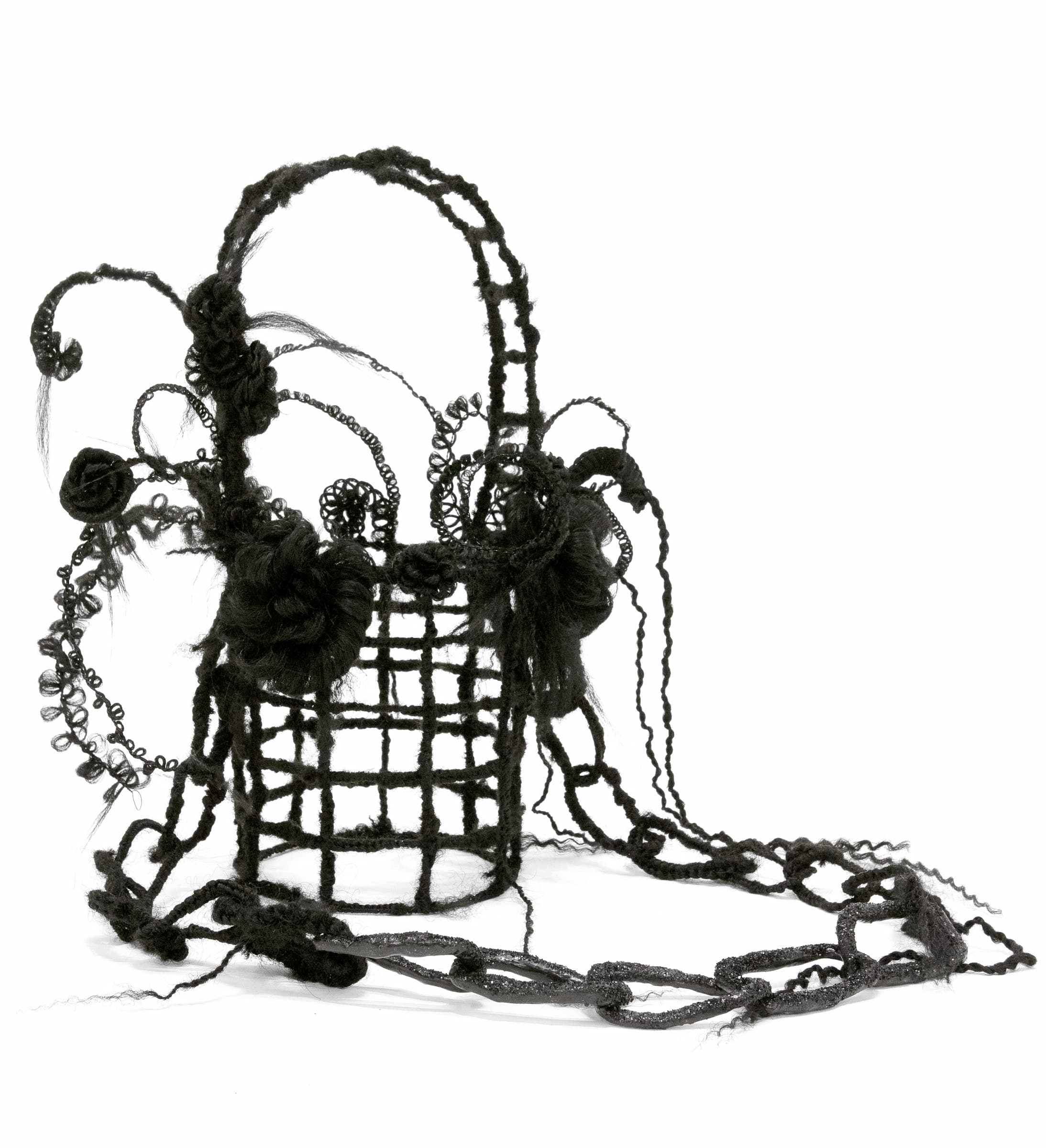
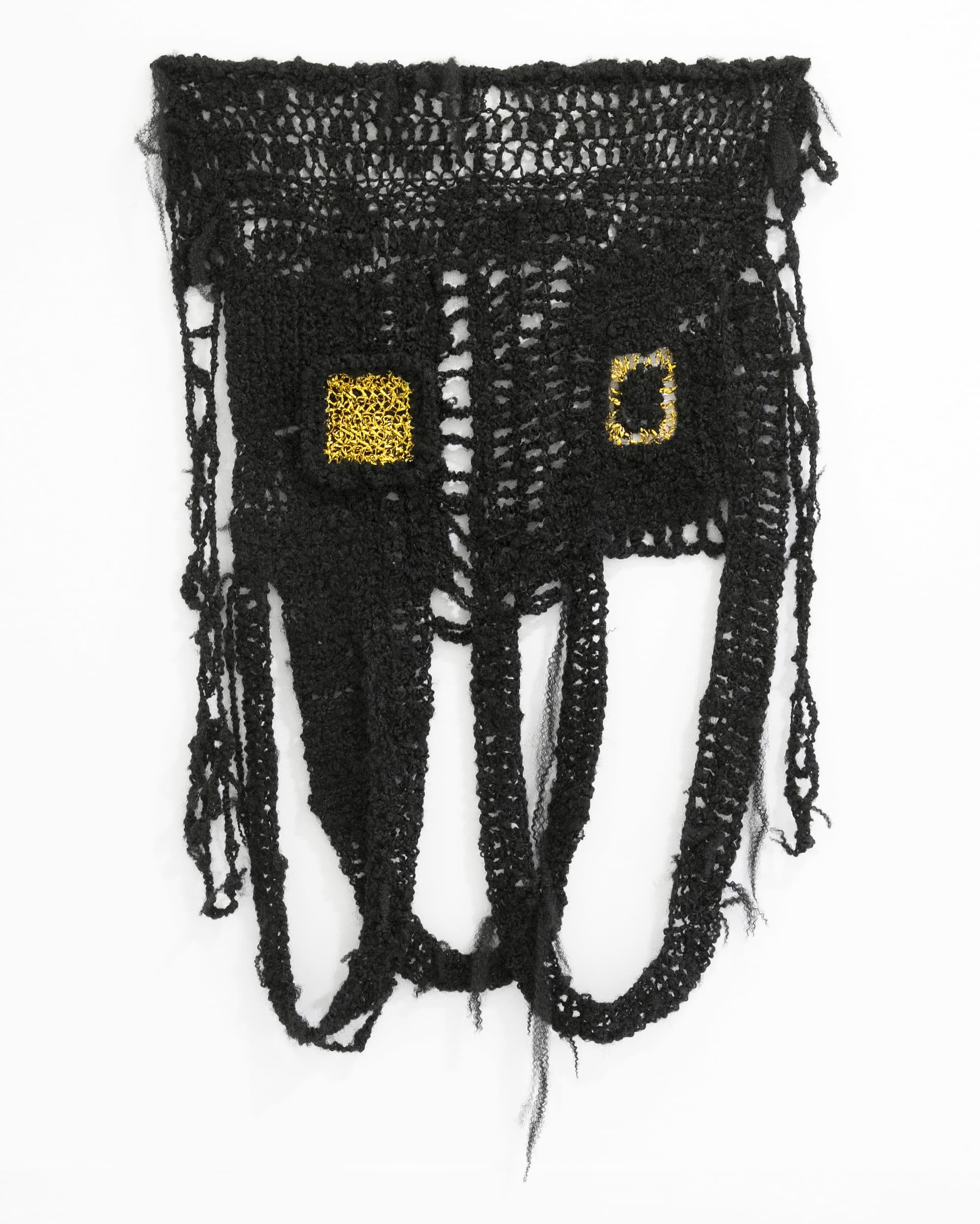
Nneka: I think of the texture and manipulation of the hair as playing with the elements of light and shadow. A braid has a different shade and curve than a two-strand twist. How is the element of light thought about within your creative and installation process?
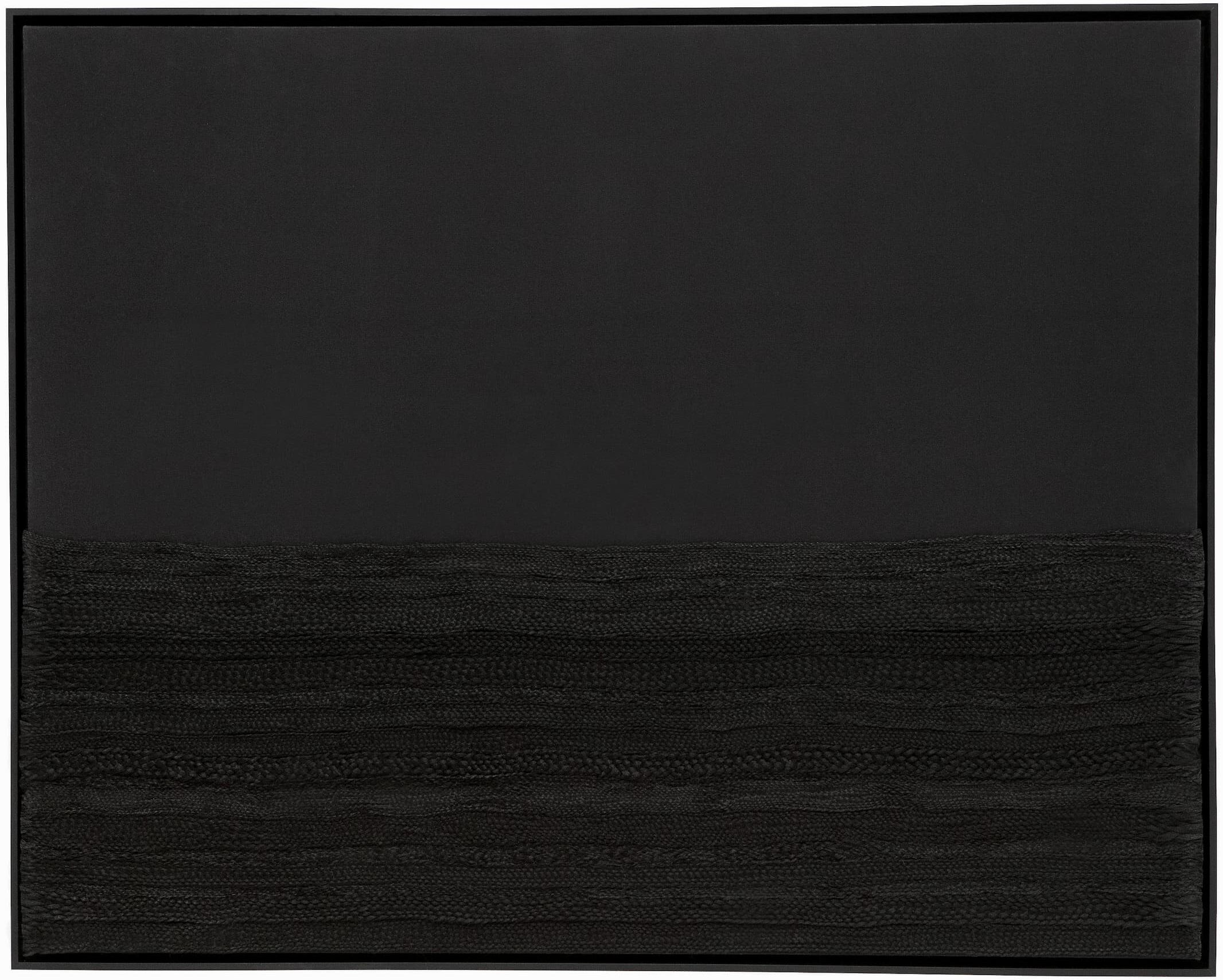
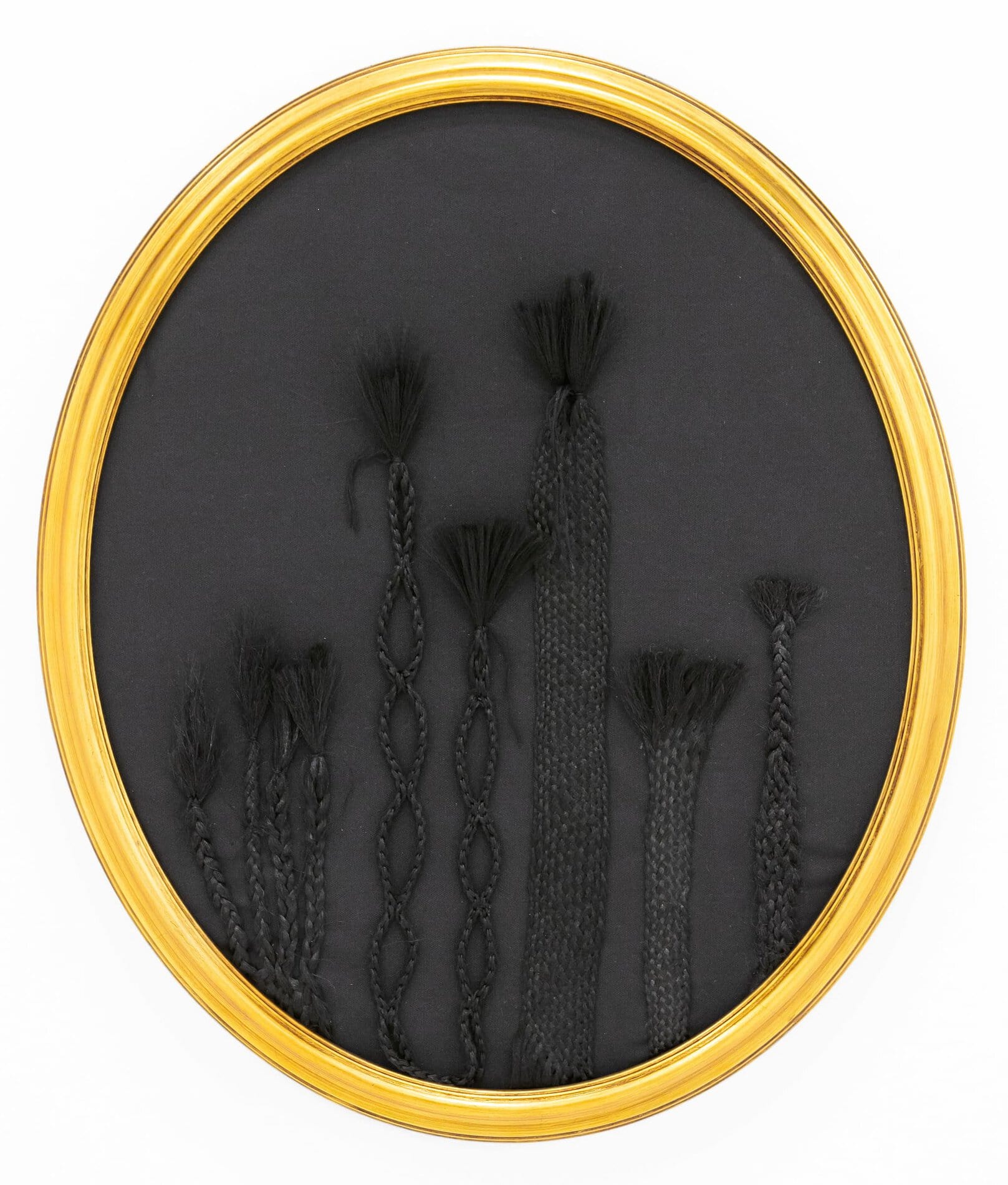
Angela: I choose my materials based on their interaction with light—whether they are absorbing, reflecting, or even bending light. This goes back to color in mourning practices and what it does to the eye first and then to the body as a whole. I use many different kinds of hair of various textures and even in a limited range, for example, of two different shades of black, the subtleties will be made more or less visible by the surface. So a three-way braid versus a twenty-way versus two ply twist will yield really beautiful distinctions.
Nneka: Unfortunately, you were a victim of gun violence back in 2015. How did that experience inform the writing of your manifesto, School of the Dead, and the creation of multiple sculptures in the wake of that experience?
Angela: After the shooting, which I awkwardly but also affectionately call “my” shooting, I forgot how to make art. I felt ambivalent about making things that took up space three dimensionally. I didn’t want the responsibility or obligation to care for things. I was deep in an existential crisis, questioning the purpose of art and its relevance. I couldn’t listen to music, I couldn’t hear myself think, I had little desire to speak, words felt inadequate. I did obviously make my way back to making things but it was through language first. I became very curious about the way words take up space and live as sound or even memory in the body, and that was a space I wanted to occupy. Very slowly, I started writing as an attempt of tracking my experience—making lists of things I knew for sure, of what I could count on. And then also questions—questions that had no answers, that were there floating in my head. And then I began to see my materials, color palette, ritual gestures. Everything became a form of communication.
Nneka: Can you lastly discuss what you’re working on or the questions and curiosities currently guiding your practice?
Angela: Flowers as a symbol of both grief and joy. How is their beauty deceptive, and might I use that to gain entry or access to other emotions?
I reflected on our conversation for a while after we said farewell. I thought about how we are sisters through our shared material language, and felt that sense of comfort that comes from seeing yourself reflected in another. Angela’s work makes space for confrontation, grief, and tending to. Through hair, she provides a route for those who meet and encounter her work, giving them a chance to call upon their dead. Her work is an act of remembrance, a gesture of love.
Angela Hennessy’s work will be featured in a group show at the San Francisco State University gallery in August 2026.
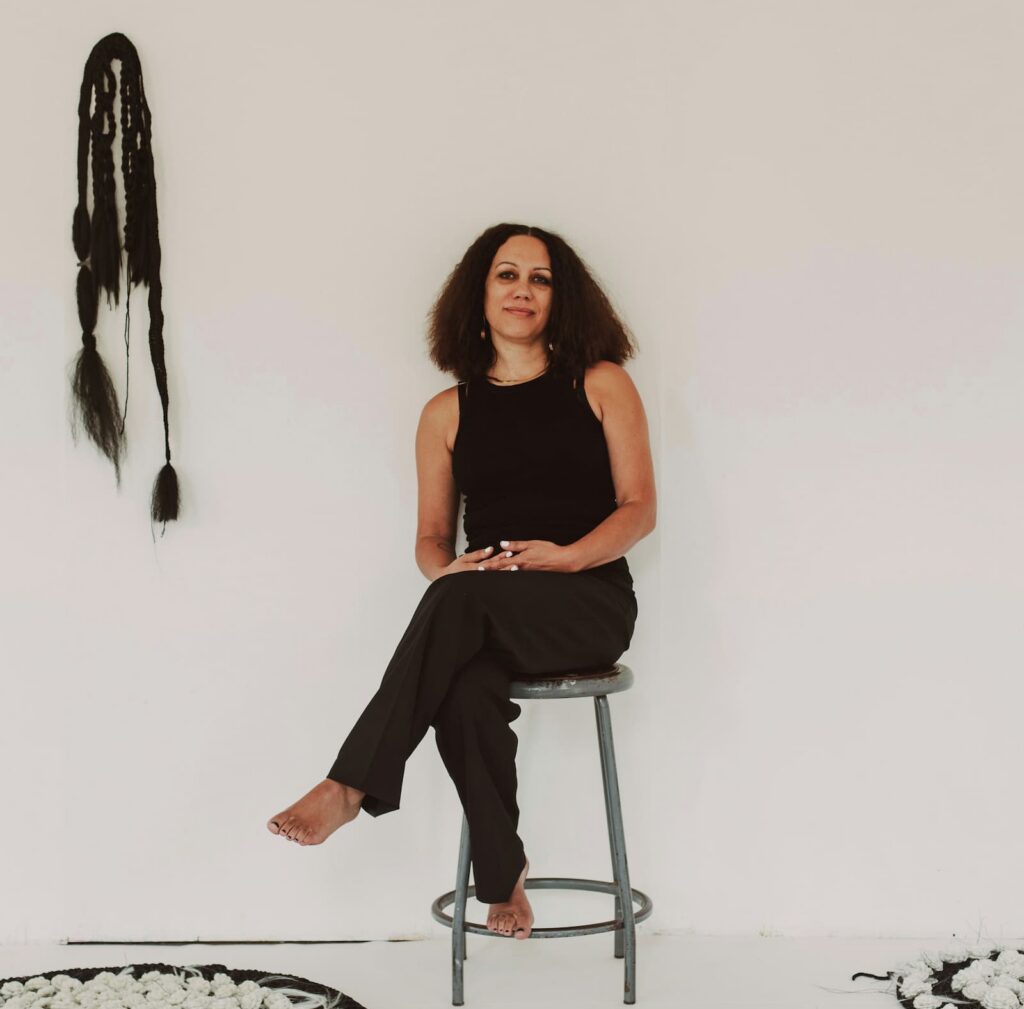
Angela Hennessy is an Oakland based artist and survivor of gun violence. She constructs sculptures and installations with everyday domestic labor—washing, wrapping, stitching, knotting, brushing, and braiding. Her work has been shown at McEvoy Foundation for the Arts, Museum of the African Diaspora, Oakland Museum of California, and Pt. 2 Gallery, and is in the collections of the de Young Museum and the Crocker Art Museum. Her audio guides, meditations, and poems have been featured at the Wattis Institute, de Young Museum, and SOMArts Gallery. Hennessy holds an MFA from California College of the Arts where she teaches courses on contemporary narratives of death. For many years she served as a hospice volunteer and death doula working with families on home funerals, death vigils, and grief rituals. She trained with Final Passages, International End of Life Doula Association, and the Grief Recovery Institute. Her work has been recognized by San Francisco Artadia, Svane Family Foundation, Joan Mitchell Foundation and Fleishhacker Foundation. She has been a resident at the Headlands Center for the Arts, and her show Griefkeepers was featured in SFMOMA’s 2024 SECA Art Award exhibition. She is on the advisory board of Recompose Seattle and lectures nationally on aesthetic and social practices that mediate the boundary between the living and the dead.
To learn more about the work of Angela Hennessy, visit angelahennessy.com / @thehouseofhennessy
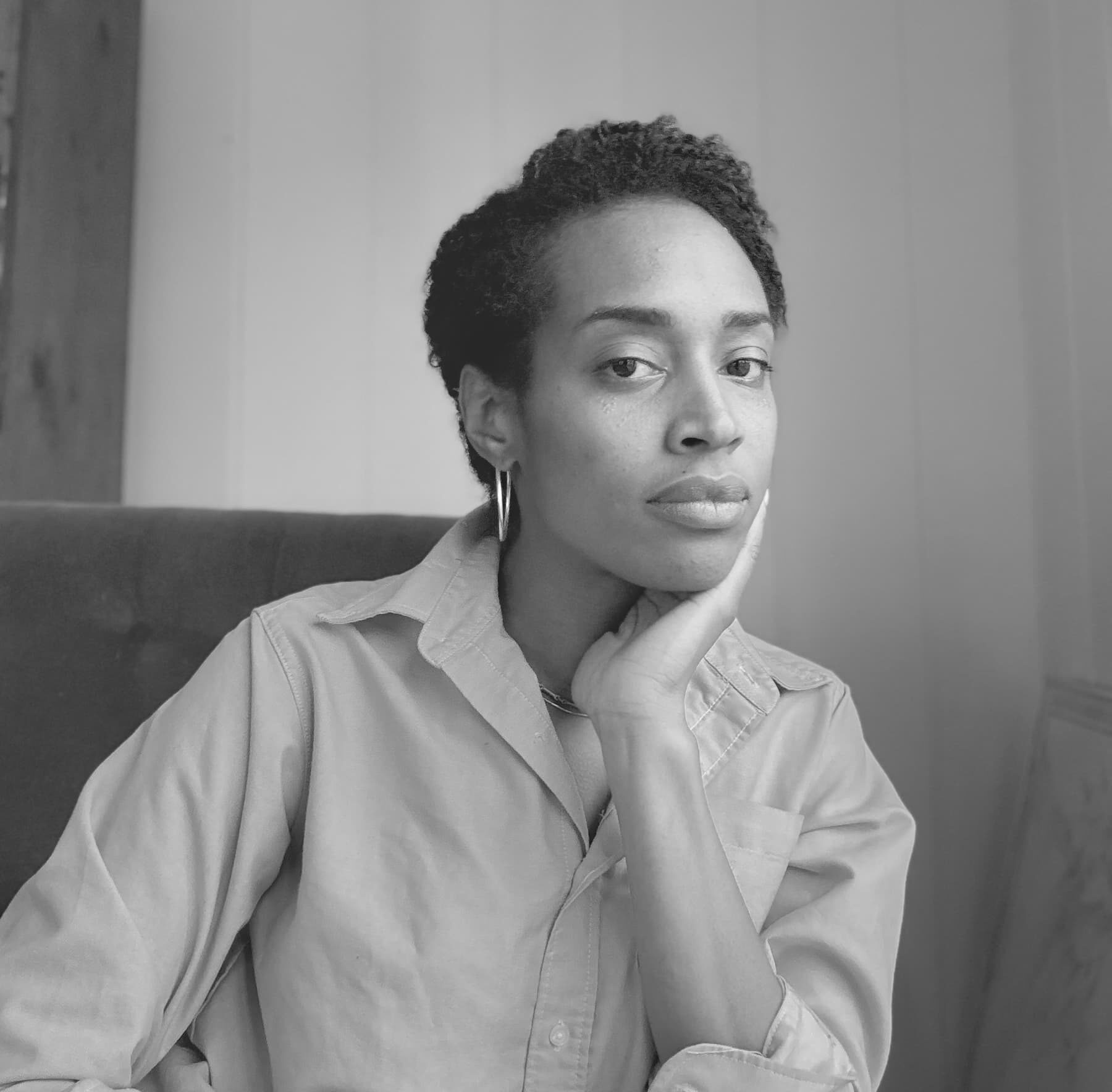
Nneka Kai is an interdisciplinary artist, writer, curator, and educator based in upstate New York. Her research-driven studio practice explores the intersections of fiber histories and Black visual aesthetics with particular attention to materiality as a site of cultural memory and resistance. Kai received her MFA in Fiber and Material Studies from the School of the Art Institute of Chicago and her BFA from Georgia State University. She currently teaches sculpture at Pratt Munson and has recently curated an exhibition, On Loss & Absence, Textiles of Mourning and Survival Exhibition in collaboration with the Art Institute of Chicago’s Textiles Department. She is the recipient of the 2023 Artadia Award (Atlanta). Her work has been exhibited in solo and group exhibitions in Atlanta, Chicago, Berkeley, and New York.
To learn more about the work of Nneka Kai, visit nnekakai.com / @nneka_kai