
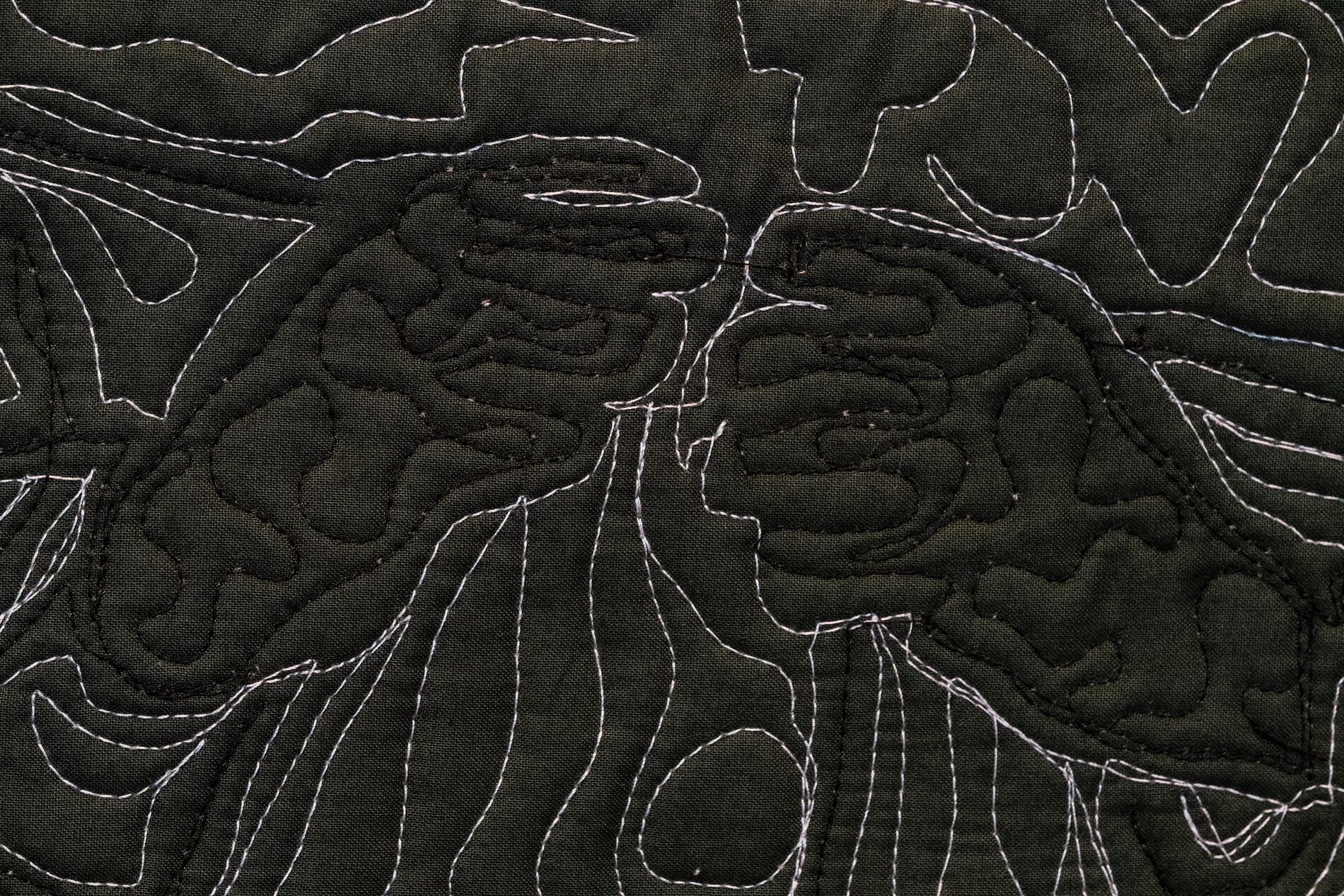
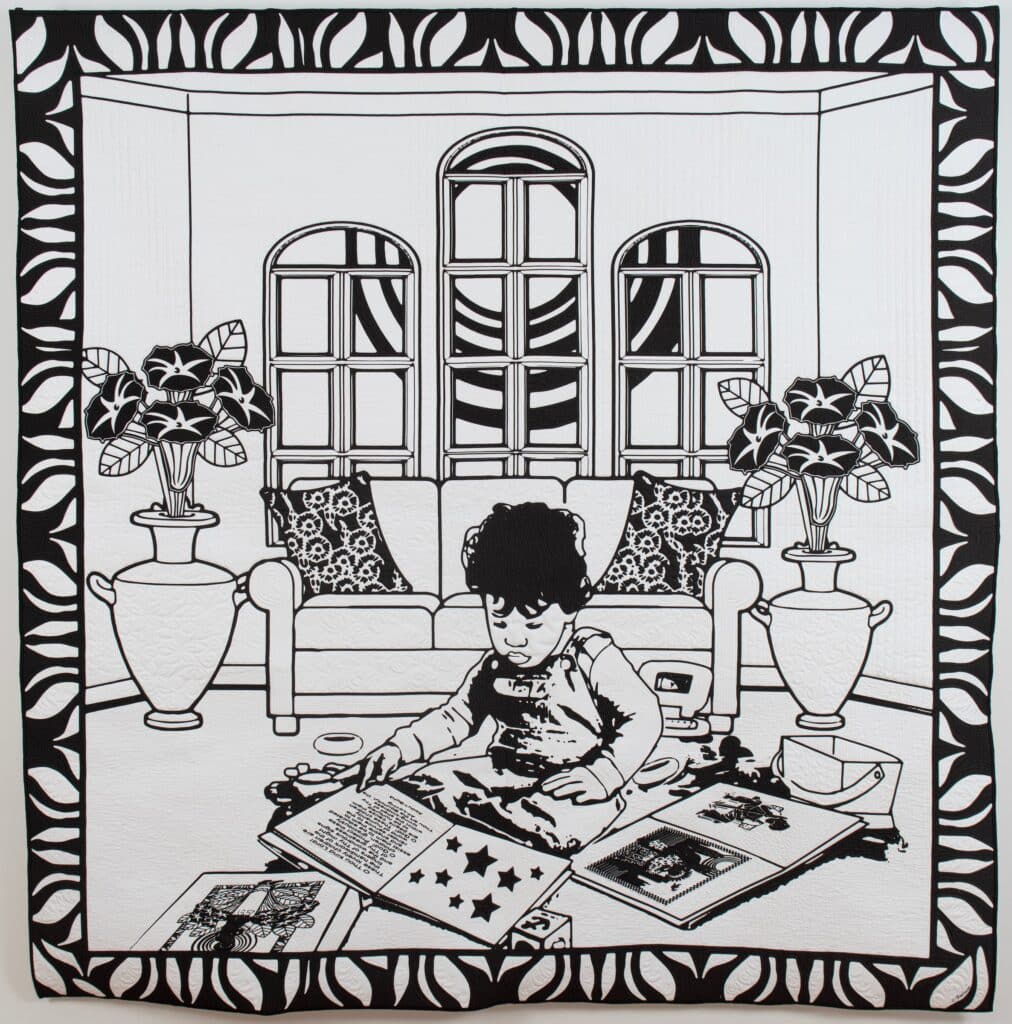
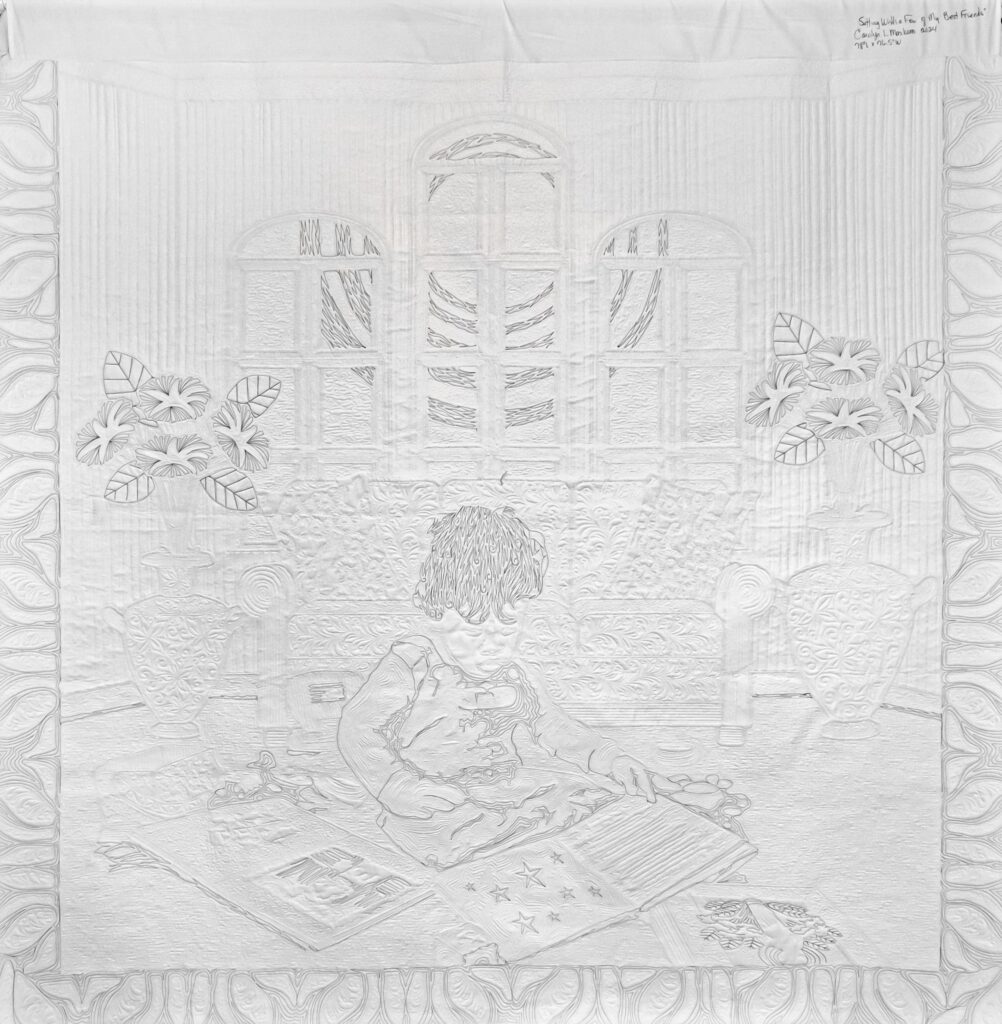
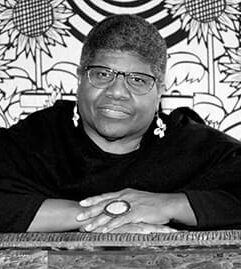
There is a quiet power in whole cloth quilts. At first glance, they easily slip past an unassuming viewer. With time and close study, ghostlike stitches become legible across one vast field of fabric. Without the distraction of patchwork, elaborate quilting comes together to create a kaleidoscope of texture that commands attention. Under the hand of Dr. Carolyn Mazloomi, however, a whole cloth surface blooms into something more: it transforms into a site of reinvention, where material portraits become monuments and archives.
Dr. Mazloomi has long been a keeper of stories and culture. Through work of the hand, she has committed herself to amplifying hidden histories and moments of cultural significance for future generations. Through work of the heart, she has situated herself as one of the most important scholars and advocates of African American quiltmaking. As founder of the Women of Color Quilters Network, Dr. Mazloomi has stewarded risk-taking curatorial projects that ensure the voices of Black quiltmakers are heard and honored. In her own quilts–especially this most recent series of whole cloth works–she turns inward, allowing the material to speak in its full gravity. These pieces stand as monuments not only to history but also to cultural ancestors whose legacies are in constant threat of erasure.
The front of each quilt demonstrates an intentional restraint of Mazloomi’s palette. Most are almost entirely black and white, with flickers of color methodically placed throughout. Her choice of color is an apt analogy for how race in America is critiqued within her work. On one hand, she offers a commentary on how white supremacy continues to oppress and divide based on these arbitrary color lines. Conversely, her use of black feels more akin to a reclamation. The inversion of black across the figures is celebratory in its presentation. She leaves no room for misinterpretation about the beauty and richness found in the color ’s purest form, and demands it be treated as such. Her journey into alternate hues is transient, only emerging in whispers as a means of creating visual interest and a sense of whimsy or emphasis in select works.
“Dr. Mazloomi has long been a keeper of stories and culture. Through work of the hand, she has committed herself to amplifying hidden histories and moments of cultural significance for future generations. Through work of the heart, she has situated herself as one of the most important scholars and advocates of African American quiltmaking.”
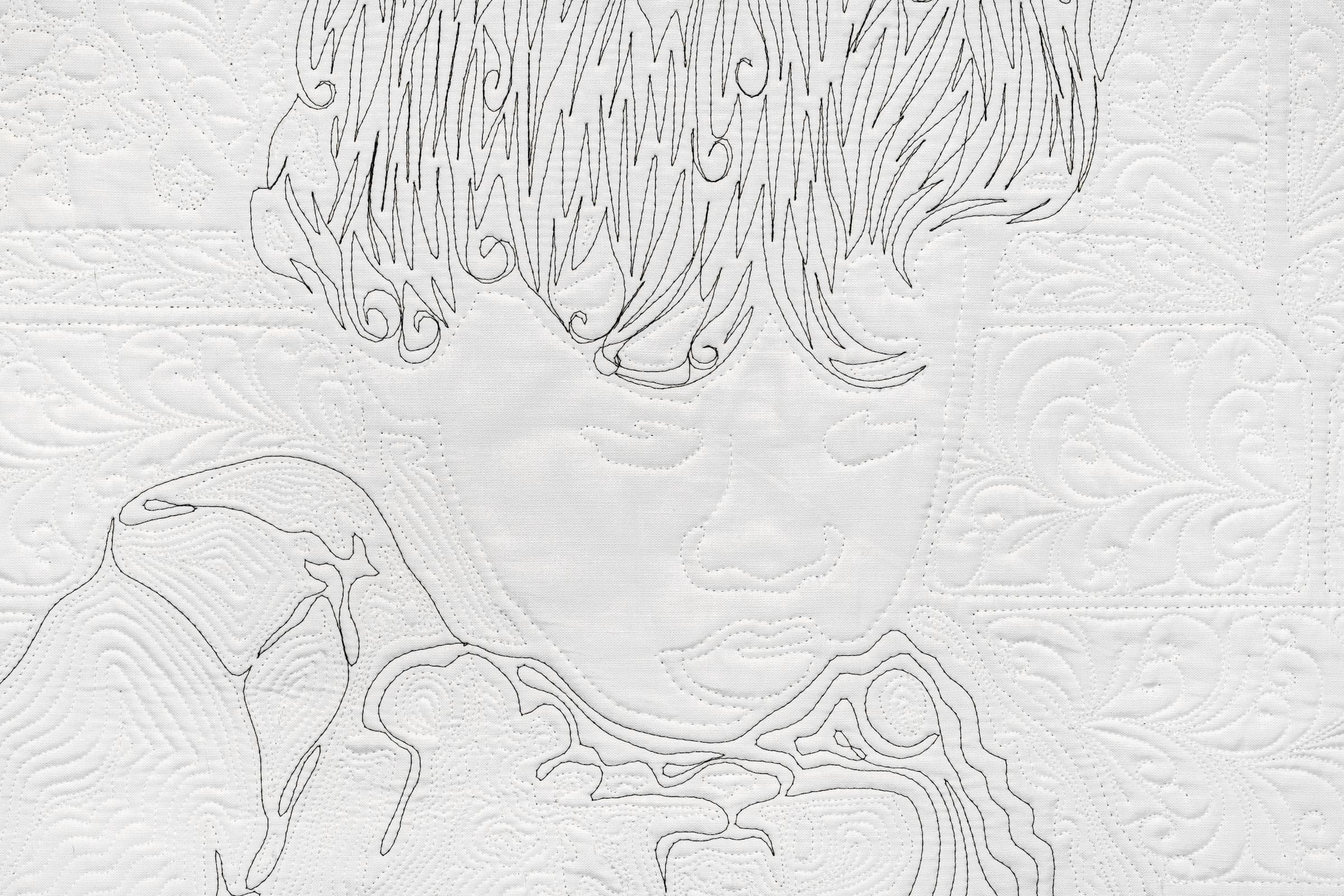
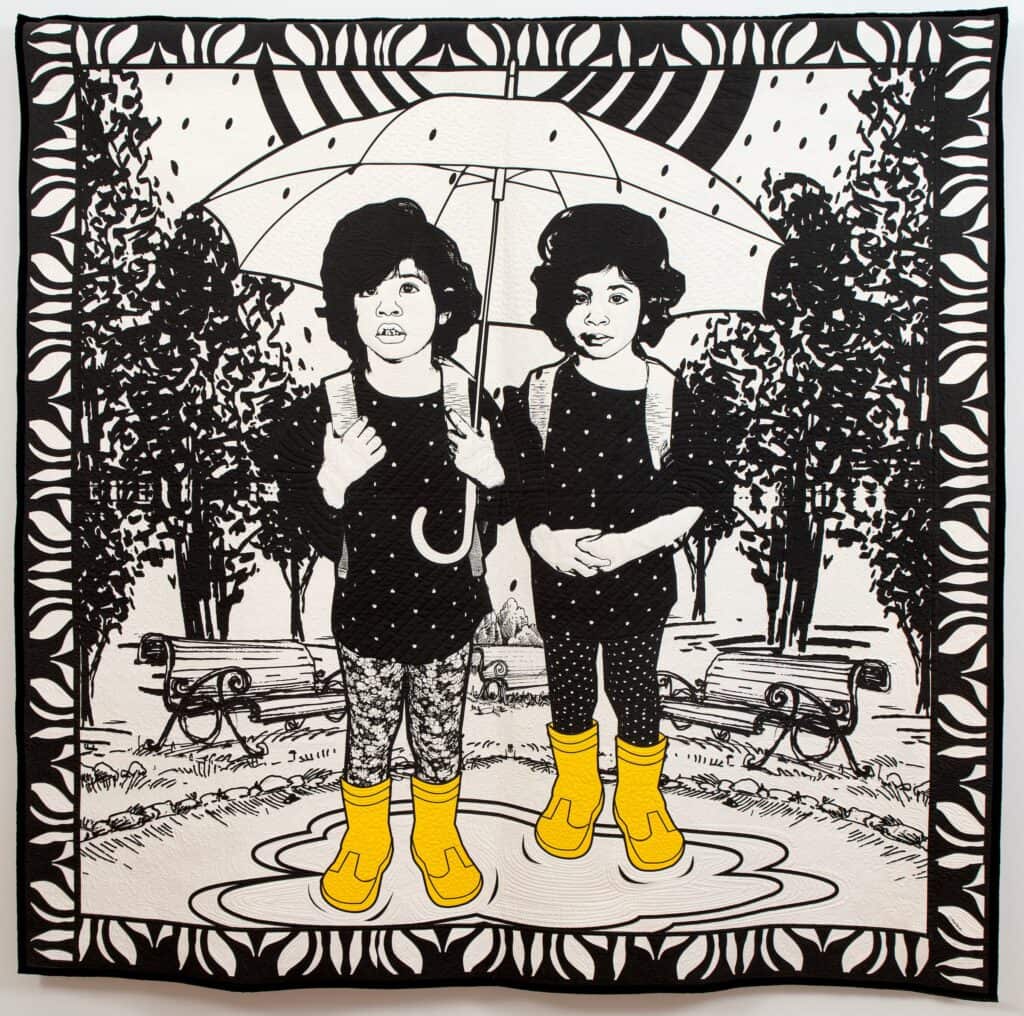
The act of depicting these heroes and visionaries in their fullness is in itself deeply caring and reverent. In a world where Black bodies have historically been treated as commerce and collateral, art offers a way to reinstate humanity and wholeness in the wake of oppression. Mazloomi’s embellishment of these portraits only further emphasizes how she venerates Black lives as a visual griot. Her commitment to preserving their dignity with love is found within every topstitch. She invokes thread as a drawing tool that can illuminate a weft of hair, a fold of cloth, or the upward curve of a cheek. The depth of texture that Mazloomi expertly crafts is evidence of her careful consideration of every subject she chooses to portray. As she maps and puckers each pocket of fabric, she is sitting in the memory of the injustices they have faced and the resilience they embody.
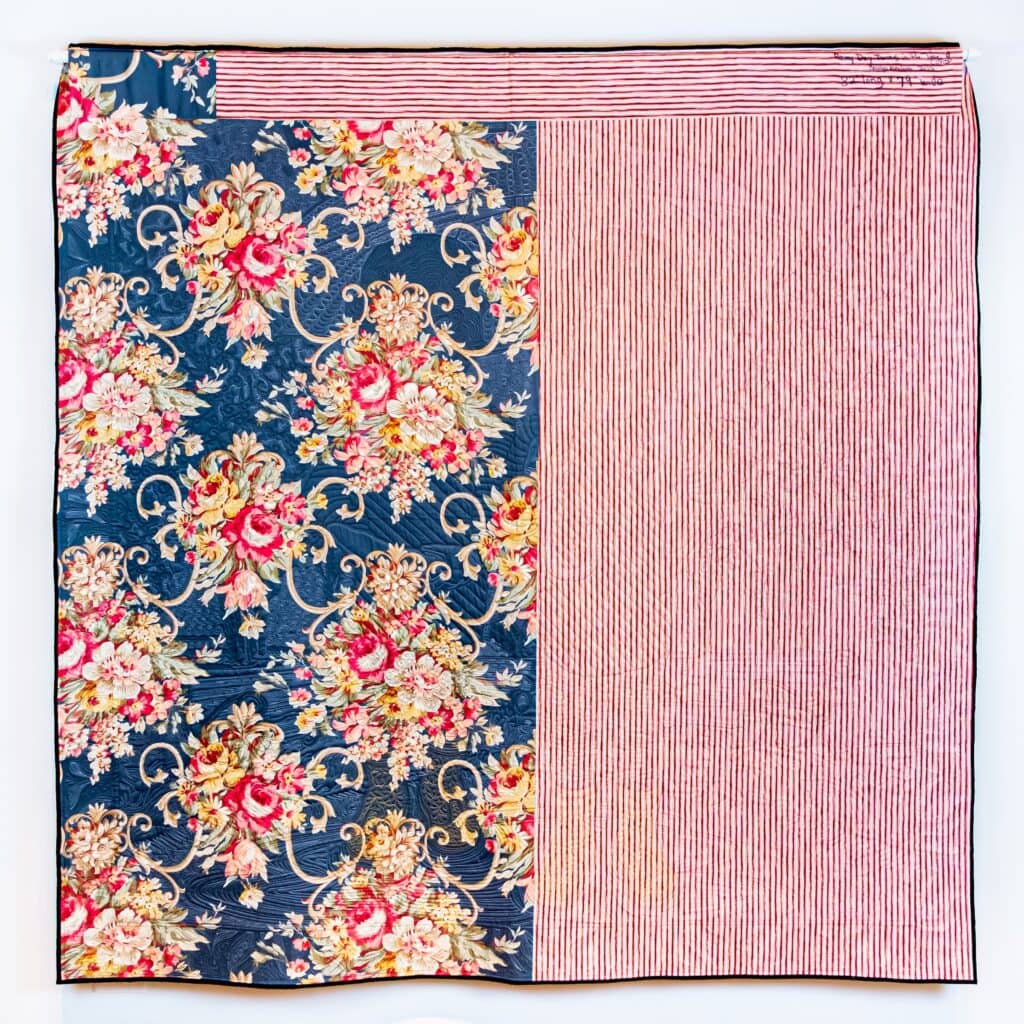
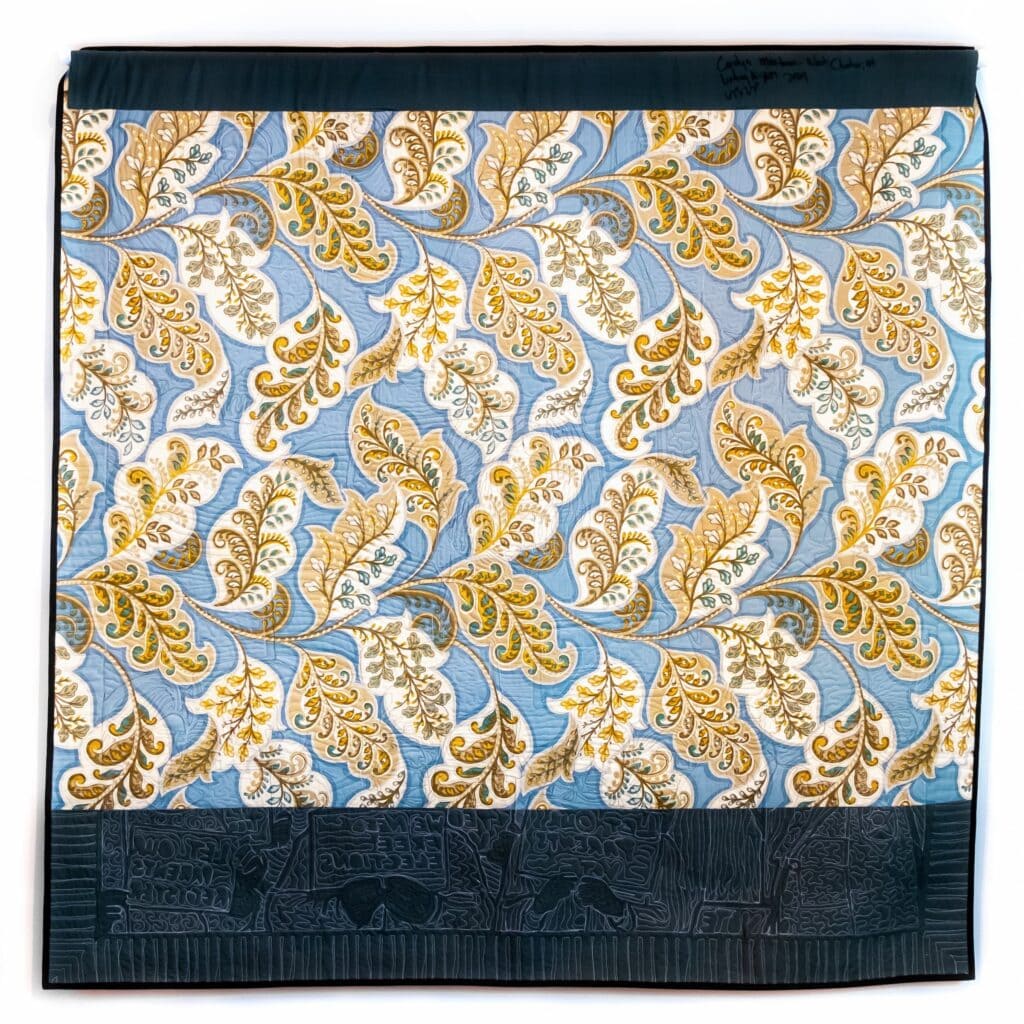
While the tops of her quilts capture a primary narrative, the backings tell a secondary story. They speak to her mastery and vulnerability as an artist. With no pieced pattern to carry the eye, every line must bear the full weight of meaning found within the work. However, Dr. Mazloomi’s hand does not falter. With the subjects out of view, one can truly appreciate Mazloomi’s patient process and deep trust in cloth to hold all that her stitches wish to say. Whereas the front of a quilt may speak to an external narrative, the back is an intimate encounter with the hand of the quilter and their relationship to the material.
In Dr. Carolyn Mazloomi’s world, whole cloth becomes a whole story. Her quilts do not simply depict history, they embody it. Dr. Mazloomi reminds us that cloth does not have to be neutral. Instead, it can offer us a meditation on Black life that is both soft and unflinching.
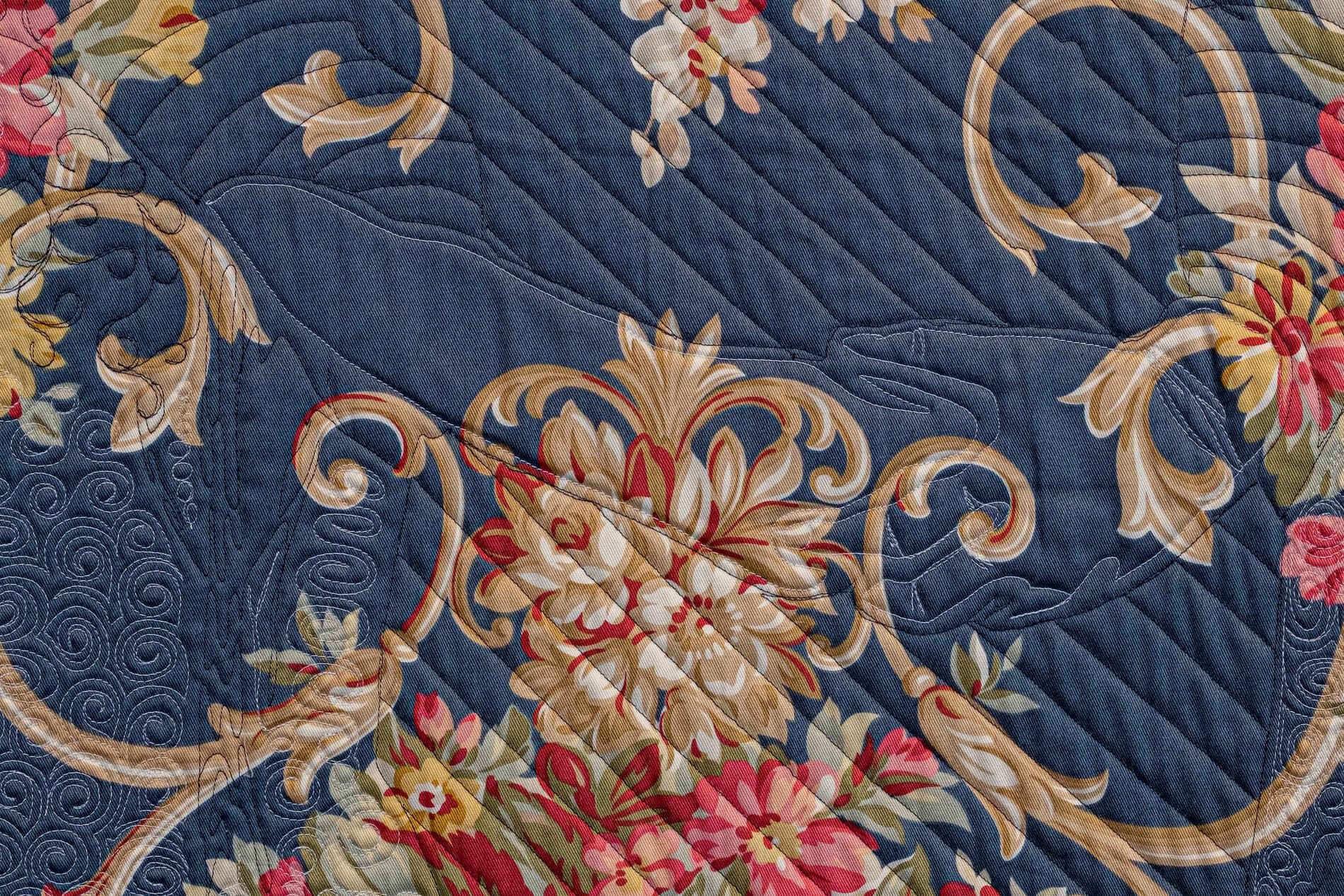
“In a world where Black bodies have historically been treated as commerce and collateral, art offers a way to reinstate humanity and wholeness in the wake of oppression.”
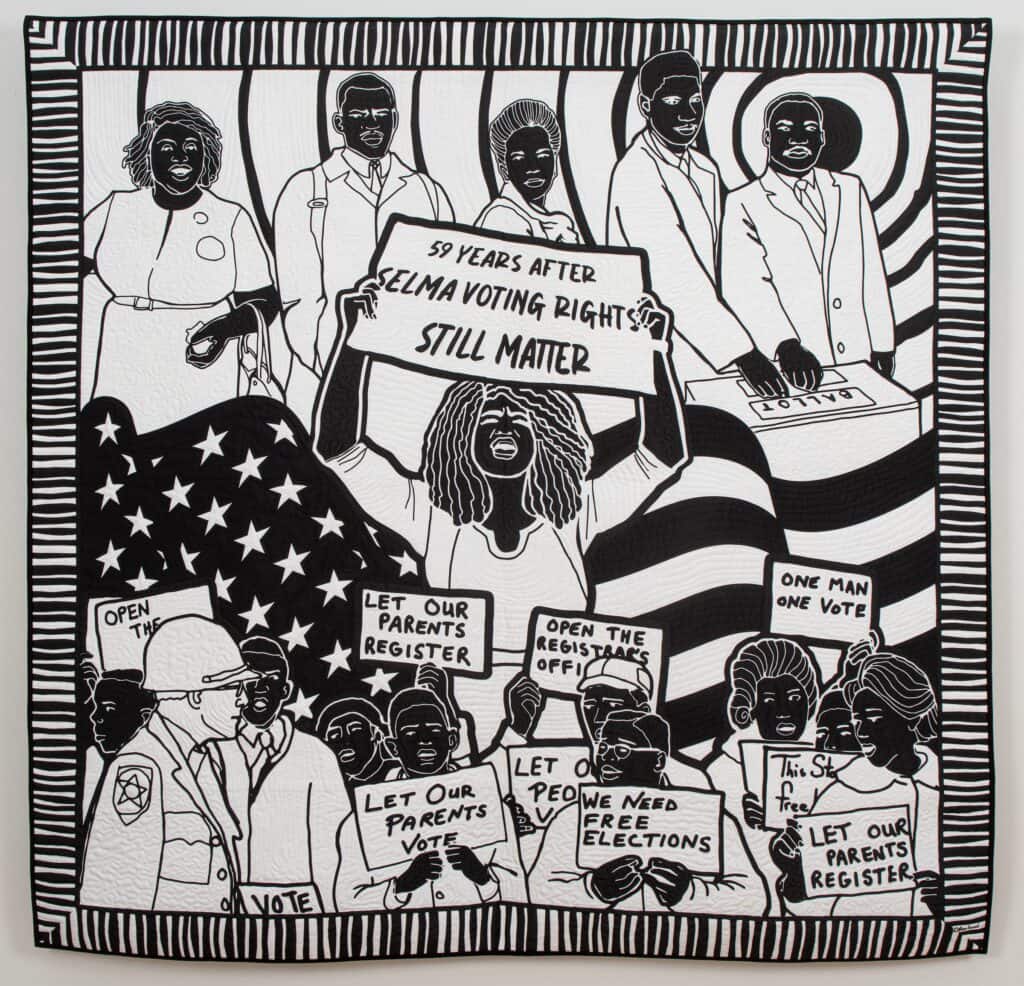
Dr. Carolyn Mazloomi’s black-and-white quilts catalyze ideas illustrated in her diaries and sketchbooks, where she embarks on in-depth explorations into the lives of freedom fighters. From these pages, her drawings are printed onto cotton fabric in rich, black ink reminiscent of the bold graphics captured in woodblock prints and indelible photographs reproduced in newspapers. During the labor-intensive process of appliqué — a technique for creating shapes by sewing on fabric patches — Mazloomi builds the compelling and complex narratives of Black trailblazers, memorializing their stories for the future generations. Each quilt is framed by a patchwork border — kaleidoscopic, geometric patterns that celebrate the quilting community and those craft traditions that she has made significant contributions to as a curator, author, and community organizer.
To learn more about the work of Dr. Carolyn Mazloomi visit carolynlmazoolmi.com / @carolynlmazloomi
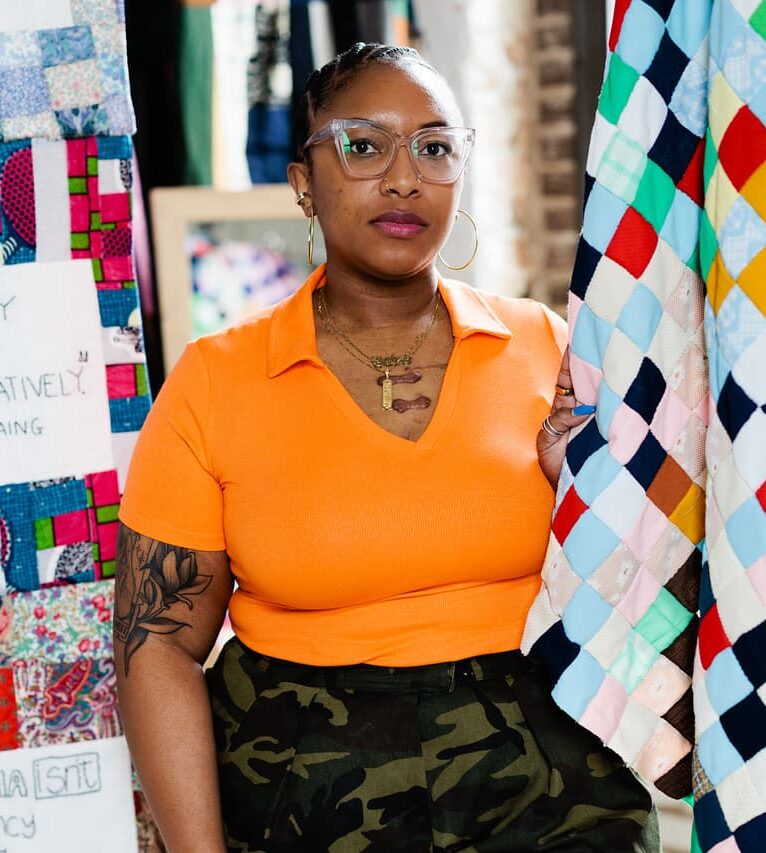
Dr. Sharbreon Plummer (she/her) is a curator, researcher, and creative practitioner with a heart for expanding how artistic practice is defined, supported, and framed through theory. Her upbringing in Southern Louisiana informs her interest and investment in how culture and ancestral memory act as influencers of identity and contemporary artistic production, especially within textile-based practices. For nearly fifteen years, her praxis has involved shaping resources for communities of creators whose work serves as an act of resistance, self-determination, and collective freedom.
She has facilitated and presented work at institutions such as Project Row Houses, the African American Museum in Philadelphia, Rhode Island School of Design, Americans for the Arts, Berkeley Art Museum and Pacific Film Archive, and Princeton University, among others. A few of her creative projects include her internationally distributed zine, Diasporic Threads: Black Women, Fibre and Textiles (2022) and The People’s Quilting Bee (2023-24), an international public humanities course and quilting circle co-founded with Dr. Jess Bailey. She has organized curatorial projects such as Of Salt and Spirit (2024), Stitching Abolition (2022) and Mirrored Migration (2017).
Sharbreon has also been featured as an artist-in-residence at Rogers Art Loft (Las Vegas, NV) and Arquetopia (Oaxaca, MX). She is the author of the forthcoming text Black Quilts: Memory, Methods and Medicine (Chronicle Books, 2026) and is a staff writer at Quiltfolk Magazine. Sharbreon currently serves as Artistic Director at Threewalls and maintains her creative consultancy AYA Thought Studio. She holds a Ph.D. in Arts Administration, Education and Policy at The Ohio State University.
To learn more about the work of Sharbreon Plummer visit sharbreonplummer.com/ @sharbreon