
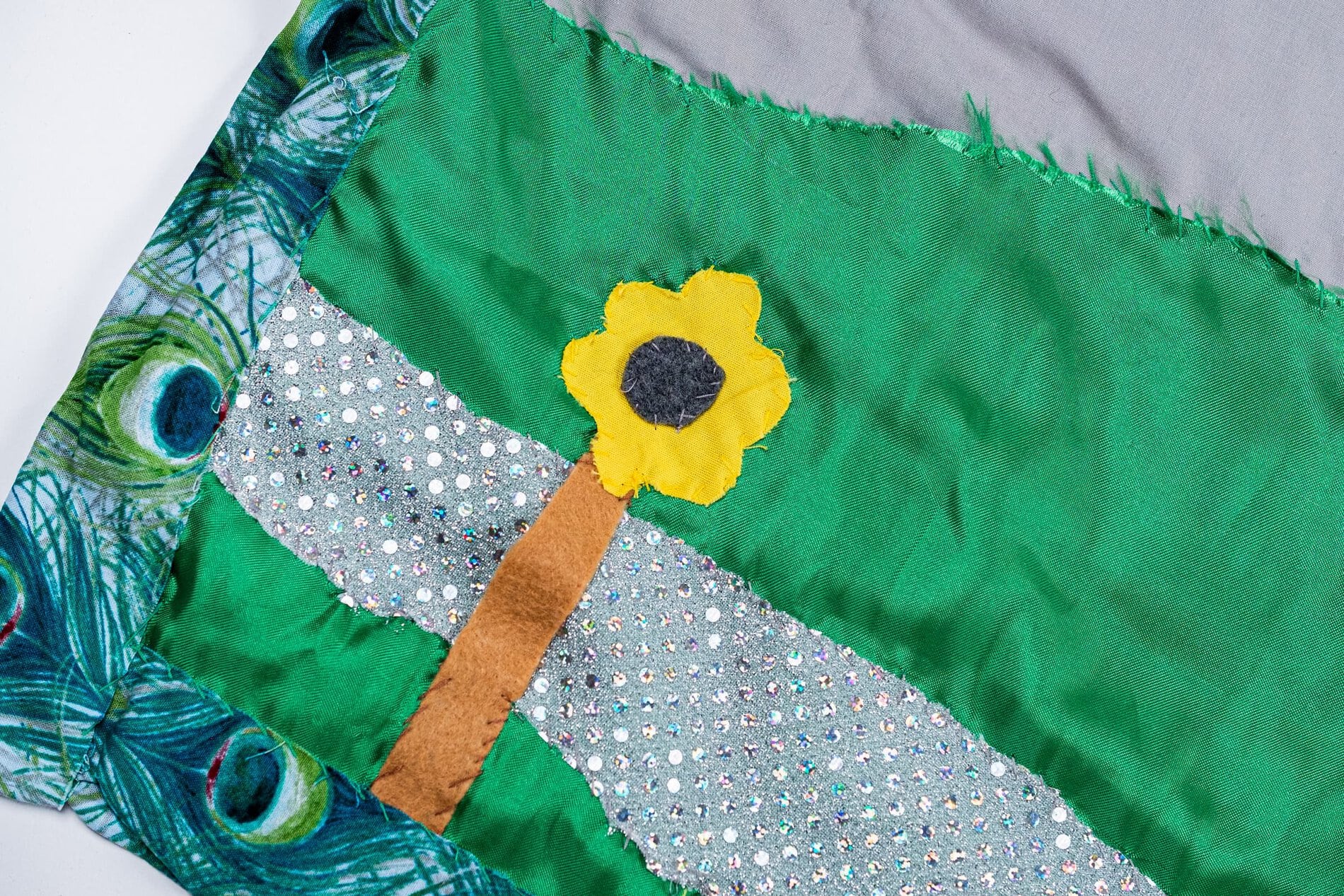
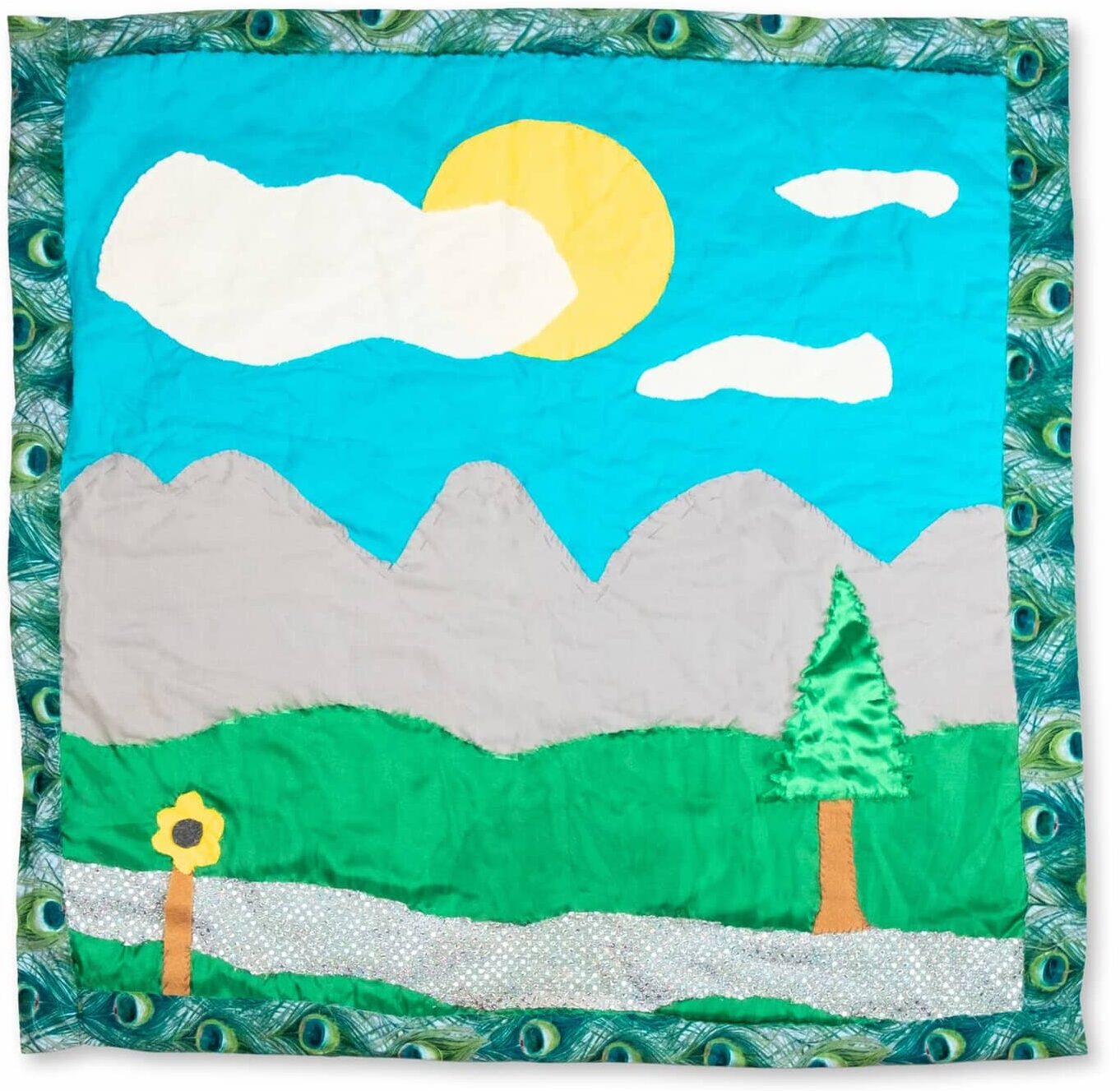
I enrolled in my first formal quilting class at the behest of my father, the late Akbar Imhotep, himself a carrier of the vernacular art of storytelling. Pursuing a connection with his An’ Couda and An’ Beulah Mae, he started taking an online quilting class offered to seniors by the Fulton County Arts Commission. This class was taught by a close family friend, Mama Darlyne Dandrige.
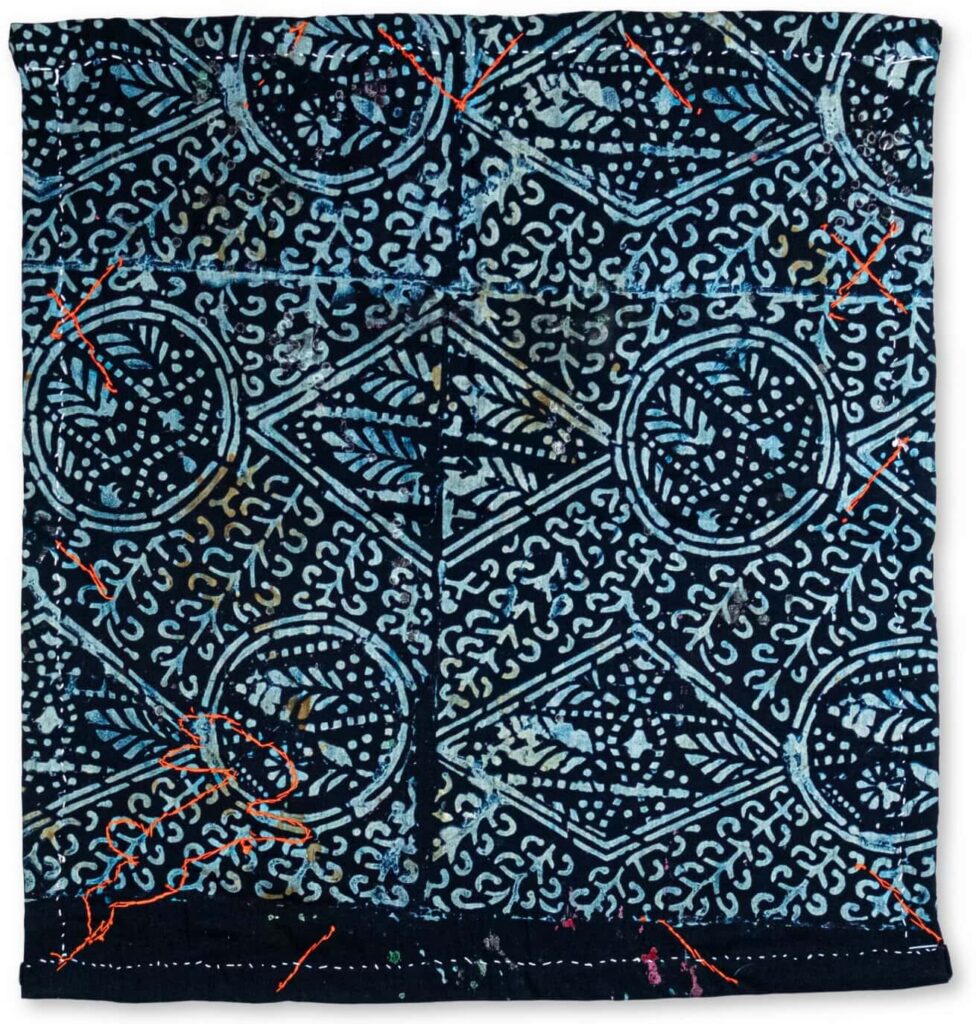
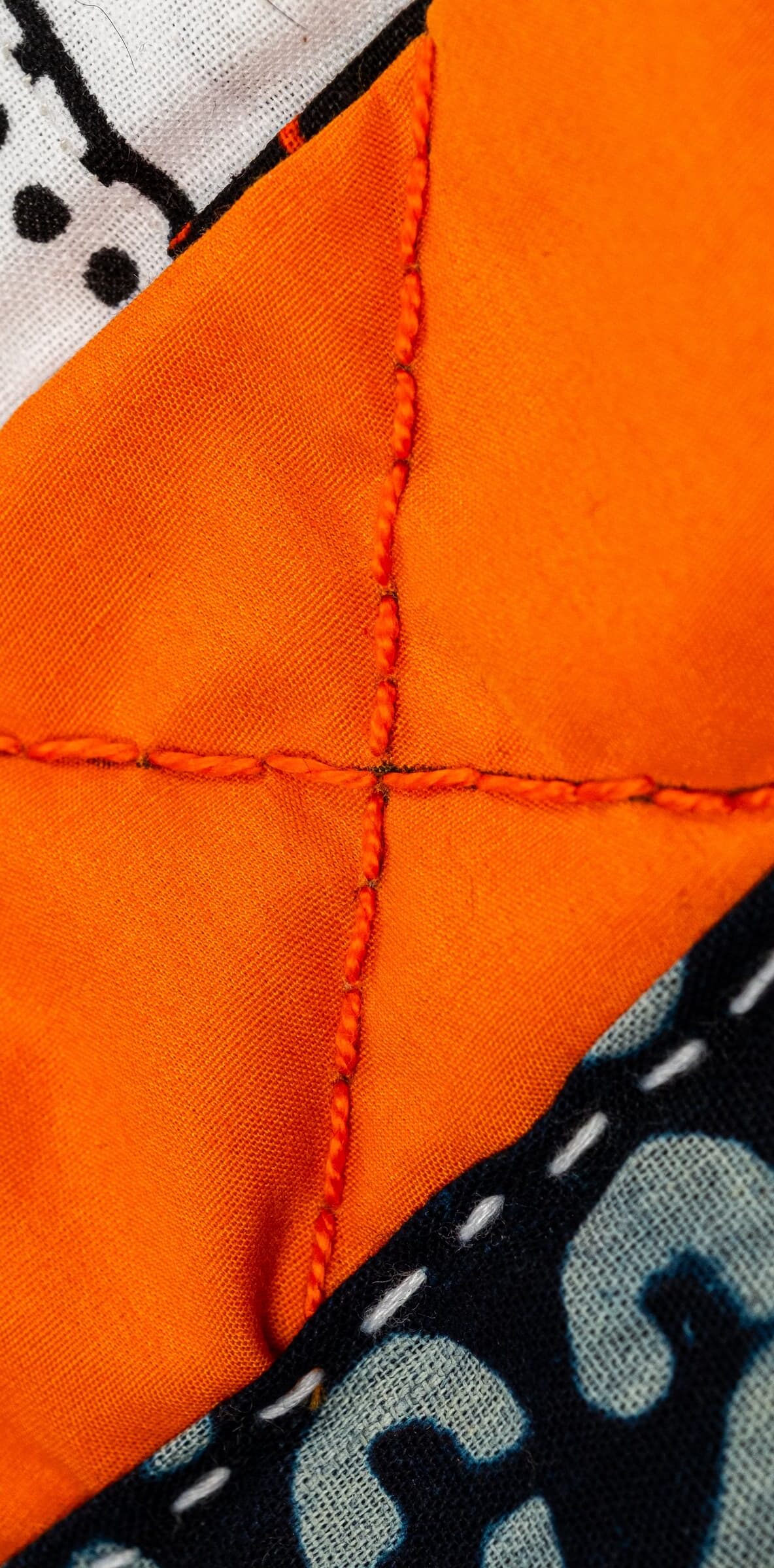
I began the class with my father in January 2022 not knowing he would “cross the crystal river” in December of that same year. I pieced by hand in the most inefficient ways. I finished piecing the quilt top by the end of the Spring session but still had the quilting to do. I had learned in the Zoom class that I was supposed to do a “basting stitch“ to hold my quilt-top, batting, and back together before I began quilting but I couldn’t figure it out. Andrew Wilson, an astounding artist who transcends disciplines but remains committed to craft, was in town and we met up in Lil Bobby Hutton Park (Oakland, CA). Before parting I asked if he would come look at my quilt and help me get this ”basting” thing down. And he swiftly pulled together three scraps and showed me the loose precision of the easily removable stitches that would help things stay in place as I went about the actual quilting.
It feels important to bring my formal and informal quilting teachers into conversation about this craft that carries a deeply felt ancestral inheritance.
In what follows, Andrew Wilson and Darlyne Dandridge exchange stories about their training and lineages that unsettle preconceived notions about what it means to be and become a Black quilter.
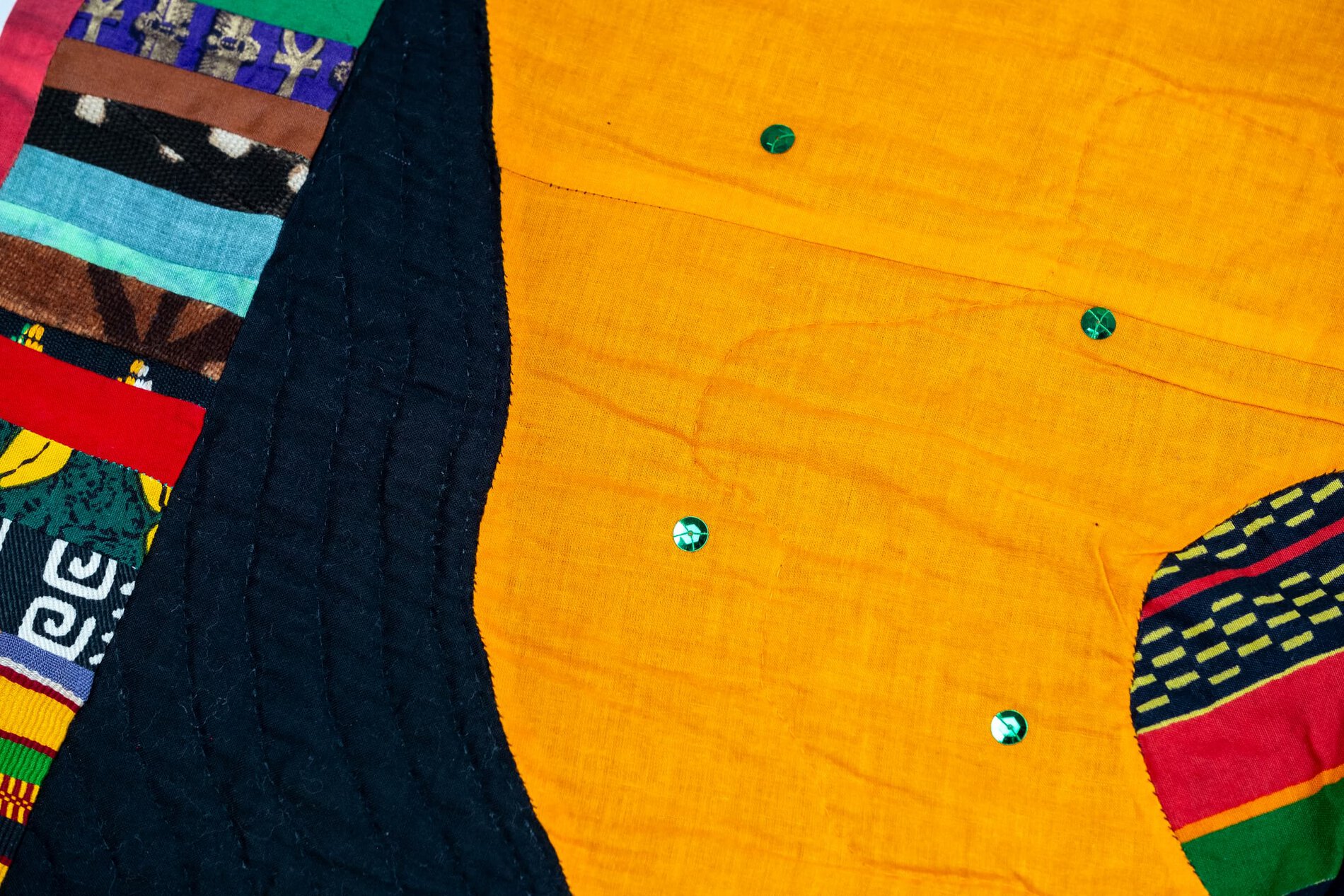
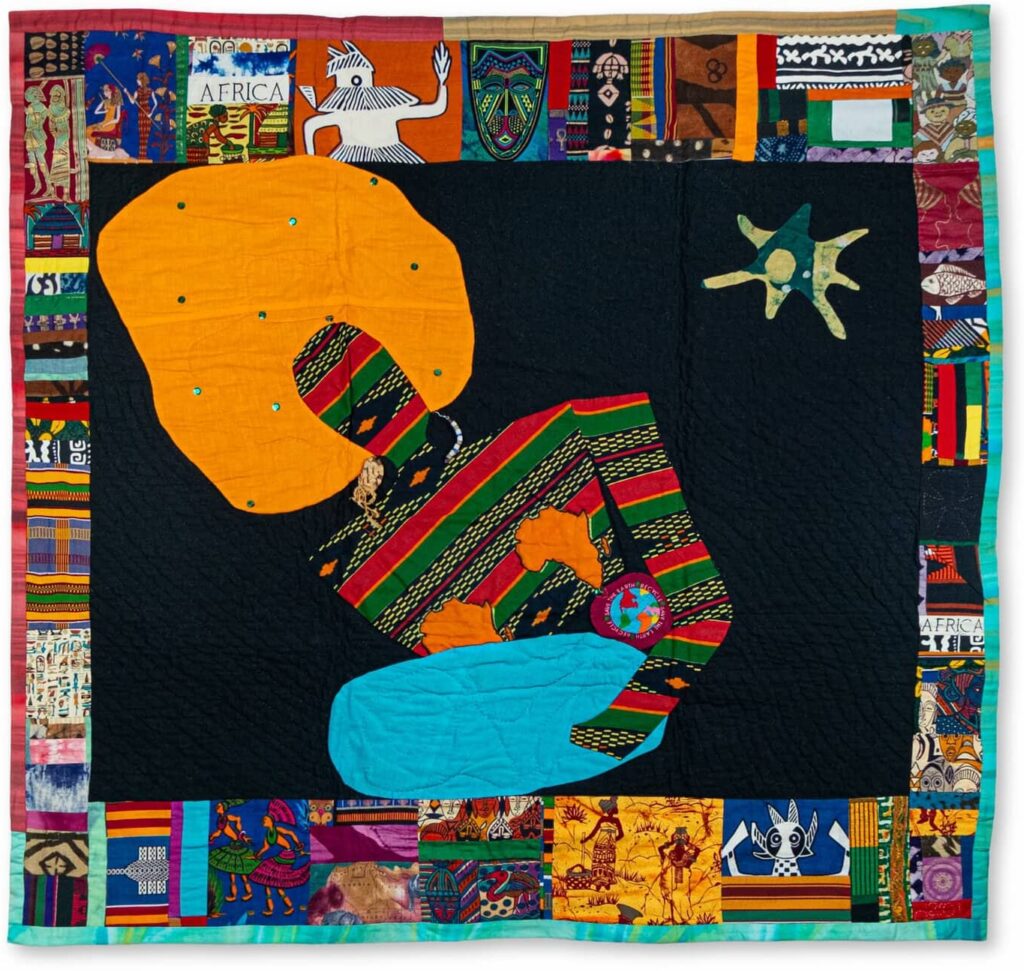
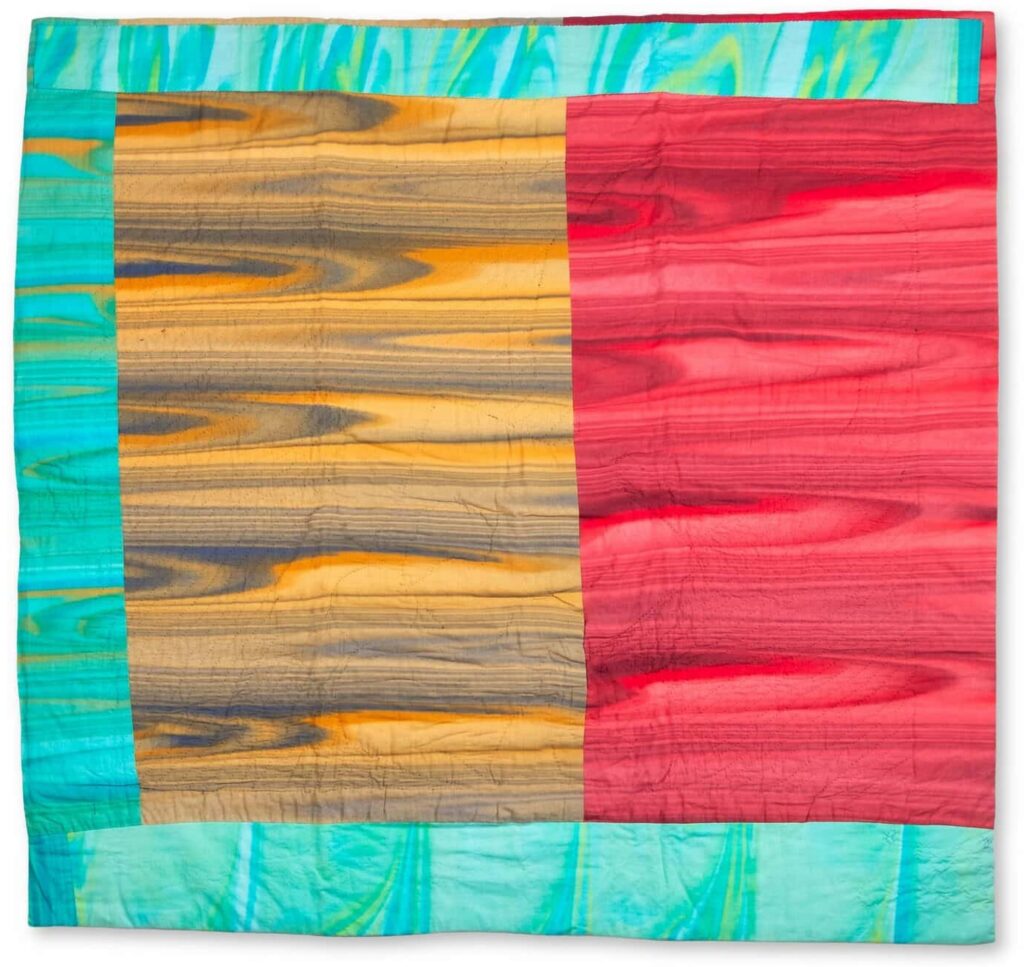
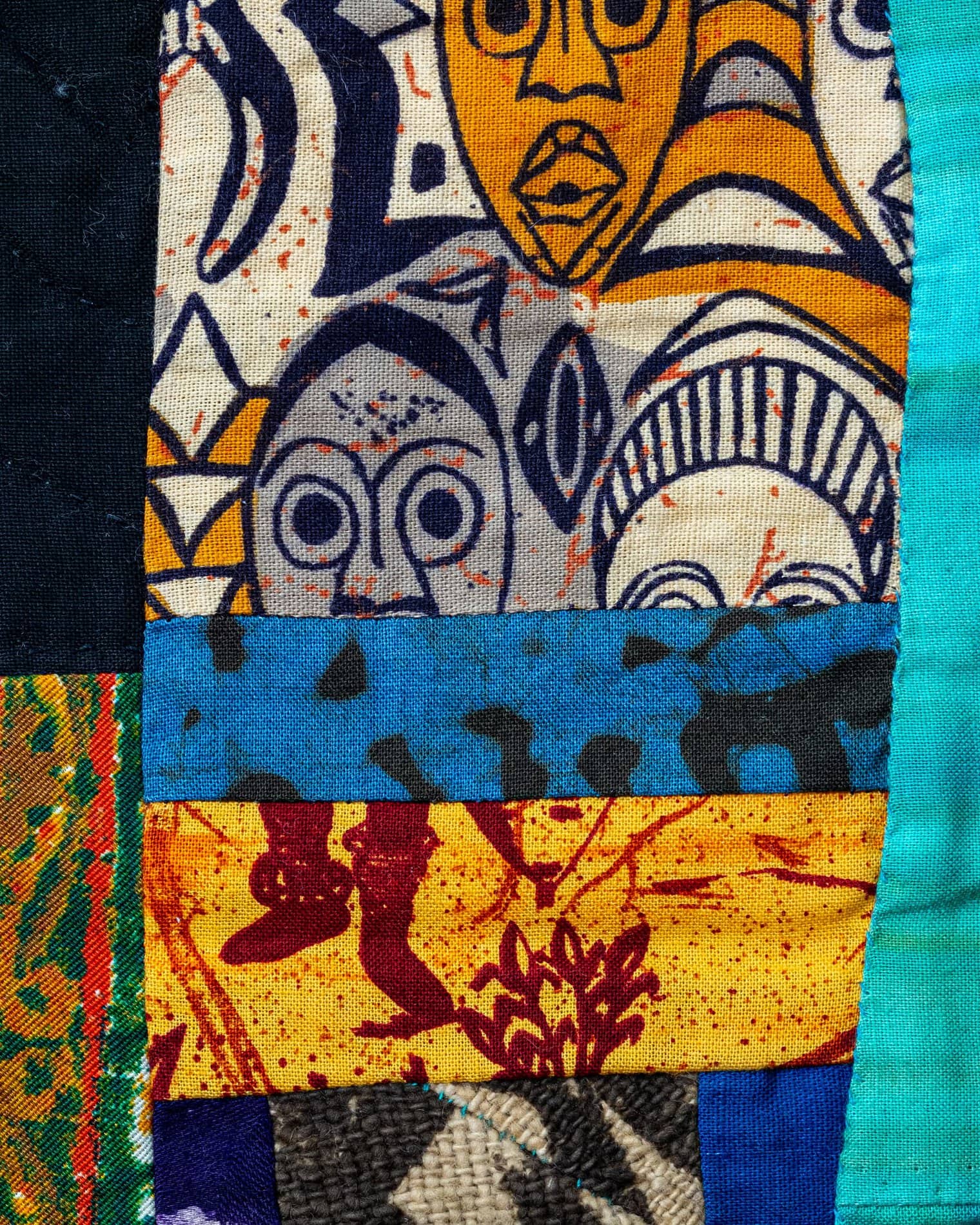
This conversation has been edited for clarity and emphasis on its core themes.
RMI
The first question I have is a little bit about genealogy, but a lotta bit about community. Like who were the people who brought you to quilting or fiber arts or sewing? Who are the people who brought you into those creative practices?
MD
I’m originally from Los Angeles, CA so the first half of my life was L.A. and the second-half is Atlanta and there was a little bit of Arizona in the middle. Around 1985 or ‘86, I was a volunteer and involved with the William Grant Steele Community Center in L.A., which was in my old neighborhood. If you are any type of craft artist or quilter, you will know the name of Carolyn Mazloomi. She, at the time, lived in LA. And she left right before I did. She’s originally from Louisiana. She went to school all over the place. Also, her degree is in aerospace engineering. I don’t think a lot of people know that. That’s why she was in L.A., getting her PhD at Northrop University. Through the Grant Steele Community Center, she rounded up a handful of people that were sewers and quilters, and I was not a quilter. But it was a handful of us that started meeting at that Community Center, and we taught each other. And then we started to meet at each other’s houses in the backyard. You know, thirty kids in the yard with some lemonade and we let them go. It’s that kind of thing. We taught each other what we knew and from that became what is now an international guild called the Women of Color (and in parentheses: Men) of Color Quilt Network. So that’s how I started.
Then we formed the Afro-American Quilters of Los Angeles, which is still going. We formed after she moved to Ohio. Dr. Mazloomi formed the Women of Color Quilters Network, which is still going. Then I moved here (Georgia). And once I got here, I decided to start a group here because there was nothing here which I found quite interesting. I moved to the South, and there were no quilting groups, specifically Black ones. So I started the first Black one, to my knowledge, at the West End Library. In the beginning we met a little while in West End Art Center and then South West Art Center.
AW
My mother and grandmother were seamstresses, so not quilters at all, you know? Don’t put that on them, though. My grandmother would roll in her grave. So my mother stopped sewing before I was born, and I went to school in Brisbane because my mom worked over there. My grandmother’s house was basically our daycare until we were, you know, able to hit elementary school. My mother and father divorced when I was four or five, something like that. I was a pretty angry kid then. My grandmother was like, “Do some with your hands.” So she would teach me to knit and crochet and sew little things or pick apart seams or things like that just to keep me busy. That’s kind of like the foundations I had, right? Really not studying sewing formally When I went to boarding school, we had a jewelry club and a sewing club.
A couple of years before I went to high school, my grandmother was evicted from her home in San Francisco and we had her whole sewing room. You know, her whole house and storage. And the school started this club and we were like, cool. Do you need, you know, fabric and machines and all this stuff? We got it. We can’t do anything with it. So we donated all this stuff to the school.
When I decided to go to college, I said I was going to study jewelry, much to the dismay of most people. They were like, well, what are you going to do with that degree? My mother says that she was either smart enough or dumb enough to let me do exactly what I wanted to do. I give thanks to her. So I studied jewelry in undergrad and that turned into exploring a lot of different media: ceramics, sculpture, jewelry, photography, printmaking, drawing, painting, figure drawing. I got involved in book arts because the photography professor was also a bookmaker, and an expert in alternative photographic process. My jewelry professor was also a fiber artist and a natural dye expert. The sculpture professor was like a madman, an engineer that could build you anything you could dream of.
At this point I realized that both Mama Darlyne and Andrew Wilson had been communally taught. The evolution of their crafts were not dependent on or constrained by the institutions they moved through. The community center, the boarding school, the liberal arts college, the backyard, and the local library all facilitated the same levels of exposure, fellowship, and skill sharing that allowed Mama Darlyne and Andrew Wilson to fully explore and refine their craft.
“One night, my father began to shiver, and in this fit of chills, asked for a quilt…Sitting by his side, looking closely at that quilt gifted by my paternal ancestors taught me the down-home way to pull the layers close. I was ancestrally taught.”
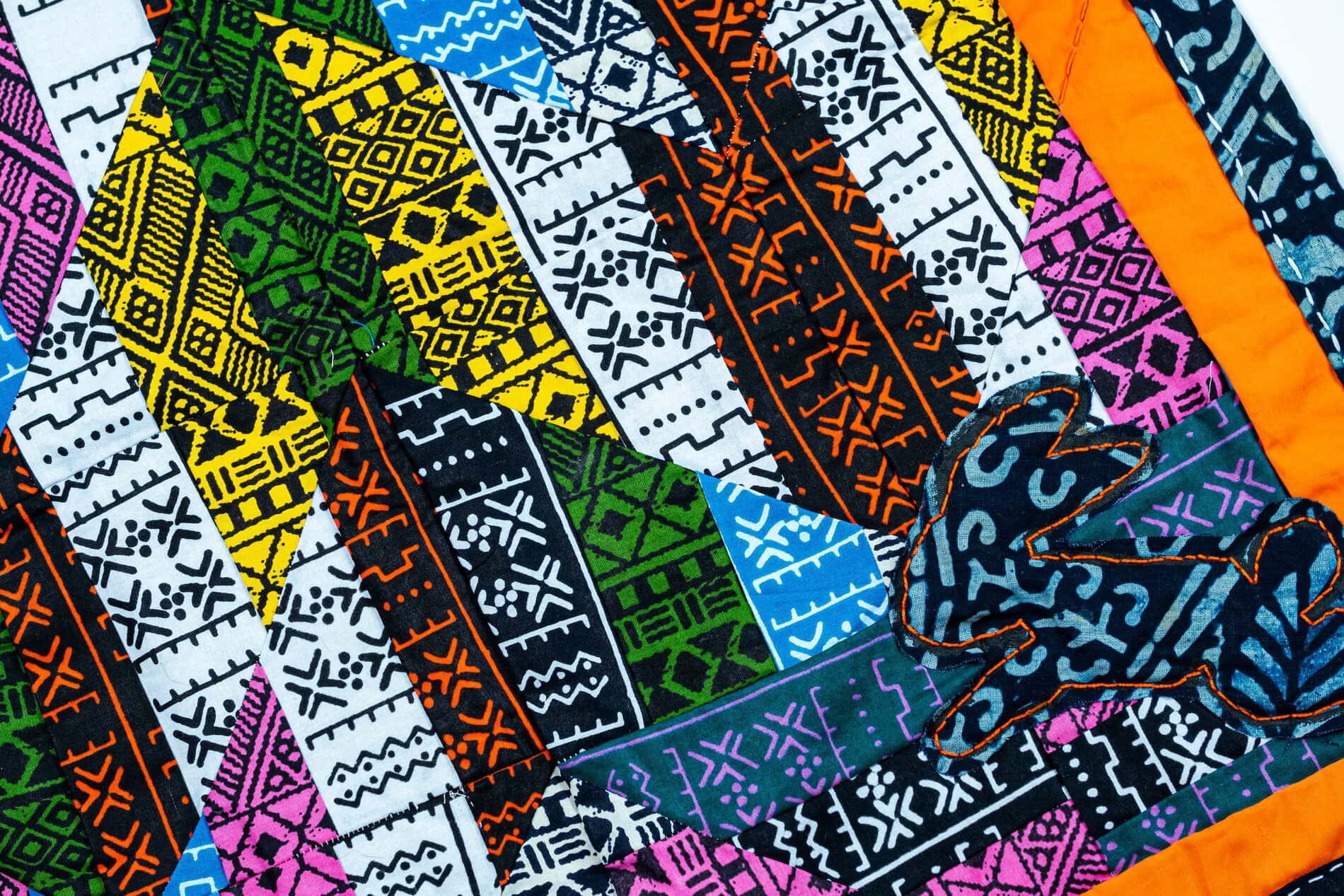
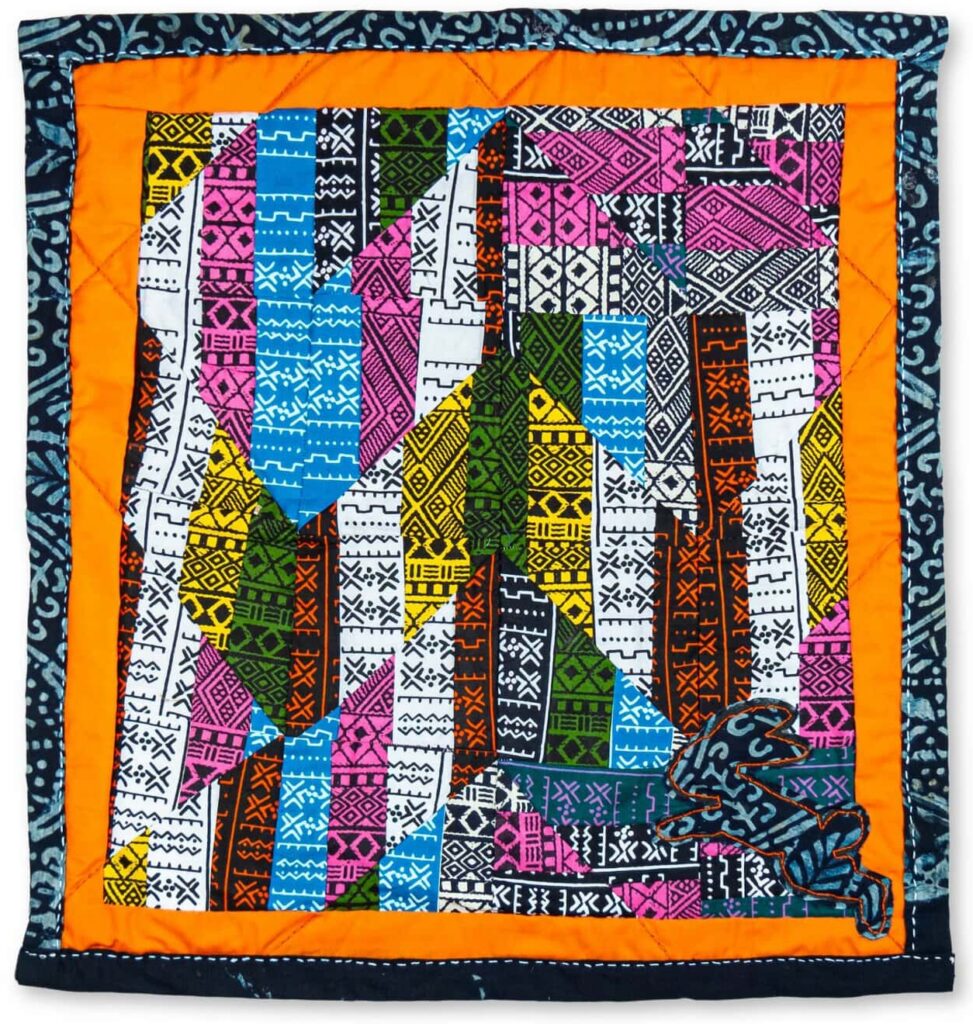
“They want the Black quilter to be stuck in time. They want the narrative. They think, ‘We just took the quilts off these beds and we put them on the wall, because we discovered their ability to create something beautiful.’”
Familial Frames
AW
I built my quilt frame and everything for it.
MD
Go ahead! My grandpa built one for my grandmother that used to drop from the ceiling.
MD
I mean, when I grew up, they lived on a small farm in Arvin, CA, near Bakersfield, a farming area. We had a frame and when the women would come over, he’d push it and it would drop down. That was my first introduction to quilting because everybody’s sewing. If you wanted something, you made it.
AW
My grandmother, the sewist, was from Kansas. She grew up on a big family farm and she was the youngest. Well, second youngest because Tilly, her sister, passed when she was really young. On our farm of eleven or twelve and she was like, yeah, I’m done with this. I’m done being in the boonies. I’m done being on this farm. I’m done working like this. I’m over it. And she moved to San Francisco with a sewing machine and lived there her whole life. My Grandmother, Dorothy.
RMI
So, Mama Darlyne, How did your quilting grandmother get to Southern California?
MD
She was my grandma by marriage. We never said half, we never said step. We never said any of that and we were all raised as cousins. That’s your grandmother. She was originally from Arkansas and moved to L.A. They had some kind of trauma. Her husband died in a suspicious way. There’s always some trauma. Most of the time when they go as far as California or further there was something that happened and they choose generally not to go into specifics.
MD
My grandmother’s family quilted, but when I was young and growing up, I didn’t pay any attention.
It wasn’t until I returned home to Atlanta in the Fall of 2022 and assumed the role as my Father’s primary caregiver that I pulled the basted quilt back out as something to do with my hands at his bedside. I watched my father light up as he explained its details and significance to my niece.
The quilt stayed in my hands as we moved him back home.
Trying to recall everything I learned from Mama Darlyne, I wrestled with the best way to lay my stitch.
One night, my father began to shiver, and in this fit of chills, asked for a quilt. The quilt on the bedroom wall was made by An’ Couda and An’ Beulah Mae on the occasion of my older brother’s birth. I took it down and laid it over him. Sitting by his side, looking closely at that quilt gifted by my paternal ancestors taught me the down-home way to pull the layers close. I was ancestrally taught.
On the “pimping” of the tradition
Sears was the first folks to pimp The Gee’s Bend quilters out. I get so frustrated. There’s one interview I found in the crevices of the YouTube archives. There was one moment, I can’t remember which quilter it was, but she was like, “Everybody come up in here and they want all of our old stuff. But don’t nobody want to see what we can actually do.”
She pulls out white work. She pulls out double wedding rings. She pulls out, I mean, the most elaborate, incredible things. And she’s like, “No one wants to see none of this stuff. We’re so much more. We’re more than this thing that white folks want us to be.”
RMI
And this is the museum as a whole, right? They want the Black quilter to be stuck in time. They want the narrative. They think, “We just took the quilts off these beds and we put them on the wall, because we discovered their ability to create something beautiful.” And I think about this all the time. This beautiful Alice Walker story “Everyday Use,” about the woman with her Black consciousness that goes home and is like “Mama give me a quilt” and Mama’s like, “Nah, this quilt’s going to go to your sister, who’s going to use it.” So this is something that I’m thinking about even in my own life. Y’all are surfacing that there’s a difference, but there’s not a strict binary between the self-taught and the community taught. These institutions want to make a distinction between the self-taught, the fine art, the utilitarian, and it’s messy in its beautiful distinctions.
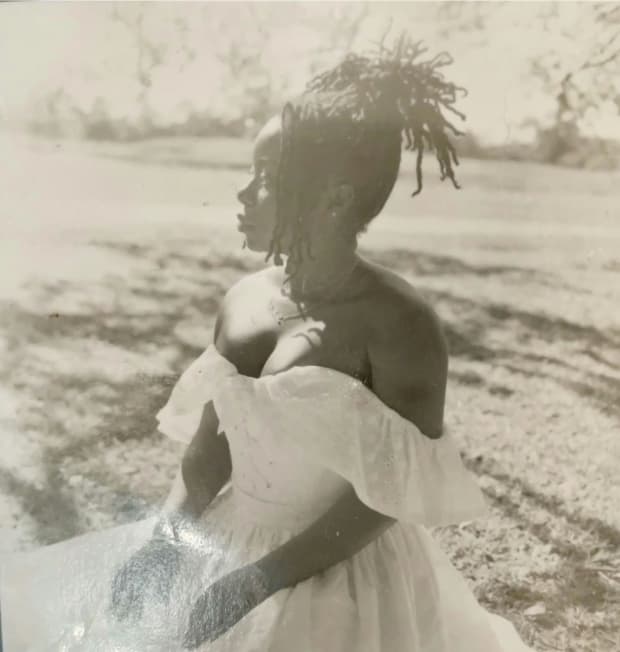
Ra Malika Imhotep, PhD (Ra/They/Them/doll) is an ancestor-accountable living thinker whose work aspires to further the traditions of revolutionary black feminisms and black diasporic theorizing. Born and bred in Atlanta, GA, they are currently in service to their community as an Assistant Professor of Global African Diaspora Studies at Spelman College. Their intellectual and creative work looks after the ways Black feminine figures across the African diaspora subvert preconceived notions about black womanhood and labor through aesthetic practice. They hold a PhD in African Diaspora Studies and New Media Studies from the University of California-Berkeley. They are the author of the poetry collection gossypiin (Red Hen Press, 2022), co-convenor of The Church of Black feminist Thought and a member of The Black Aesthetic curatorial collective. Their work has been featured in The Guggenheim Museum, The Academy of American Poets, The New Life Quarterly, Scalawag Magazine, Women & Performance, The Drama Review, and several anthologies.
To learn more about the work of Ra Malika Imhotep visit ramalikaimhotep.com / @lilcotton_flower